


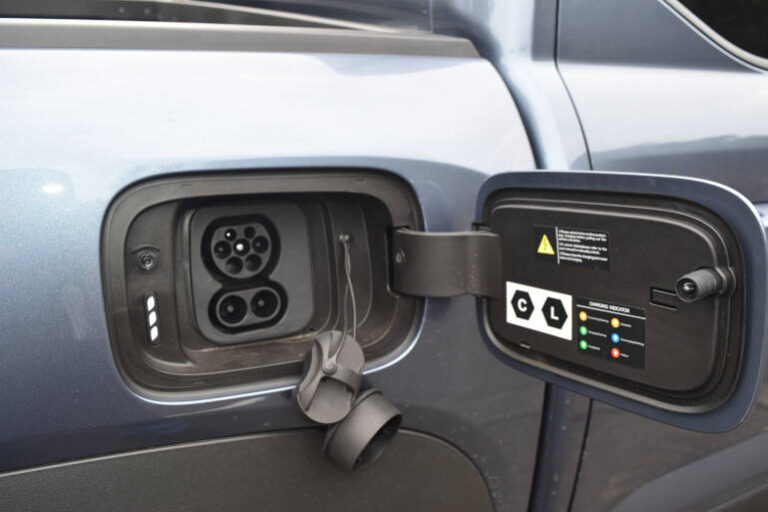
The transition to electric and plug-in hybrid vehicles is not just a vehicle selection exercise for Fleet Managers. It also requires charging access, driver education and enough data to confirm that vehicles are being used as intended.
Marcus Walker, National Fleet Sales Manager at BYD Australia and New Zealand, told the Fleet News Group in an interview for a podcast episode that much of the work involved in introducing EVs and PHEVs to a fleet comes down to education and change management.
“A lot of it is just education, breaking it down, and really taking them through the change management side of it,” Walker said.
For Fleet Managers, that becomes particularly important with plug-in hybrids. A PHEV can deliver very different fuel and emissions outcomes depending on how often drivers charge it.

Charging needs to be easy
Walker said BYD does not currently bundle fleet vehicles with one specific charging provider, with the fleet team instead focusing on the vehicle and bringing charging specialists into customer discussions when required.
From his perspective, the first step is making charging simple and familiar for drivers.
“The analogy I often use when talking to fleet managers and really dumbing it down is an EV is just as easy as plugging in your phone,” Walker said.
“Each night, people put their phone by their bedside, plug it in, and they’re charging their phone.”
He said home charging can be one of the easiest ways for organisations to support EV use where fleet vehicles are taken home by employees.
“If we can do the same for and looking at opportunities for people to charge at home with their fleet vehicle, that’s one of the easiest ways for people to do their transition,” Walker said.
The same principle applies to workplace and depot charging.
Walker said having charging available at a home base or office makes drivers more likely to plug vehicles in regularly, particularly where PHEVs are being used.
PHEVs only work if drivers plug them in
The operational case for a plug-in hybrid can weaken quickly if drivers treat it like a conventional petrol vehicle.
Walker said providing convenient charging infrastructure improves the likelihood that drivers will use the electric capability available to them.
“Having the charging facility, especially if they have plug-in hybrids, for example, ensures that people are far more likely to plug them in and get the most,” he said.
That has a direct impact on whole-of-life cost.
A fleet might select a PHEV on the assumption that a significant proportion of its kilometres will be completed using electricity. If drivers do not charge regularly, the actual fuel consumption and emissions profile can look very different to the assumptions used during the procurement process.
For Fleet Managers, that makes driver behaviour part of the fleet transition plan rather than something that can be addressed after the vehicles arrive.
Two odometers give Fleet Managers another data point
Walker highlighted one feature of BYD’s plug-in hybrid vehicles that could help fleet teams monitor whether drivers are making use of electric operation.
BYD PHEVs have two odometer readings: one showing total vehicle kilometres and another recording kilometres completed in pure electric mode.
“One is a pure EV odometer, and one is the total odometer,” Walker said.
“So fleet managers can actually see how often the vehicle is running in pure EV, so they can actually track and use that as part of their scope emission reporting to ensure that they know that their vehicle one is being plugged in.”
That gives fleet teams a practical way to compare how the vehicle was expected to operate with how it is actually being used.
If a PHEV records relatively few electric kilometres despite being assigned to a driver with predictable daily travel and access to charging, the issue may not be the vehicle itself. It could point to charging access, driver behaviour or a gap in the organisation’s EV transition process.
Telematics can add another layer
Walker said some of the same information can also be accessed through telematics data.
“We can also pull that through some of the telematic data,” he said.
For fleet teams already using telematics, combining EV-mode kilometres with location, utilisation and charging information could provide a stronger picture of whether a vehicle is well matched to its application.
It also moves the conversation beyond simply asking whether a driver likes an EV or PHEV.
Fleet Managers can instead assess whether vehicles are being charged, how much travel is being completed electrically and whether the fleet is achieving the operating cost and emissions outcomes originally modelled.
Driver education remains part of the transition
Walker said EV education remains important because many customers are still buying their first electrified vehicle.
BYD dealerships use their own charging facilities to demonstrate how vehicles are charged and Walker said the company generally recommends that customers have access to a dedicated charger.
“Just again using the phone analogy, just like plugging in your phone, you plug your car in,” Walker said.
He expects that education requirement to reduce as EVs become more familiar and customers begin buying their second, third or fourth electrified vehicle.
Until then, Fleet Managers introducing EVs and PHEVs need to account for the human side of the transition.
The vehicle can provide the electric range and the organisation can install charging infrastructure, but the expected financial and emissions benefits still depend on drivers actually plugging it in.
For PHEV fleets in particular, the combination of charging access, driver education and utilisation data gives Fleet Managers a way to move from assumptions about electric operation to evidence of how the vehicles are performing in everyday use.