


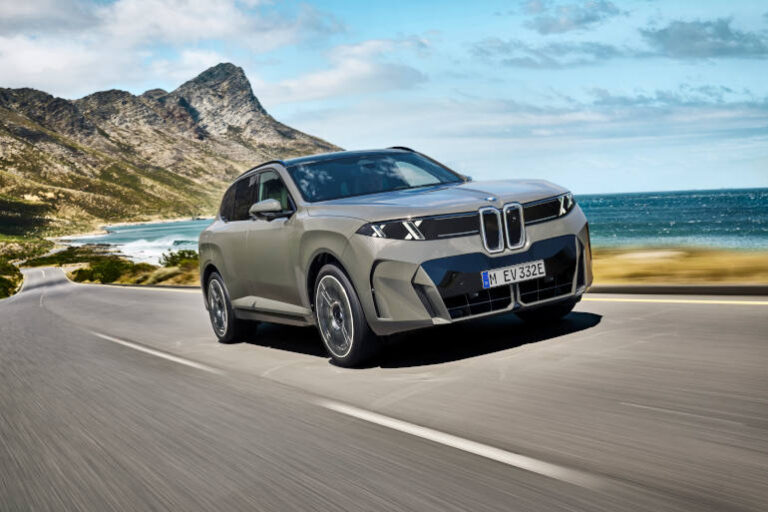
BMW has confirmed the all-electric iX5 will join the new fifth-generation X5 range in Australia from the first quarter of 2027, extending one of the brand’s most established premium SUVs into battery-electric territory for the first time.
The announcement comes as BMW Australia confirms pricing and specifications for the first versions of the new X5, which will arrive locally in the fourth quarter of 2026. The initial line-up will comprise the diesel X5 40d xDrive from $143,900 and petrol X5 40 xDrive from $145,900, both using six-cylinder engines with 48V mild-hybrid technology.
For Fleet EV News readers, however, the more significant detail is what follows.
BMW says the range will expand from Q1 2027 with the all-electric BMW iX5 and the X5 50e xDrive plug-in hybrid, giving customers a broader choice of powertrains within the same vehicle family.
An electric X5 adds another option for premium fleets
The arrival of the iX5 will give corporate, executive and novated lease buyers another large premium electric SUV to consider, particularly for organisations already familiar with the X5 nameplate.
BMW says more than 3.1 million X5s have been sold globally since the model was introduced in 1999, including more than 80,000 in Australia.
That existing customer base could make the iX5 particularly relevant for fleets looking to transition senior management or executive vehicles to electric without moving into an unfamiliar vehicle category.
BMW has not yet released Australian battery capacity, driving range, charging performance or pricing for the iX5, so fleets will need to wait before assessing its whole-of-life cost position against competing premium electric SUVs.
New-generation technology arrives before the EV
Although the iX5 will follow the combustion-powered models into Australia, the fifth-generation X5 provides an early indication of the technology and cabin environment expected across the new range.
The new X5 introduces BMW Panoramic iDrive and Operating System X, along with BMW Panoramic Vision, a 3D head-up display, a 17.9-inch central display and a separate passenger screen.
For fleet operators, the technology upgrade is significant because premium vehicles are increasingly being assessed on more than drivetrain choice. Driver assistance, connectivity, usability and occupant comfort can all influence suitability for executive fleets and high-utilisation corporate applications.
The Australian specification also includes Driving Assistant Plus, Parking Assistant Professional, Adaptive M Suspension, a panoramic glass sunroof, ventilated and massaging front seats and an 18-speaker Bowers & Wilkins audio system as standard on the initial X5 models.
Capability remains part of the X5 proposition
BMW is also maintaining the X5’s traditional focus on towing and long-distance versatility.
The new generation retains a five-seat layout, xDrive all-wheel drive and available towing capability of up to 3,500kg.
That will make the eventual specifications of the iX5 particularly interesting for fleets. Large electric SUVs are increasingly capable of replacing petrol and diesel vehicles for daily business use, but towing capacity, range under load and charging speed remain important considerations for organisations with regional or operational requirements.
The specification gap will matter
The petrol X5 40 xDrive produces 294kW and 540Nm, while the diesel X5 40d xDrive produces 230kW and 670Nm. Both feature xDrive all-wheel drive and 48V mild-hybrid assistance.
Those figures provide a useful benchmark for the iX5 when its specifications are released.
For fleet buyers, the key questions will be whether the electric version can deliver comparable towing capability, long-distance practicality and driver comfort while reducing energy and maintenance costs over its operating life.
BMW has so far confirmed only that the iX5 will arrive in Australia from Q1 2027. Pricing, battery size, range and charging specifications are still to come.
Its arrival will nevertheless mark a significant expansion of BMW’s electric SUV offering and give fleets another pathway to retain a familiar premium vehicle while moving away from internal-combustion powertrains.