

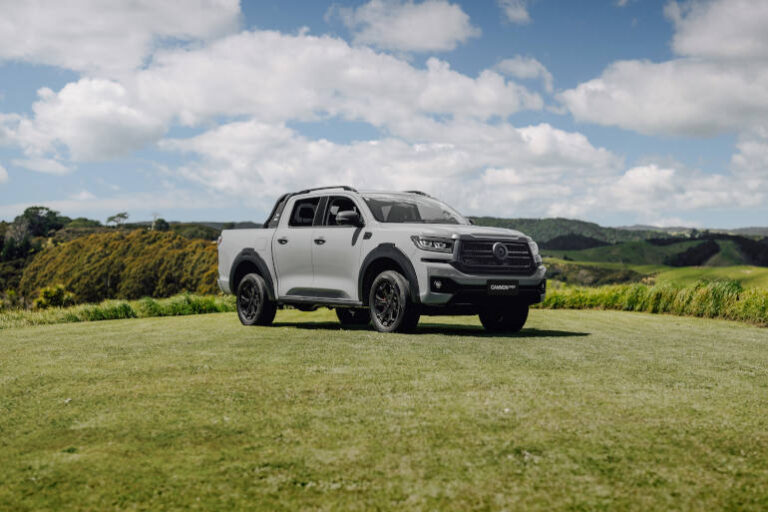
GWM’s Cannon Hi4-T plug-in hybrid ute has arrived in Australian dealerships, adding another option for fleets seeking to introduce electric driving while retaining four-wheel-drive capability and a 3,500kg braked towing capacity.
Available in Lux and Ultra grades, the Cannon Hi4-T joins the larger Cannon Alpha Hi4-T in GWM’s Australian line-up, expanding its plug-in hybrid offering alongside its established diesel range.
For fleet managers, the arrival creates another opportunity to assess whether a plug-in hybrid ute can meet operational requirements while reducing petrol use through regular charging.
Electric driving with towing capability
GWM claims an electric driving range of 115km under the NEDC test cycle. This is a laboratory figure rather than a guarantee of workplace range, with actual results dependent on conditions, load and driving patterns.
For vehicles completing predictable local trips, that claimed range provides a starting point for assessing how much daily travel could be completed electrically.
The fleet outcome will depend on access to charging and whether drivers consistently plug in. Matching vehicles to suitable routes and providing convenient charging will be central to making use of the plug-in hybrid system.
Alongside its electric capability, the Cannon Hi4-T offers mechanical four-wheel drive and a maximum braked towing capacity of 3,500kg.
That combination will attract attention from fleets whose utes need to move between everyday road travel, worksites and towing duties. Buyers should also check payload, gross combination mass and axle limits against their specific equipment and trailer requirements.
A broader choice of plug-in hybrid utes
The Cannon Hi4-T expands GWM’s approach to ute electrification, giving buyers a choice between two distinct plug-in hybrid models.
According to GWM, it is currently the only manufacturer offering two PHEV ute models in Australia.
For organisations reviewing diesel ute replacements, the broader range creates more scope to compare vehicle size, specification and operational suitability.
Plug-in hybrid technology may suit applications involving regular local driving alongside longer journeys. However, fleets will need to assess fuel and electricity consumption across their own duty cycles, particularly when carrying loads or towing.