
Where a vehicle is parked at two in the morning could tell a fleet manager more about its electric future than where it travels during the working day.
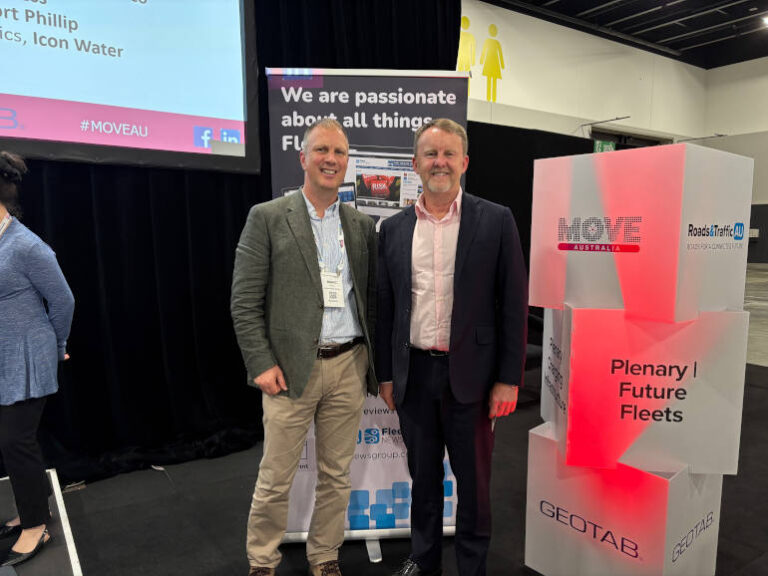
That was one of the practical insights shared by Chris Noone, Ventia’s General Manager – Plant, Fleet and Future Mobility, during a fireside chat with Fleet News Group’s Marc Sibbald at MOVE Australia.
For readers who missed the session, the discussion offered an insight into electrifying a complex working fleet. It also demonstrated the value of attending fleet events: hearing how other operators approach challenges can reveal useful questions to take back to your own organisation.

A fleet stretching from lawnmowers to fire engines
Ventia’s operations span defence, transport, telecommunications and infrastructure services across Australia and New Zealand. Its work includes maintaining motorways and tunnels, building power distribution networks, supporting defence bases and operating drilling equipment in remote locations.
The discussion described approximately 8,000 fleet assets supporting a business with around 16,000 employees and 140 projects.
Noone illustrated that diversity with examples ranging from lawnmowers and light vehicles to specialised fire engines, boats, aircraft and dozers laying communications cables across the desert.
For Ventia, electrification requires decisions about individual applications, operating environments and customer requirements.
Some clients require electric vehicles. Other projects have restrictions, remote operating conditions or towing requirements that influence the available choices. Even apparently similar vehicles can need substantially different fitouts.
The charging question starts with vehicle behaviour
One of Noone’s clearest messages was the importance of understanding where vehicles spend their downtime.
“What I’m interested in is where the vehicles dwell at 2am,” he said.
That information helps identify whether charging could happen at an employee’s home, a depot or another location.
Having a depot does not automatically make depot charging the answer. Vehicles may rarely visit it, while a short project contract can complicate the business case for installing infrastructure.
Noone outlined the questions Ventia needs to consider: does it own or lease the property? Is landlord approval required? How long will the project run? Will the vehicles remain on that project for their full lease term?
Home charging introduces further considerations, including how employees could be reimbursed for electricity. Public charging also has a role, with the appropriate combination depending on each vehicle’s work.
For fleet managers, the lesson was to understand vehicle movements and parking patterns before committing to a charging solution.
Electric first, with the job setting the requirements
Ventia is taking an electric-first approach to vehicle discussions while keeping operational suitability central to the decision.
“At the end of the day, we want the best vehicle for the job,” Noone said.
Replacement planning starts with familiar fleet management considerations: age, kilometres, maintenance costs and operating requirements. The team then assesses where an electric option can meet the task.
Light vehicles are a major focus, including passenger vehicles, utes and vans. Larger electric vehicles are considered case by case.
At the time of the discussion, Noone said plug-in hybrid utes and passenger vehicles were providing practical opportunities. Vans presented a greater challenge in some applications because of their daily travel distances.
Service coverage and parts availability also mattered, particularly for a business operating across a wide geographical area.
Plug-in hybrids provide a learning opportunity
Noone described plug-in hybrids as “electric on training wheels”, allowing Ventia to explore charging arrangements and driver adoption while retaining petrol capability.
He said many drivers were experiencing plug-in hybrids for the first time and were driving predominantly on electric power. Regular charging remained central to achieving the benefits.
The experience was also helping the business learn about the human side of the transition.
Moving to an electric vehicle changes routines. Drivers accustomed to filling a fuel tank need to become comfortable plugging in during suitable periods of downtime.
Ventia is using driver surveys and discussion groups to gather feedback and share lessons across the business.
Noone cautioned against assuming which employees would embrace the technology. People expected to resist could become enthusiastic users, while others might need more support than anticipated.
Successful adoption requires involvement from safety teams, people and culture, senior management and the drivers themselves.
Start with why, then build the plan
Asked where fleets should begin, Noone recommended first establishing why the organisation wants to electrify.
The reasons could include sustainability targets, client requirements, operating costs or improving the employee driving experience. Clear objectives help shape the plan and the measures used to assess progress.
The next step is understanding the fleet data: daily kilometres, dwell time, remote travel, towing needs and other operating conditions.
Driver consultation then adds the practical knowledge needed to turn that analysis into a workable transition.
Throughout the conversation, a consistent theme emerged. Electrification draws heavily on established fleet management disciplines: understanding the task, selecting suitable assets, managing costs and supporting the people who use them.
Why these conversations matter
The Ventia session gave attendees access to the thinking behind fleet decisions, including the complications that are easy to overlook when discussing vehicles and charging in isolation.
A question about overnight parking led to a broader discussion about property leases, project duration, infrastructure investment and employee reimbursement. A conversation about plug-in hybrids opened up lessons about driver behaviour and organisational change.
That is a compelling reason to make time for fleet events.
Presenters bring experience that can help other fleet managers test their assumptions, identify gaps in their plans and ask better questions. Conversations with fellow attendees provide another opportunity to compare approaches and build connections across the fleet community.
For anyone planning their next stage of electrification, getting out of the office and into those discussions can provide knowledge that is difficult to gain from a specification sheet.
You may not operate fire engines, drilling rigs or dozers in the desert. But understanding how another fleet tackles its challenges could help you solve your own.