

Battery electric vehicles captured 23.1 per cent of Australia’s new vehicle market in October 2026, almost tripling their share from a year earlier as buyers responded to fuel costs, greater choice and support through the Electric Car Discount.
Almost 25,000 BEVs were sold during the month, according to NALSPA’s summary of FCAI and Electric Vehicle Council data. While volumes were below September, electric vehicles still accounted for close to one in every four new vehicles purchased.
The October result compares with a BEV market share of 7.3 per cent in October 2025. Over the same period, petrol vehicle sales fell 35.9 per cent and diesel sales declined 14.7 per cent.
For fleet and novated lease buyers, the figures point to a substantial change in purchasing patterns, with electric models now competing near the top of the overall sales charts.
Model Y leads the reported electric models
Tesla delivered 4,050 vehicles in October, up 342 per cent on the same month last year.
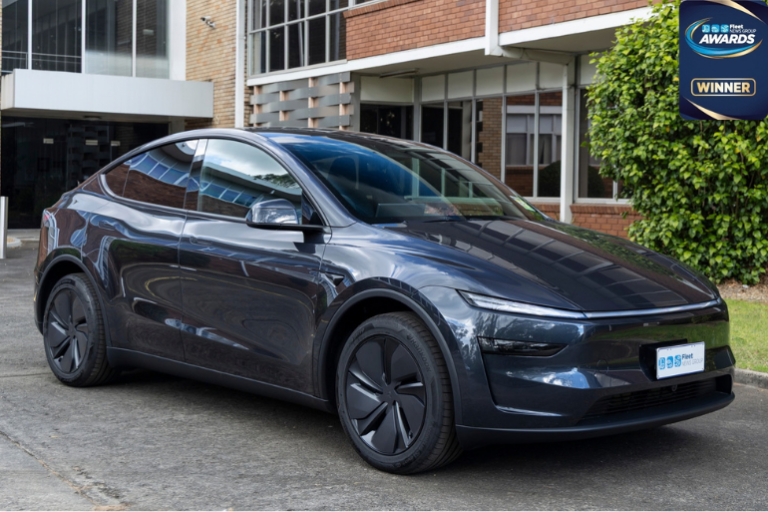
The Model Y accounted for 3,105 deliveries, taking its 2026 total beyond 39,000. Its October result placed it fourth among the models in the supplied FCAI and EVC figures, behind Toyota HiLux, Ford Ranger and Toyota RAV4.
BYD Sealion 7 recorded 2,524 sales, while BYD Atto 2 and Geely EX5 also appeared among the overall market’s leading models.
| Battery electric model | October 2026 sales |
|---|---|
| Tesla Model Y | 3,105 |
| BYD Sealion 7 | 2,524 |
| BYD Atto 2 | 1,943 |
| Geely EX5 | 1,789 |
| Tesla Model 3 | 945 |
Tesla Model 3 deliveries increased to 945, compared with 181 in October 2025.
Combined Tesla and Polestar deliveries reached 4,168 for October and 47,554 for the year to date, an 86 per cent increase on the corresponding period last year. The EVC notes that these sales are recorded at delivery, rather than when orders are placed.
Buyers respond to running costs
Electric Vehicle Council CEO Julie Delvecchio said affordability and reduced exposure to petrol prices were influencing demand.
“The Government’s Electric Car Discount and the New Vehicle Efficiency Standards are cost-of-living measures. They give Australians more choice, and when people have that choice, they’re choosing electric in record numbers.”
The FCAI also identified competition, sustained higher fuel prices, instability in the Middle East and Federal Government tax concessions as contributors to strong BEV demand during 2026.
FCAI chief executive Tony Weber said buyers were responding to opportunities to reduce costs.
“Consumers are making rational choices and are attracted to options that reduce their costs. Despite continuing pressure on household budgets and higher borrowing costs in 2026, the October result shows there is extraordinary resilience in new vehicle demand,” Mr Weber said.
For fleet managers, the practical task is to translate that interest into vehicle assessments using actual kilometres, charging arrangements and whole-of-life costs.
Mortgage belts embrace EV novated leases
NALSPA’s September quarter data adds another dimension to the sales story, showing strong Electric Car Discount uptake in outer suburban areas.
Werribee, Kellyville and Marsden Park led its top ten postcodes for new EV novated leases. Tarneit, Craigieburn and Cranbourne also featured.
NALSPA CEO Rohan Martin said the discount was helping households facing mortgage payments and long commutes consider an electric vehicle.
“These aren’t inner-city elites. They’re families in Werribee, Tarneit, Kellyville and Marsden Park who have a mortgage, a long commute and are counting every dollar. For many of them, an EV only became realistic because of the Discount.”
For employers offering salary packaging, the findings underline the relevance of EV information to employees travelling longer distances to work.
NALSPA also highlighted the longer-term contribution of today’s leased vehicles to used EV supply.
“Every car that goes electric means less reliance on imported oil, less exposure to price shocks and lower emissions. Plus, today’s EV Discount cars become tomorrow’s affordable second-hand EVs for even more households.”
Charging must keep pace
As EV uptake increases, charging access remains a key consideration for fleets, employers and households.
Mr Weber said infrastructure investment needed to match vehicle demand.
“This increase in new vehicle demand, especially BEVs, must be supported by reliable and accessible charging infrastructure that keeps pace with demand.”
October’s results give fleet buyers a clearer picture of the electric models attracting customers. Turning that market momentum into a successful fleet transition still requires matching vehicles to their work and planning where, when and how they will charge.