

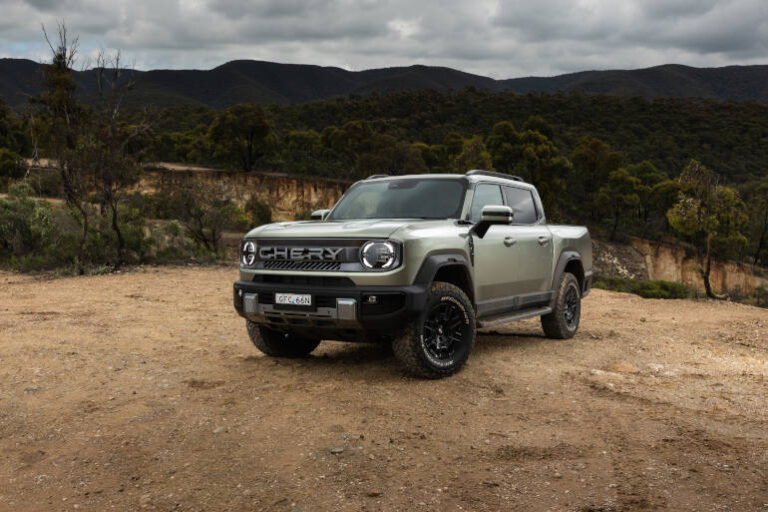
Chery is bringing a different approach to the electrification of Australia’s dual-cab ute market, combining a turbo diesel engine with plug-in hybrid technology in its new Stockman.
The manufacturer has confirmed specifications for the Stockman Urban, a new variant joining the flagship Ultimate model, giving fleet operators another option when considering how to reduce fuel consumption and emissions without compromising the operational requirements of a traditional work ute.
Unlike petrol plug-in hybrid utes entering the Australian market, the Stockman uses a 2.5-litre Turbo Diesel Super Hybrid powertrain delivering a combined 350kW of power and 800Nm of torque.
It also offers up to 100km of electric driving range under the NEDC testing cycle, creating the potential for fleet vehicles to complete routine daily journeys using electricity while retaining diesel power for longer trips.

A different pathway to lower fleet emissions
For many fleet operators, replacing diesel utes with electric vehicles is proving more complicated than transitioning passenger cars and SUVs.
Towing requirements, payload, regional travel and the availability of charging infrastructure can all limit the suitability of battery electric alternatives.
The Stockman presents another option by combining electric driving capability with a diesel engine.
For organisations operating vehicles from a central depot, the opportunity to charge overnight and complete shorter daily journeys using electricity could provide meaningful reductions in diesel consumption.
The diesel engine would remain available for longer trips, towing and operations where charging infrastructure is limited.
However, the potential savings will depend heavily on how the vehicles are used.
A plug-in hybrid that is regularly charged and operates within its electric driving range could deliver a very different result from one that spends most of its time running on diesel.
Towing and payload remain central to the equation
Chery has retained the capability expected of a conventional dual-cab ute, with the Stockman Urban offering a braked towing capacity of 3,495kg.
The Stockman range also provides a payload of up to 810kg, making vehicle selection and load management important considerations for fleet buyers.
While the towing figure is comparable with many conventional diesel utes, the available payload will need to be assessed against the weight of passengers, tools, accessories and equipment.
For fleet operators using dual-cab utes as mobile workshops or carrying substantial equipment, this could influence whether the Stockman is suitable for particular applications.
The Urban also features four-wheel drive, individually selectable centre and rear differential locks, and 235mm of ground clearance.
A double wishbone front suspension and leaf spring rear suspension provide a familiar configuration for fleet operators accustomed to traditional work utes.
These features reinforce Chery’s intention to offer an electrified vehicle that can still meet the practical demands of Australian worksites and regional operations.
What does the Urban offer?
The new Urban variant retains the headline performance and capability of the Stockman powertrain while providing an additional choice within the range.
Key specifications include:
| Specification | Stockman Urban |
|---|---|
| Engine | 2.5-litre turbo diesel PHEV |
| Combined power | 350kW |
| Combined torque | 800Nm |
| Electric range | Up to 100km (NEDC) |
| Drivetrain | Four-wheel drive |
| Braked towing capacity | 3,495kg |
| Unbraked towing capacity | 750kg |
| Ground clearance | 235mm |
| Suspension | Double wishbone front, leaf spring rear |
| Wheels | 18-inch highway-terrain tyres |
| Dimensions (L × W × H) | 5,450 × 2,010 × 1,890mm |
The Urban will be priced from $52,990 MSRP, compared with $57,990 MSRP for the Ultimate.
For fleet buyers, the decision between variants will depend on the equipment required for each application rather than simply choosing the highest specification model.
The challenge is making plug-in hybrids work
The introduction of another plug-in hybrid ute creates opportunities for fleet managers, but it also raises questions about how these vehicles should be managed.
Unlike conventional diesel vehicles, PHEVs require drivers to charge regularly to maximise their electric driving capability.
Fleet managers considering the Stockman will need to understand where vehicles are parked overnight, whether charging is available and how many kilometres are travelled each day.
They will also need to consider how the vehicle performs when the battery is depleted, particularly when towing or carrying a full load.
The claimed 100km electric range provides a useful starting point, but real-world testing will be needed to establish how much of a typical working day can be completed without using diesel.
Fuel and electricity consumption will also need to be included in whole-of-life cost calculations to determine whether the plug-in hybrid delivers financial benefits compared with a conventional diesel ute.
Another option for fleets that still need diesel capability
The arrival of the Stockman highlights how manufacturers are taking different approaches to reducing emissions in the light commercial vehicle market.
Battery electric vehicles may be suitable for fleets with predictable routes and reliable charging, while plug-in hybrids can provide an alternative for organisations that require greater operational flexibility.
By combining a diesel engine with electric driving capability, Chery is offering fleet operators another way to approach the transition.
The real test will be whether the Stockman can deliver lower fuel consumption and emissions during everyday fleet operations while maintaining the towing, payload and reliability that organisations expect from their work vehicles.
For fleet managers, that balance between environmental objectives and operational capability will ultimately determine where the diesel plug-in hybrid fits into their fleet replacement strategy.