


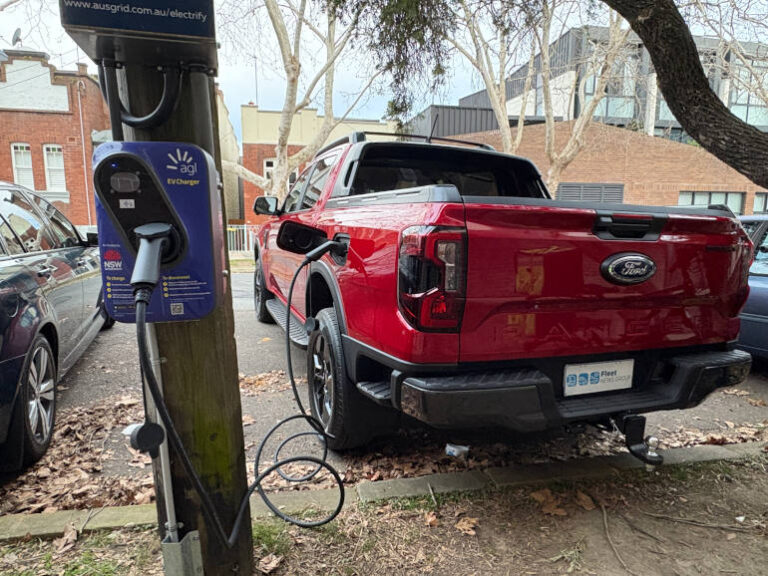
The NSW Government has released an updated Electric Vehicle Strategy that places fleet electrification, charging infrastructure and workforce capability at the centre of its transport decarbonisation plan.
Backed by $100 million in funding, the strategy focuses on practical measures designed to make electric vehicles more accessible for businesses and communities, particularly in regional and outer suburban areas where charging access has been a barrier to adoption.
For organisations planning to transition their fleets, the announcement signals continued government support for infrastructure, vehicle incentives and skills development—three areas that directly influence the pace and success of electrification programs.

A stronger focus on fleet and truck electrification
One of the most relevant changes for Fleet Managers is the expansion of the EV Fleets Incentive Program to include small and medium-size trucks. This move recognises the growing role of light and medium commercial vehicles in urban logistics, service delivery and regional operations.
The updated strategy aims to accelerate the deployment of electric trucks by providing financial support for vehicle purchases and charging infrastructure, helping organisations reduce operating costs and emissions.
Julie Delvecchio, Chief Executive Officer at the Electric Vehicle Council, highlighted the importance of this shift for business fleets.
“Expanding fleet incentives to trucks is one of the smartest moves in this strategy – it’s one of the fastest ways to cut operating costs for businesses while making our streets cleaner and quieter for everyone.”
For Sustainability Managers and Finance Managers, this reinforces a key planning principle: the fastest emissions reductions often come from electrifying high-utilisation vehicles first, particularly those operating predictable daily routes.
Closing the charging gap for regional and operational fleets
Charging infrastructure remains one of the most common operational concerns raised by fleet teams, particularly those supporting regional services or dispersed workforces.
The strategy places significant emphasis on expanding fast charging infrastructure in regional, remote and suburban areas, as well as increasing the availability of kerbside chargers for drivers without access to home charging.
To date, the NSW Government has funded more than 3,300 public chargers across over 1,200 locations, creating a foundation for broader fleet deployment.
Applications are also open for councils to access funding to plan and deliver local charging infrastructure, recognising the critical role local government plays in enabling fleet transitions.
For organisations developing depot strategies or reviewing operational readiness, this investment reduces infrastructure risk and supports more confident long-term vehicle replacement planning.
Building the workforce needed to support fleet transitions
A less visible but equally important element of the strategy is the investment in workforce capability.
The NSW Government will support training for approximately 2,000 mechanics in regional areas to ensure vehicles and charging infrastructure can be safely serviced and maintained.
This aligns closely with the broader challenge many organisations face: electrification is not just a vehicle procurement decision—it requires changes to maintenance planning, workshop capability and safety procedures.
Minister for Skills, TAFE and Tertiary Education Steve Whan said the training initiative is designed to support the long-term transition of the automotive sector.
“Electric vehicles are transforming the automotive industry, and it’s critical our mechanics have the skills to keep up with that change.”
For fleet operators, access to skilled technicians is a key operational risk factor. Workforce development initiatives like this help reduce downtime risk and support more reliable service delivery.
Cost pressures continue to drive the business case
The timing of the strategy reflects ongoing pressure from fuel costs and operating expenses, which continue to dominate discussions in executive teams and budget planning cycles.
According to the NSW Government, switching to an electric vehicle can reduce fuel costs by up to $3,000 per year and lower maintenance costs by around 40 per cent.
These cost savings are increasingly important as organisations respond to rising fuel prices, emissions reporting requirements and the introduction of vehicle efficiency standards.
More than 117,000 electric vehicles are now registered in NSW, collectively saving an estimated 141 million litres of petrol each year.
For Finance Managers, this reinforces the need to move beyond purchase price comparisons and adopt a whole-of-life cost approach when evaluating replacement options.
What this means for organisations planning fleet transitions
The updated strategy provides a clearer policy signal for organisations at different stages of fleet maturity.
Rather than focusing solely on vehicle procurement, the announcement highlights the importance of coordinated planning across infrastructure, workforce capability and operational processes.
For many organisations, the practical next steps include:
- Reviewing replacement schedules to identify suitable early electrification candidates
- Assessing depot and workplace charging requirements
- Building internal capability in maintenance and safety procedures
- Developing a structured emissions reduction plan aligned to organisational targets
As fleet management maturity increases, organisations will be better positioned to take advantage of incentives, infrastructure investment and emerging vehicle options—turning policy support into measurable operational outcomes.