


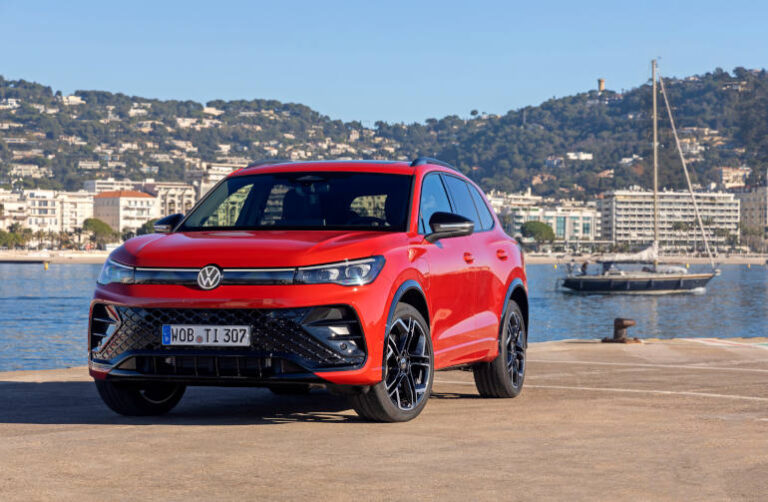
Volkswagen Australia has confirmed local pricing and key specifications for the new Volkswagen Tiguan eHybrid and Volkswagen Tayron eHybrid, strengthening its plug-in hybrid offering in the medium SUV segment.
Both models are built on Volkswagen’s latest-generation plug-in hybrid platform, pairing a 1.5-litre TSI petrol engine with an electric motor. Depending on grade, system outputs are rated at 150kW or 200kW, with a 19.7kWh battery delivering an electric-only driving range of 113–117km (WLTP). Combined fuel consumption is listed at 1.6–1.8L/100km .
For fleet buyers assessing transition pathways between internal combustion and full battery electric vehicles, the electric-only range positions both SUVs as viable options for low-emission urban driving while retaining hybrid flexibility for longer regional trips.
Charging and efficiency
Both eHybrid models support AC charging up to 11kW and DC charging up to 40kW, enabling faster energy replenishment at depot, workplace or public charging sites .
For organisations with limited charging infrastructure maturity, this dual AC/DC capability provides flexibility during early-stage electrification planning. The 113–117km electric range may also reduce fuel spend and tailpipe emissions for vehicles operating within metropolitan duty cycles.
Pricing and positioning
Volkswagen has positioned the eHybrid variants just above their petrol equivalents.
Tiguan eHybrid pricing (MRRP incl. GST):
- 150TSI eHybrid Elegance – $64,590
- 200TSI eHybrid R-Line – $74,550
The Tiguan seats five and offers 490 litres of luggage capacity .
Tayron eHybrid pricing (MRRP incl. GST):
- 150TSI eHybrid Elegance – $62,390
- 200TSI eHybrid R-Line – $76,550
As the larger model, the Tayron provides 705 litres of boot space .
Two SUVs, different fleet roles
While sharing the same plug-in hybrid technology, the Tiguan remains Volkswagen’s core midsize SUV with a more compact footprint suited to urban operations. The Tayron sits one size above, offering increased cabin and luggage space for organisations requiring greater cargo flexibility .
Both models will arrive in Australian showrooms in the second quarter of 2026, with order books opening soon .
For Fleet Managers and Sustainability Managers, the Tiguan and Tayron eHybrid represent an incremental decarbonisation step. With meaningful electric range, reduced fuel consumption and fast charging capability, they offer a practical bridge between conventional ICE fleets and full BEV adoption—particularly where operational requirements or infrastructure constraints limit immediate transition.