


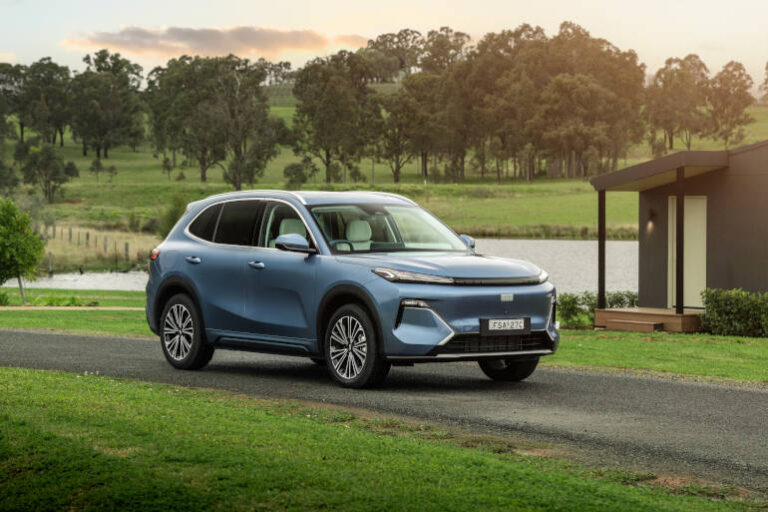
Geely Auto Australia is expanding its Starray EM-i plug-in hybrid SUV range with a new all-wheel-drive variant, giving fleet buyers another option where electric driving needs to be combined with longer-distance capability and more challenging road conditions.
The Starray EM-i Inspire AWD will arrive in Australian dealerships from mid-September 2026, joining the existing Complete and Inspire front-wheel-drive models.
The biggest change is the addition of an 80kW/150Nm rear electric motor, creating an all-wheel-drive system with a combined output of 220kW and 412Nm.
The extra motor also significantly improves performance, reducing the claimed 0–100km/h time to 6.3 seconds compared with 8.2 seconds for the front-wheel-drive Inspire.
For fleet operators, however, the more important development may be the broader operating envelope offered by the AWD configuration.
Geely has added Snow and Off-road drive modes, while the rear suspension moves from the four-link arrangement used by the front-wheel-drive variants to a five-link configuration designed to improve ride comfort, stability and handling.
That could broaden the Starray EM-i’s appeal beyond metropolitan passenger fleets to organisations whose vehicles regularly travel on regional roads, unsealed surfaces or in changing weather conditions.
Long-distance capability remains a focus
Despite the addition of another electric motor and AWD hardware, Geely is continuing to position the Starray EM-i as a vehicle capable of combining substantial electric driving with long-distance petrol operation.
The Inspire AWD uses the 29.8kWh battery fitted to the existing Inspire and offers a claimed 130km of electric-only driving under the WLTP test cycle.
That is slightly lower than the 136km quoted for the front-wheel-drive Inspire, but the AWD model’s combined petrol and electric range increases to a claimed 1,065km.
The longer overall range is supported by a 60-litre fuel tank, compared with 51 litres for the entry-level Complete variant.
Claimed WLTP fuel consumption is 1.7L/100km for the Inspire AWD, compared with 1.6L/100km for the front-wheel-drive Inspire.
For fleet operators assessing plug-in hybrids, the figures reinforce the importance of looking beyond headline fuel consumption. Actual operating costs and emissions will depend heavily on how frequently vehicles are charged and the proportion of daily kilometres completed using electricity.
With 130km of claimed electric range, the Starray EM-i AWD potentially provides enough battery capacity for a substantial amount of routine metropolitan or regional fleet driving to be completed without starting the petrol engine, while retaining petrol capability for longer trips.
Three Starray EM-i options
The Australian Starray EM-i range now consists of three variants.
The Complete has an 18.4kWh battery, 83km WLTP electric range and 943km combined range.
The front-wheel-drive Inspire increases battery capacity to 29.8kWh, providing a claimed 136km of electric range and 996km combined range.
The new Inspire AWD retains the larger battery but adds the rear electric motor, Snow and Off-road modes and the upgraded rear suspension. Its electric range is rated at 130km, with combined range extending to 1,065km.
Recommended retail pricing before on-road costs is $37,490 for the Complete, $41,490 for the Inspire and $44,990 for the Inspire AWD.
Geely Auto Australia Product Marketing & Planning Director Andrew Tuitahi said the company was broadening the local range following the response to the brand since its Australian introduction.
“The adoption of Geely by the Australian market has encouraged us to broaden our offering,” Tuitahi said.
“The new Starray EM-i Inspire AWD complements our existing Starray EM-i range by providing an option for those seeking enhanced performance and adventurous driving.”
For fleet buyers, the new variant adds another configuration to the rapidly expanding Australian plug-in hybrid market, particularly for organisations that want extended electric driving for everyday use without giving up AWD capability or the flexibility of petrol for longer journeys.