


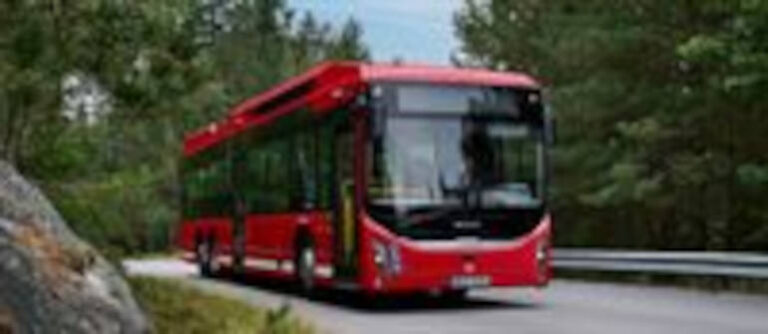
Scania will deliver 91 battery-electric buses to transport operator VR Sweden in one of the largest electric bus deals in Sweden to date, with the vehicles scheduled to enter service in the Södertälje area from June 2027.
The order follows VR Sweden’s 2025 contract win with local public transport authority SL to operate bus services in Södertälje and Nykvarn. Ahead of the start of services, VR Sweden has selected Scania to supply the electric buses and provide long-term support.
The deal is Scania Sweden’s single largest delivery of battery-electric vehicles to date and reflects the growing shift towards zero-emission public transport.
Local production supports local transport
The agreement has a strong local connection, with Scania’s headquarters and production facilities located in Södertälje. The buses will support the ongoing transition towards fossil-free public transport in the region, delivering quieter operation and reduced local emissions in city traffic.
The order includes 91 Scania Fencer f1 BEV buses based on Scania’s battery-electric bus platform, developed and produced in Europe. The fleet will include 32 buses with a 4×2 configuration and 59 with a 6×2*4 configuration. All vehicles will have 445kWh of installed energy.
Anders Frykman, Bus Director at VR Sweden, said the investment would support both emissions reduction and service reliability.
“The investment is an important step in the transition to electrified public transport and enables reduced local emissions, while ensuring attractive and reliable traffic for passengers as well as a good working environment for drivers and maintenance personnel,” said Frykman.
Support beyond the vehicle
The agreement between VR Sweden and Scania extends beyond vehicle delivery. It covers development and planning, preparation for the start of services, vehicle servicing and long-term operational support.
For transport operators and Fleet Managers, this highlights one of the most important lessons in bus electrification: the transition is not just about replacing diesel buses with electric vehicles. Successful deployment also depends on depot readiness, charging strategy, maintenance planning, driver training, service support and operational reliability.
Christopher Svensson, Key Account Manager at Scania Sweden, said close cooperation between the two organisations would be central to the rollout.
“With development and battery assembly in Södertälje, and close cooperation throughout the process, we will offer a solution that is both robust and sustainable,” said Svensson.
Electric buses move into scaled deployment
The order aligns with Scania’s strategy to play a central role in the shift towards sustainable transport, with electric buses becoming a key component of public transport decarbonisation.
When the buses enter service in 2027, they will contribute to lower carbon emissions and improved urban environments in Södertälje and Nykvarn.
For fleet and transport organisations, the scale of the deal shows how electric bus procurement is moving from trials and small deployments into larger, planned fleet transitions. It also reinforces the importance of long-term supplier partnerships when introducing zero-emission vehicles into essential public transport services.




