


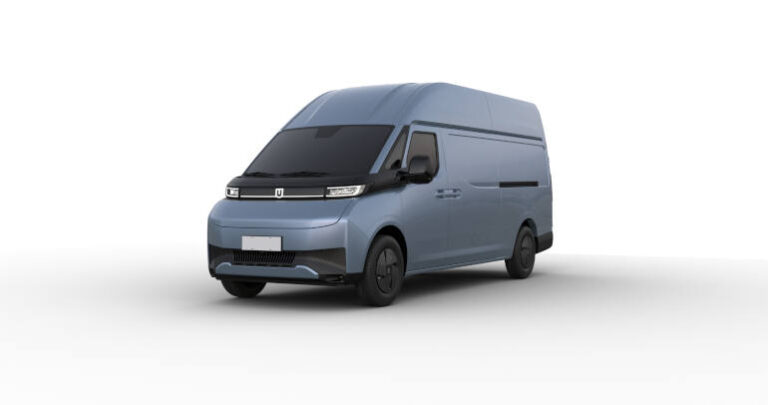
Farizon is expanding its Australian electric commercial vehicle offering with a new super-long-wheelbase, high-roof version of the SV, giving fleet and delivery operators greater cargo capacity without moving away from a fully electric drivetrain.
The new SV SLWB HR joins the existing short- and long-wheelbase models and becomes the largest van in the local SV range. It is aimed at operators that need additional load volume for delivery, trade and fleet applications.
A key feature is the 13m³ cargo area, supported by a load bay measuring 3,695mm long, 1,795mm wide and 1,960mm high. Despite the larger body, Farizon quotes a payload of 1,075kg and a braked towing capacity of 2,000kg.
The SLWB HR is also equipped with a 106kWh NMC battery, providing a claimed driving range of up to 398km on the WLTP cycle.
For fleet operators, that combination of range, payload and cargo volume will be important when assessing whether an electric van can replace an existing internal-combustion vehicle without compromising operational requirements.
Broader choice for electric commercial fleets
The arrival of the new variant comes as Farizon works to broaden its electric commercial vehicle presence in Australia.
The SV range now sits alongside the recently introduced Farizon V7E, giving businesses more options across different vehicle sizes and operating requirements.
Jameel Motors Australia, which distributes Farizon locally, has also revised pricing across the SV range.
The SV SWB LR is now priced from $62,990, the LWB LR from $64,990 and the LWB HR from $69,490. The new SLWB HR is priced at $77,490. Prices are manufacturer suggested retail prices and exclude statutory charges and on-road costs.
Selected variants have received reductions of up to $8,500 as Farizon attempts to lower the initial purchase hurdle for businesses considering electric commercial vehicles.
Adam Lawson, Country General Manager at Jameel Motors Australia, said commercial customers were increasingly looking for electric vehicles that could meet practical operating requirements.
“We’re continuing to see strong interest from businesses looking to transition towards electric commercial vehicles, particularly when the products are designed around real operational requirements,” Lawson said.
Fleet suitability will be the real test
For fleet buyers, the growth in electric van choice is creating more opportunities to match EVs with suitable routes rather than attempting to replace every diesel vehicle with the same solution.
A van offering almost 400km of claimed range and 13m³ of cargo capacity potentially opens the door to applications beyond short urban delivery routes, although real-world suitability will depend on factors including payload, daily kilometres, charging windows and operating conditions.
The revised pricing may also improve the whole-of-life cost equation, particularly for vehicles travelling predictable daily routes where depot charging and high annual utilisation can help offset the higher capital cost traditionally associated with electric commercial vehicles.
Farizon Auto is part of Geely Holding Group and focuses exclusively on electric commercial vehicles for logistics, delivery and commercial transport applications.