

Tesla is aiming to reach 200,000 cumulative vehicle deliveries in Australia during October 2026, as strong Model Y demand and a broader vehicle range support its next stage of growth.
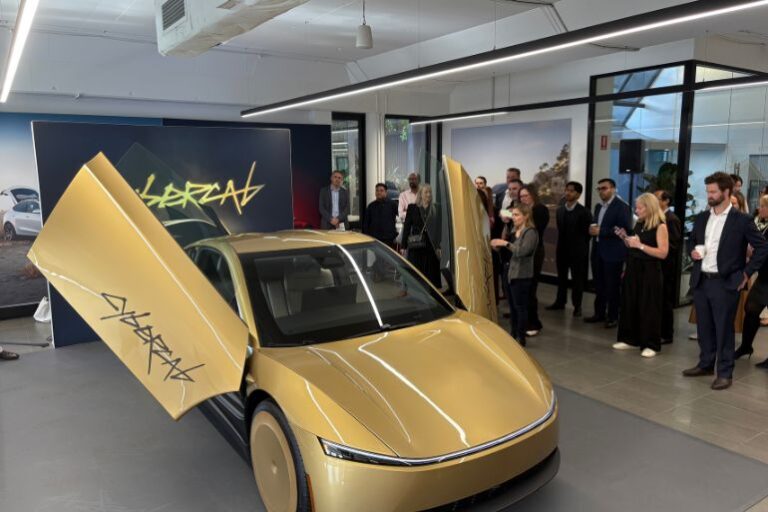
Speaking at a Sydney event for the fleet community, Thom Drew, Country Director (Motors) for Australia & New Zealand at Tesla, outlined a business focused on attracting more customers while strengthening the service, parts and repair infrastructure needed to support them.
Tesla reported 8,072 Model Y deliveries in June and another 4,644 in July. Drew also highlighted Tesla’s position as the top-selling manufacturer in three months of 2026.
For fleet buyers, the story extends beyond delivery volumes. Tesla is widening its product offering and addressing ownership considerations that influence vehicle selection, whole-of-life costs and operational availability.

A broader range opens more doors
The launch of the Model Y L in March added another option to Tesla’s range, while the new Model 3 RWD creates a more accessible entry point for corporate fleets and value-conscious novated lease buyers.
Introduced to the Sydney fleet audience at $45,900 (plus onroads), the Model 3 RWD brings a familiar fleet purchasing approach to the electric vehicle market: selecting a specification that meets the job without paying for features the driver or organisation may not need.
Drew said the vehicle’s appeal extended across customer groups.
“It does cater well to fleet customers, but also private buyers,” he said. “It’s not a stripped vehicle by any means.”
The new variant gives Tesla an opportunity to reach buyers who may previously have considered the brand beyond their budget.
“This is a product that really helps cater and open up EV ownership,” Drew said.
For fleet managers, a wider range creates more flexibility within vehicle policies. Organisations can assess different variants against operational requirements, employee entitlements and replacement budgets while retaining a common vehicle platform.
It also reflects the growing maturity of the EV market. Buyers increasingly have a choice of specifications and price points within a model range, following the purchasing patterns long established with petrol and diesel vehicles.
Keeping the Tesla proposition intact
Drew said the lower entry price of the Model 3 RWD had been achieved while retaining the qualities customers associated with Tesla.
“You’re not losing out on any of that DNA,” he said.
That positioning matters as the business broadens its customer base. An accessible model needs to attract new buyers while delivering an ownership experience consistent with the wider range.
For corporate fleets and novated lease customers, the acquisition price is the starting point. Range, charging access, driver acceptance, insurance and resale performance all contribute to the final assessment.
Tesla’s expanding range gives buyers more options, but the fleet management exercise remains familiar: match the vehicle to its intended use and assess the costs over its operating life.
Supporting a larger Australian vehicle population
Approaching 200,000 cumulative Australian deliveries brings a growing requirement for aftersales support.
Drew pointed to Tesla’s investment in service centres, parts distribution and body repair facilities as part of its commitment to customers over the longer term.
At the time of the interview, Tesla had four Australian body repair locations. Drew said the business had focused on establishing the quality of its repair operation before expanding further, with increasing insurer demand creating a need for additional capacity.
“Our number one goal: great quality repair,” he said.
He also identified keeping insurance premiums down as a priority.
For fleet operators, these are significant parts of the growth story. A vehicle awaiting parts or collision repairs cannot perform its assigned task, and extended downtime can create replacement vehicle costs and disrupt service delivery.
As Tesla’s Australian vehicle population grows, the capacity of its support network becomes increasingly relevant to buyers assessing the brand for larger replacement programs.
Australian customers influence the offer
Drew’s comments also highlighted the role of Tesla’s Australian team in advocating for changes that meet local customer expectations.
The five-year, unlimited-kilometre New Car Limited Warranty is one example of that influence. His discussion of the Model Y L also illustrated how the local business works to secure products suited to Australian demand.
For fleet buyers, that local input matters. Vehicle suitability depends on more than global sales success: operating conditions, annual kilometres, passenger requirements and access to support all shape the purchasing decision.
A manufacturer’s willingness to respond to those needs can influence whether a vehicle progresses from an initial trial to a broader fleet deployment.
Growth brings a wider fleet opportunity
Tesla’s 2026 momentum combines strong Model Y deliveries with a broader product offering and continued investment in ownership support.
The planned October milestone of 200,000 cumulative Australian deliveries would mark the scale of the brand’s presence. The new Model 3 RWD provides another avenue for growth, bringing Tesla into consideration for buyers focused on practical specifications and affordability.
For the fleet community, the next stage will be assessed through everyday performance: how well the vehicles suit their roles, how efficiently they can be maintained and repaired, and what they cost across their working lives.
Tesla’s message to the Sydney audience was that its growth ambitions encompass that complete ownership proposition, alongside the vehicles themselves.