


Ford Australia is building its commercial vehicle electrification strategy around a straightforward principle for fleets: match the powertrain to the job rather than assume every application needs the same technology.
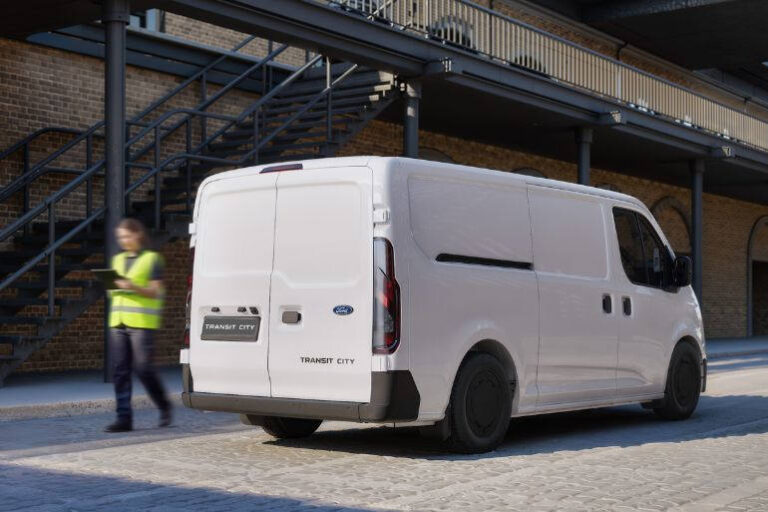
That approach was evident at Ford Uncovered, where the new Transit City joined the E-Transit, E-Transit Custom and Transit Custom plug-in hybrid in Ford’s commercial vehicle line-up. Ford also confirmed the Tourneo people mover would move to plug-in hybrid power.
For Fleet Managers, the significance is the breadth of powertrain choice. Instead of treating electrification as a single whole-of-fleet decision, Ford is positioning different vehicles for different duty cycles.
Different routes need different answers
Transit City has been developed for predictable urban work, with a 56kWh battery sized around Ford’s connected-vehicle data.
Ford’s analysis of more than 2,000 Transit Custom vans found typical urban daily travel averaged 76km, while 90 per cent of routes covered 200km or less. That data helped Ford determine that a smaller battery could meet the needs of many metropolitan operators without adding unnecessary weight and cost.
Karen Larkin, General Manager, Product Marketing at Ford Australia, said maintaining powertrain choice remained important.
“We believe in giving our customers choice.”
For fleets, that creates an opportunity to look beyond the question of whether the entire fleet should transition to battery electric vehicles.
Route length, payload, towing requirements, charging access and vehicle dwell time can instead be assessed vehicle by vehicle. BEVs can be deployed where the operating profile supports them, while plug-in hybrid or other powertrains can remain in applications where the operational requirements are different.
Let the fleet data decide
Ford’s Transit City strategy also reinforces the importance of using operational data before selecting an electric vehicle.
The urban duty cycles Ford identified support the case for a smaller battery in Transit City, but they do not suggest every commercial vehicle will operate in the same way.
Larkin acknowledged that distinction when explaining how Ford arrived at the vehicle specification.
“Based on everything that we know, this is what we think this package is capable of.”
The same approach can be applied by fleet operators.
Vehicles operating stable metropolitan routes with predictable daily kilometres may be obvious candidates for BEVs. Vehicles travelling into remote areas, towing regularly or operating across highly variable distances may require a different solution.
Making those distinctions before procurement can help fleets avoid paying for battery capacity they rarely use while also reducing the risk of selecting an electric vehicle that cannot comfortably complete its required task.
Charging remains a separate consideration
Vehicle selection is only one part of the electrification decision.
While the broader Ford Pro model overseas can include charging support, depot charging is not currently part of the Australian Ford Pro rollout.
Michael Elias, General Manager – Ford Pro Australia, said the local program is prioritising other areas first.
That means fleets considering Ford’s electric commercial vehicles still need to treat charging infrastructure as a separate workstream.
For many operators, the vehicle and charging strategy will need to be developed together. Selecting a BEV without understanding when, where and how it will recharge can undermine an otherwise suitable fleet application.
Electrification without an all-or-nothing approach
Ford’s strategy is less about setting a single deadline for every commercial vehicle to become electric and more about creating enough options for fleets to transition application by application.
That is likely to reflect how many Australian fleets actually replace vehicles.
The challenge for Ford will be maintaining sufficient choice across BEV, plug-in hybrid and other powertrains — and providing those options at price points that allow Fleet Managers to make operationally driven decisions without leaving significant gaps in the range.