


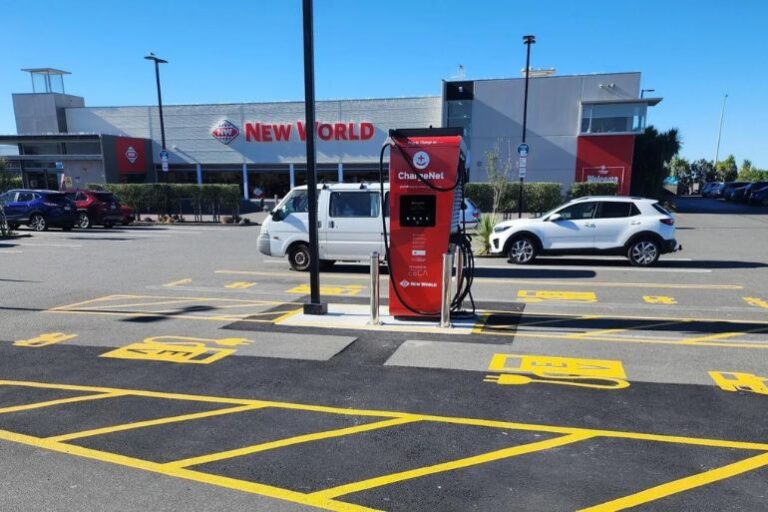
Public charging infrastructure continues to expand across New Zealand, with ChargeNet announcing a major rollout supported by government co-investment.
The company has secured $37.7 million through the Public EV Charging Infrastructure Loans programme, managed by National Infrastructure Funding and Financing, enabling the installation of more than 1,700 new charging points nationwide by 2030.
ChargeNet will match the government funding, creating a large-scale investment designed to accelerate the transition to low-emissions transport while supporting long-term infrastructure sustainability.
For Fleet Managers planning the transition to electric vehicles, the expansion provides a clear signal that public charging infrastructure is becoming more widely available across urban and regional locations.
Charging infrastructure expanding to support fleet operations
The investment reflects growing demand for reliable charging infrastructure as electric vehicle uptake increases and fuel price volatility continues to affect operating costs.
The rollout will focus on expanding access to public charging in urban areas, regional centres and tourism destinations, particularly for drivers and fleets that do not have access to home or depot charging.
Danusia Wypych, CEO of ChargeNet, said the expansion is designed to support both everyday travel and longer-distance journeys.
Danusia Wypych, CEO of ChargeNet, said the company’s rapid chargers are ideal for quick top-ups on the go, while additional charging options will ensure reliable access whether drivers are commuting in cities or travelling between regions.
For organisations operating service vehicles, field teams or regional fleets, the availability of reliable public charging reduces one of the key operational risks associated with electrification — access to energy during the working day.
AC charging to complement the rapid charging network
As part of the expansion, ChargeNet has identified an opportunity to increase the deployment of AC destination charging, which is suited to locations where vehicles remain parked for extended periods.
These locations typically include:
- council facilities
- shopping centres
- recreation and tourism venues
- public car parks
- workplace and community sites
AC charging complements existing DC rapid charging infrastructure, which is designed for shorter stops and higher utilisation.
Danusia Wypych explained the role of both technologies in supporting different charging needs.
Danusia Wypych, CEO of ChargeNet, said AC chargers are ideal for longer stays at destinations such as shopping centres and recreational venues, while rapid chargers enable drivers to return to the road quickly.
For fleet operators, this blended approach supports operational flexibility by allowing vehicles to charge during natural dwell times rather than relying solely on dedicated depot infrastructure.
Partnerships to support local deployment
The new charging points will be delivered in partnership with a range of site hosts, including major retailers such as Foodstuffs, as well as regional and city councils and recreational venues.
This partnership model is becoming increasingly common in the rollout of charging infrastructure, allowing organisations to host charging assets while sharing investment and operational responsibilities.
For local governments and businesses, hosting charging infrastructure can support:
- community access to charging
- fleet electrification planning
- sustainability and emissions reduction targets
- regional economic development
- improved service delivery capability
The funding is structured as a concessionary loan, enabling ChargeNet to deliver infrastructure efficiently while maximising the value of public investment.
A practical step toward fleet electrification readiness
Large-scale infrastructure investment is one of the key enablers of fleet electrification, alongside vehicle availability, workforce capability and operational planning.
Since 2015, ChargeNet has built a national network of more than 520 rapid DC charging points, supporting more than three and a half million charging sessions across the country.
The planned expansion represents a significant increase in capacity and geographic coverage, helping to normalise electric vehicle use across both metropolitan and regional environments.
For Fleet Managers and Sustainability Managers, the practical implication is clear:
Charging infrastructure is becoming more accessible, more reliable and more integrated into everyday operations.
Organisations that continue to build fleet management maturity — through data analysis, infrastructure planning and structured replacement programs — will be better positioned to adopt low and zero emission vehicles as the transport sector continues to transition.