


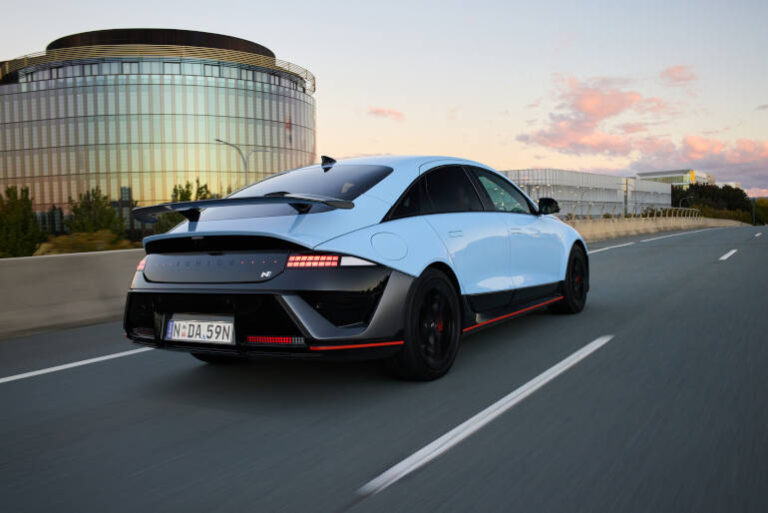
Hyundai has unveiled the new IONIQ 6 N, bringing its high-performance N division into the electric sedan market with a model designed to combine track-focused capability, aerodynamic efficiency, and everyday usability.
The IONIQ 6 N follows the success of the IONIQ 5 N but takes a noticeably different direction. Instead of the upright SUV shape, Hyundai has developed a low, streamlined sedan aimed at drivers wanting a more traditional performance-car experience in an electric vehicle.
The new model features widened bodywork, aggressive aerodynamic styling, a large rear wing, black exterior accents, and signature red highlights associated with Hyundai’s N performance brand. Hyundai says the design changes are functional as well as visual, improving stability, cooling, and aerodynamic performance at higher speeds.
The IONIQ 6 N is expected to use a dual-motor all-wheel-drive setup similar to the IONIQ 5 N, delivering strong acceleration and advanced torque management systems designed to improve handling and driver engagement.
The sedan body style may also provide efficiency advantages over larger performance SUVs. The standard IONIQ 6 already has one of the most aerodynamic shapes in the EV market, and the N version is expected to combine high performance with competitive driving range.
For fleet buyers and novated lease customers, the IONIQ 6 N reflects how quickly the EV market is evolving. Performance EVs are no longer limited to luxury European brands or ultra-expensive niche products. Mainstream manufacturers are now delivering electric vehicles with genuine enthusiast appeal while still offering the lower operating costs and reduced maintenance associated with EV ownership.
The arrival of the IONIQ 6 N also shows how EV marketing is shifting beyond sustainability messaging. Manufacturers are increasingly focusing on driving experience, design, technology, and emotional appeal as competition in the EV market intensifies.
Hyundai’s N division has already established a strong reputation with petrol-powered performance models such as the i30 N. The company is now using electric platforms to redefine performance through instant torque delivery, advanced battery management, software-controlled handling systems, and regenerative braking technology.
The IONIQ 6 N enters a growing segment of high-performance EVs competing for buyers seeking both practicality and excitement. Hyundai appears determined to position the model as a more attainable alternative to premium European performance EVs while maintaining strong everyday usability.
Australian pricing, specifications, performance figures, and local launch timing are expected to be confirmed closer to launch.