


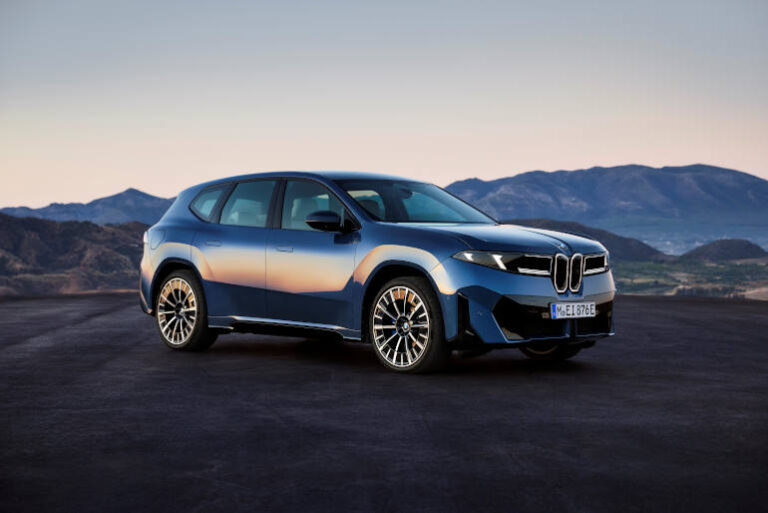
The BMW Group has produced its two-millionth all-electric vehicle, highlighting the rapid growth of EV manufacturing as global automotive brands scale up production to meet increasing demand for low and zero-emission vehicles.
The milestone vehicle was a BMW i5 M60 xDrive sedan built at BMW Group Plant Dingolfing in Germany. The vehicle, finished in Tansanit Blue, will be delivered to a customer in Spain.
The announcement reflects how quickly EV manufacturing has accelerated in recent years. BMW only began series production of all-electric vehicles at Plant Dingolfing in 2021 with the BMW iX. Since then, the site has produced more than 320,000 battery electric vehicles (BEVs), making it one of the company’s key EV manufacturing hubs.
Today, the Dingolfing facility produces a wide range of EV models including the BMW iX, BMW i5 sedan and touring variants, and the BMW i7. In 2025, more than a quarter of all vehicles produced at the plant were fully electric.
BMW said its manufacturing strategy continues to focus on flexibility rather than committing plants to a single drivetrain technology. Under the company’s BMW iFACTORY production approach, combustion engine, plug-in hybrid and battery electric vehicles are produced together on the same production lines.
The company described this “technology-open approach” as central to its production strategy, allowing it to respond to changing market demand across different global regions.
BMW also noted that every German BMW Group production facility now builds at least one fully electric model, reflecting how EV production has moved from specialist programs into mainstream manufacturing operations.
For fleet buyers, the announcement is another sign that vehicle manufacturers are continuing to increase investment in EV production capacity despite ongoing uncertainty in some global markets around incentives, infrastructure rollout and consumer demand.
The scale of BMW’s EV manufacturing growth also demonstrates how premium automotive brands are balancing EV expansion with operational flexibility. Rather than separating EV production into dedicated facilities, mixed-line manufacturing allows manufacturers to adjust production volumes according to regional demand and evolving emissions regulations.
The BMW Group said sustainability remains a core part of its corporate strategy, covering supply chain operations, production processes and vehicle lifecycle management.
In 2025, BMW Group sold 2.46 million passenger vehicles globally across its BMW, MINI and Rolls-Royce brands.




