

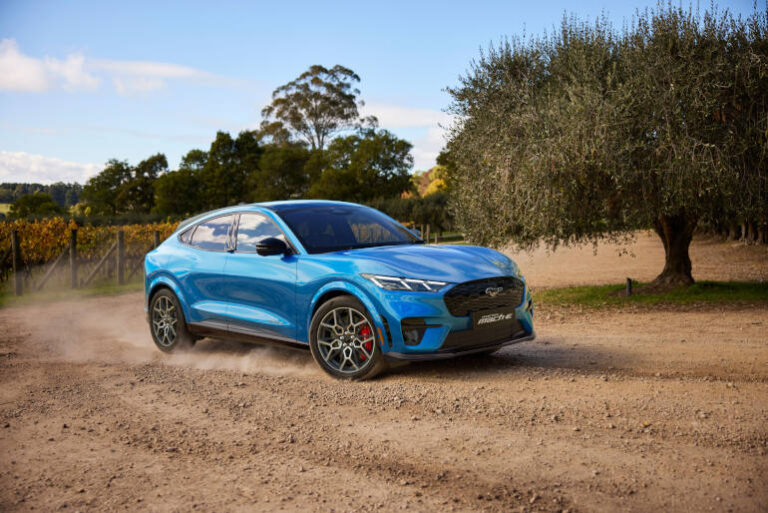
Rising fuel prices are changing the conversation in Ford dealerships, with Australian buyers increasingly looking at electrified vehicles such as the Ford Ranger PHEV and Mustang Mach-E.
Speaking at the launch of the MY26.5 Ford Ranger and Everest, Ford Australia Marketing Director Ambrose Henderson said the recent fuel price increases had triggered a noticeable shift in customer enquiries and showroom traffic.
“Mach-E, our fully electric vehicle, has seen a huge surge in inquiry since the fuel crisis has incurred over the last couple of months,” Henderson said.
“We’re really excited about the increased inquiry and the buzz that is being generated about that, and the number of customers coming in to test drive that vehicle.”
The increased interest in electrified vehicles comes as many Australian motorists look for ways to reduce their fuel bills and manage total vehicle operating costs.
According to Henderson, Ford’s plug-in hybrid Ranger is also benefiting from this trend.
“Similarly, Ranger hybrid over March and April has seen a surge in demand,” he said.
The level of interest has been significant enough to reduce available stock across the dealer network.
“So much so that we have seen our stocks decrease across the country. We still have limited stocks of Ranger hybrid around the country, so really encourage our customers to chat to their dealers if they’re looking for one, so they can secure their unit,” Henderson said.
Ford is now working to increase supply to meet customer demand.
“We’re working as fast as we can to bring more production in of Ranger hybrid, so that customers can continue to buy that vehicle,” he said.
While fuel prices are driving interest in electrified vehicles, Henderson said Ford’s focus remains on delivering a compelling total cost of ownership proposition rather than simply competing on purchase price.
“What our customers need and want is a total cost of ownership story that goes far beyond just the initial price that they buy a car on,” he said.
“That includes the backup from a parts and service perspective, and a network of 180 dealers around the country to support those customers when they’re out doing what they do in Rangers and Everest.”
Henderson also highlighted Ford’s broader approach to reducing running costs through alternative fuels. Earlier this week Ford announced that next-generation Ranger, Everest and Transit vehicles can operate on renewable diesel (HVO), providing another option for fleet operators looking to reduce fuel-related emissions without changing vehicles.
“The fact that our cars can run on this alternative fuel is just another proof point” of the innovation being delivered by Ford’s Australian engineering and product teams, Henderson said.
The growing demand for electrified vehicles comes as Ford continues to strengthen its position in the Australian market. Henderson noted that Ranger remains Australia’s top-selling vehicle, while Everest is on track to retain its position as the country’s best-selling large SUV.
For fleet buyers, the recent surge in enquiries suggests that fuel prices remain a powerful factor influencing vehicle purchasing decisions. While diesel-powered utes continue to dominate many fleet applications, rising interest in the Ranger PHEV and Mustang Mach-E indicates that more customers are actively exploring lower-cost alternatives for at least part of their vehicle fleet.
As fuel costs remain volatile, Ford appears well positioned to capitalise on growing demand across both fully electric and plug-in hybrid segments.