

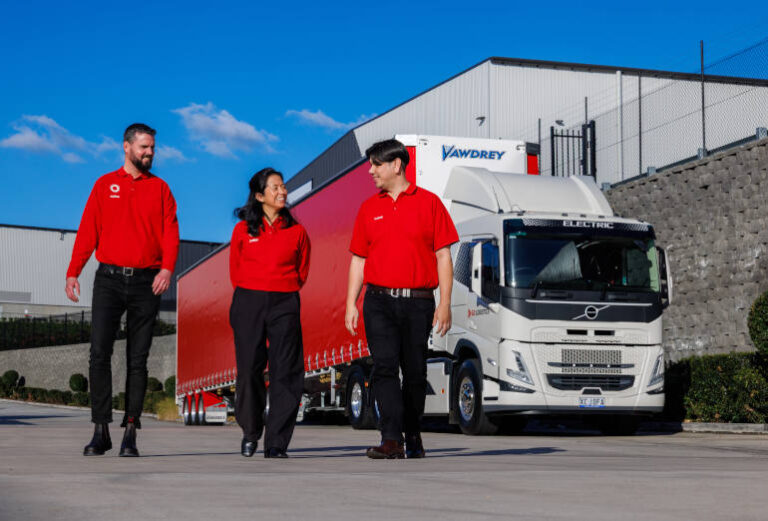
Coles is expanding its electric vehicle trials into heavy freight, introducing three Volvo electric prime movers into its New South Wales distribution network in partnership with S2 Logistics.
The electric trucks will transport products from suppliers into Coles distribution centres and are capable of pulling B-double trailer combinations.
Their introduction represents an important operational test for battery-electric heavy vehicles in Australia, where freight tasks involving high payloads, long operating hours and strict delivery schedules are significantly more demanding than urban delivery applications.
More than 60 tonnes of tailpipe emissions avoided per truck
Based on expected annual operations, Coles forecasts that each electric prime mover will avoid the use of more than 20,000 litres of diesel every year when compared with an equivalent diesel vehicle.
This is expected to prevent more than 60 tonnes of associated tailpipe carbon dioxide emissions per truck annually.
Across the three vehicles, the project could therefore avoid more than 60,000 litres of diesel and approximately 180 tonnes of tailpipe carbon dioxide emissions each year, subject to how the trucks are ultimately deployed.
The figures demonstrate the potential environmental benefit of replacing diesel prime movers with electric alternatives on suitable transport routes.
However, the operational data collected through the project may prove equally valuable.
Testing electric trucks in real freight operations
Coles Head of Primary Freight, Dwayne Fernandez, said the introduction of the electric prime movers would help the company understand how lower-operational emissions technology could be incorporated into its transport network.
“Moving products safely and efficiently across our supply chain is a significant operation, and we are continuing to explore technologies that have the potential to reduce operational transport emissions while maintaining the reliability our suppliers depend on,” he said.
The ability to pull B-double trailers is a significant part of the trial.
While battery-electric trucks are increasingly being introduced for metropolitan delivery work, B-double operations create additional demands relating to vehicle mass, energy consumption, route planning, charging infrastructure and driver productivity.
The Coles project will provide practical information about how electric prime movers perform when completing genuine supply chain tasks rather than controlled demonstrations.
“These electric prime movers will give us valuable insights into how heavy electric vehicles perform in day-to-day operations, including on B-double routes,” Fernandez said.
“This will help inform how we invest in and scale transport solutions with lower operational emissions across our network over time.”
Operational knowledge must come before scale
For Fleet Managers and Sustainability Managers, the project reinforces the importance of introducing electric trucks through structured operational trials.
Purchasing an electric prime mover is only one part of the transition. Organisations also need to understand the daily kilometres travelled, payloads, route gradients, vehicle dwell times, charging windows and the availability of electrical infrastructure.
These factors determine whether an electric truck can complete its assigned task reliably without creating additional operational risks.
Charging also needs to be integrated into the transport schedule. A vehicle that returns to a depot for several hours between shifts may be suitable for depot charging, while a truck operating continuously may require a different charging strategy or changes to how the task is scheduled.
The trial should help Coles and S2 Logistics identify where electric prime movers provide the strongest operational and emissions benefits, as well as where further infrastructure, technology or changes to freight planning may be required.
Building the business case for electric freight
The avoided diesel consumption will also provide information for future whole-of-life cost assessments.
Although electric trucks generally involve a higher initial purchase price, they can offer lower energy and maintenance costs. The commercial outcome will depend on vehicle utilisation, electricity prices, charging infrastructure costs, maintenance requirements and how effectively the vehicles are integrated into daily operations.
Finance Managers will need reliable operating data before supporting larger investments in electric heavy vehicles and charging infrastructure.
Projects such as the Coles trial can provide evidence about energy consumption, charging demand, vehicle availability and maintenance performance. This data can then be used to refine financial models and compare electric trucks with diesel alternatives on a like-for-like operational basis.
Part of a broader electric vehicle program
The new trucks form part of Coles’ broader work to explore electric vehicle technology across its operations.
This includes investigating lower-emissions freight transport and providing electric vehicle charging for customers at selected stores.
Rather than treating the introduction of electric trucks as a simple vehicle replacement exercise, Coles is using the project to build practical knowledge about how the technology performs within its supply chain.
For other organisations considering electric heavy vehicles, the approach provides a useful example. The first step is not necessarily to electrify every route. It is to identify suitable tasks, collect reliable operational data and gradually build the fleet management capability required to support wider adoption.
The three Volvo electric prime movers will give Coles and S2 Logistics an opportunity to test battery-electric freight technology under genuine operating conditions.
More importantly, the lessons from the project could help shape how Coles invests in lower-emissions transport across its distribution network in the years ahead.