


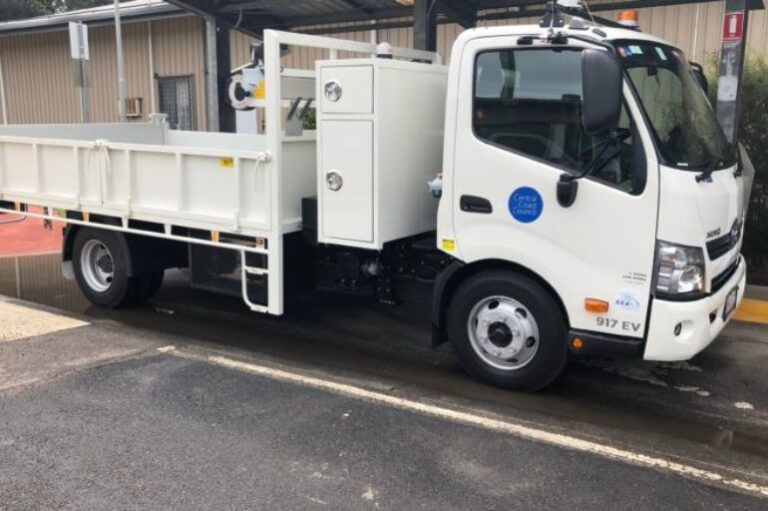
Central Coast Council now has 153 battery electric and hybrid vehicles in service as it continues a gradual transition away from conventional petrol and diesel models.
The electrified vehicles represent around 11 per cent of Council’s total fleet of 1,386 vehicles. The mix includes battery electric passenger vehicles, hybrid passenger vehicles, hybrid trucks and a hybrid 20-tonne excavator.
The latest figures show Council has added 24 battery electric and hybrid vehicles since 2022, when it reported an electrified fleet of 129 vehicles.
The transition is being managed through normal replacement cycles, with each hybrid or electric vehicle replacing a conventional vehicle that has reached the end of its service life.

Transition began with 10-year plan
Central Coast Council began developing its long-term fleet transition approach in 2019 under then Mayor Jane Smith.
At its meeting on 25 March 2019, Council adopted six pledge actions through the national Cities Power Partnership Program to reduce greenhouse gas emissions.
The commitments included installing rooftop solar systems on Council buildings, reducing wastewater emissions while generating energy, improving landfill gas capture, introducing energy-efficient street lighting, supporting electric vehicle uptake and assisting community groups with local energy initiatives.
Fleet electrification was therefore positioned as one component of a broader emissions reduction program rather than a standalone vehicle procurement exercise.
Fuel costs strengthened the case for change
In a 2022 update, Council said fuel costs for its conventional fleet had increased sharply during the previous 12 months and were expected to continue rising.
Council said the transition would be undertaken in a responsible, year-on-year manner rather than delaying replacement decisions until a future point when many other fleets could be competing for electric vehicles at the same time.
“Council also expects this impact will see the demand for EVs in the wider community grow,” Council said at the time.
By 2022, the fleet included a hybrid 20-tonne excavator described as a first for NSW local government, a battery electric tipper truck, six hybrid trucks, nine battery electric passenger vehicles and 112 hybrid passenger vehicles.
Council had also installed charging stations at several operational sites, including systems capable of scheduling charging during off-peak periods.
Whole-of-life costs guide replacement decisions
Central Coast Council’s approach highlights the importance of assessing more than the initial purchase price when considering lower-emission fleet assets.
Replacement decisions are based on whole-of-life cost assessments covering factors such as state contract pricing, acquisition costs, anticipated residual values, servicing availability and operational reliability.
Council said hybrids currently provide the most practical balance between reducing emissions and maintaining financial sustainability.
“Council continues to review and actively consider electric vehicle options as technology, infrastructure and market conditions evolve,” Council said on 15 April 2026.
The approach recognises that different vehicle applications may require different transition pathways. Passenger vehicles can often be replaced with battery electric or hybrid models more readily than specialised plant, trucks and equipment that operate for long periods or require significant payload, towing or remote-area capability.
Fuel security remains an operational issue
The value of reducing fuel dependence has been reinforced by current concerns about fuel prices and distribution.
Central Coast Council, along with other councils across NSW, has been asked to provide information about its fuel storage capacity, reserves and the fuel intensity of its operations.
Local Government NSW president Darcy Byrne said councils were dealing with the impact of the fuel crisis and the effects it was having on communities.
“At the request of the Treasurer, LGNSW is seeking data from all councils regarding the current distribution challenge,” he said.
“Although this is particularly relevant for rural, regional and remote councils, I encourage all councils to take part in our short survey collating information specific to your community on storage capacity, fuel reserves and fuel intensity of council operations.”
Byrne said distribution problems and rising prices would affect councils differently depending on their size, location and operating requirements.
“But it’s important that we speak with one voice when it comes to ensuring our sector’s essential services are prioritised for fuel distribution, as required,” he said.
For Central Coast Council, the electrification of 11 per cent of its fleet will not remove its exposure to fuel supply and pricing risks. However, the staged transition demonstrates how vehicle replacement planning, charging infrastructure and whole-of-life cost analysis can gradually reduce fuel consumption without requiring the fleet to be replaced all at once.