

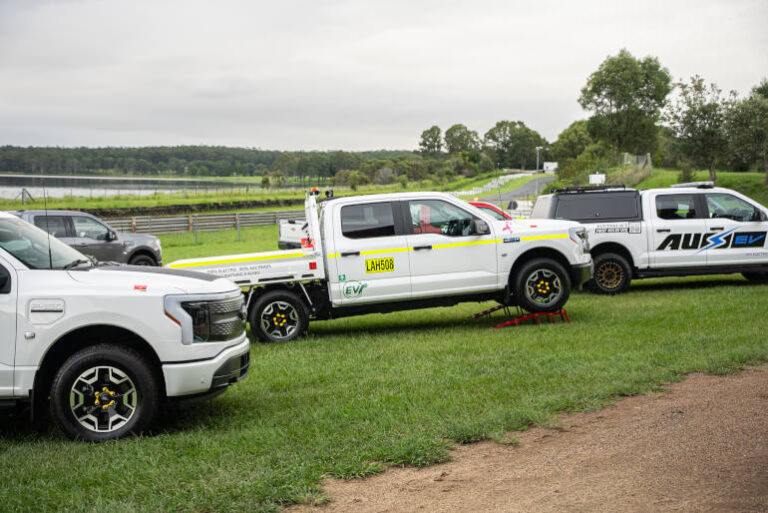
For fleet operators in remote and regional Australia, the Ford F-150 Lightning is proving that whole of life cost (WOLC) benefits extend far beyond fuel savings and emissions reductions. With its fully electric drivetrain and robust upfit capabilities, the locally converted right-hand drive version offers significant operational advantages—particularly in how it reduces vehicle downtime and associated labour costs.
Edward Kocwa, CEO of Bosscap Group (parent company of AUSEV), says that downtime is often the hidden expense in fleet operations, especially in mining and construction sectors operating hundreds of kilometres from the nearest dealership. “Maintenance isn’t just the cost of servicing the vehicle. There’s a real cost to having a team member take the vehicle in, wait, and then return. That’s time they’re not being productive—and if two people are involved, the cost doubles,” Kocwa explains.
In some cases, Kocwa has seen remote fleet operators travel up to 400 km just to service a vehicle. “That’s a full-day job for one or two employees, and it pulls the vehicle off the road as well. It’s a big hit to efficiency,” he said.
The F-150 Lightning’s EV platform dramatically reduces these service requirements. With fewer moving parts, no oil changes, and regenerative braking systems that reduce wear, servicing needs are lower and less frequent. According to Kocwa, this translates directly into measurable savings: “Fleets doing more than 20,000 kilometres a year start to see real WOLC advantages. We estimate operational savings of $10,000 to $12,000 per year compared to a traditional diesel ute.”
That figure doesn’t even include vehicle-to-grid (V2G) capability, which is now certified for use with Essential Energy in New South Wales. This allows the vehicle to act as a mobile power source—another layer of cost-saving functionality, particularly for depots and worksites during outages.
The Lightning’s large battery capacity—up to 144 kWh in the extended range model—also ensures it meets the range requirements of most regional operations. But as Kocwa points out, the standard range battery (98 kWh) is often more than sufficient. “Most fleets aren’t doing more than 300 km a day. The standard range battery encourages a behavioural shift toward charging regularly, which improves fleet reliability.”
Upfit challenges have also been addressed through extensive local development. Unlike previous models with imported trays and accessories, the mining-spec F-150 Lightning has been built with Australian conditions in mind—meeting regulatory requirements and integrating seamlessly with fleet safety systems such as blind-spot monitoring and ADAS features.
When WOLC is viewed through the lens of productivity, not just purchase price, the F-150 Lightning stands out. Reduced servicing, less employee downtime, fewer disruptions, and the opportunity to use renewable power all add up to a smarter investment for regional fleet managers.
As Kocwa puts it: “It’s not just an EV with big towing capacity—it’s a tool to improve operational efficiency. The downtime savings alone make it a serious contender for fleets working outside the metro bubble.”