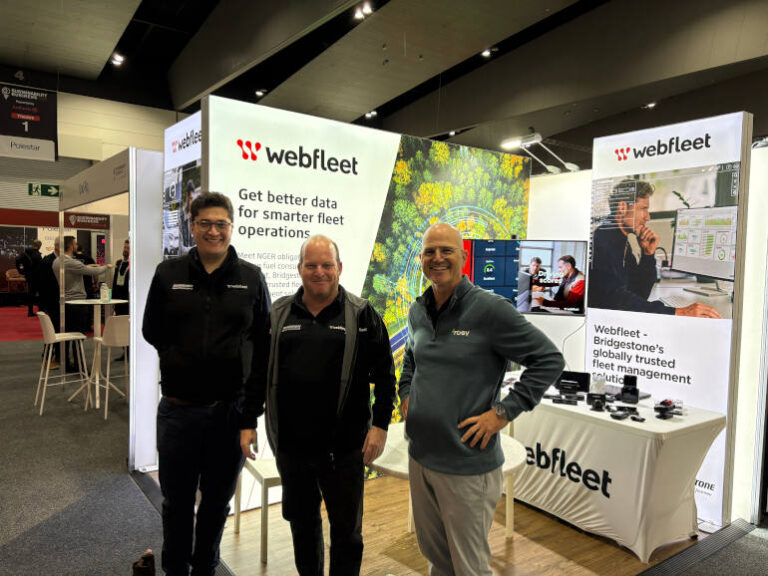
For many Fleet Managers, Roev has become synonymous with electric vehicle transition planning. But according to the company’s leadership, that perception only tells part of the story.
While Roev has built a strong reputation helping organisations navigate fleet electrification, the company says its broader mission is helping fleets manage energy across every vehicle type, whether that energy comes from petrol, diesel or electricity.

Speaking with Fleet News Group at Sustainability Business Live 2026, Robert Dietz, Co-founder and CEO at Roev, said the market often overlooks the company’s wider capabilities because of its focus on EV adoption.
“I think it’s a bit of a misnomer that we’re just an EV transition tool,” said Dietz. “We’re basically a fleet energy management system.”
The distinction is important because, despite growing EV sales, most fleets will continue operating mixed-energy environments for many years to come.
“The reality is for the next 10, 15, 20 years, we’re talking about multi-fuel,” Dietz explained. “So you’re talking about petrol and diesel and electrons.”
According to Dietz, successful fleet decarbonisation is not simply about replacing internal combustion engine vehicles with EVs. Instead, it requires a deeper understanding of how energy is consumed across the entire fleet.
“Yes, we’ve leaned in heavily onto the electron side and can help that transition, but it doesn’t mean we can’t provide, and shouldn’t be providing, value on the diesel and petrol that most fleets rely on.”
That broader approach was recently demonstrated through Roev’s work with a Webfleet customer operating a large national fleet.
Using Roev’s analytics platform, the company identified multiple fuel anomalies that had previously gone unnoticed. By combining fuel card data with telematics information, the fleet was able to investigate unusual fuel transactions and identify opportunities to reduce unnecessary expenditure.
The example highlights a challenge facing many organisations. While sustainability strategies often focus on future vehicle purchases, significant operational savings can frequently be achieved by better understanding the vehicles already in service.
For fleets operating hundreds of vehicles, fuel remains one of the largest operating expenses. Improving efficiency, identifying waste and understanding energy consumption patterns can deliver immediate financial benefits while supporting longer-term sustainability goals.
Dietz believes these improvements can also help organisations accelerate their transition plans.
“If you’re talking about a fleet of 500, maybe they have 30 vehicles that are EVs right now,” he said.
“The reality is if you can help them identify savings on the petrol and diesel side, that actually helps their bottom line, which then maybe they can invest more into the EV transition side of things.”
The comments reflect a growing shift in fleet management thinking. Rather than treating electrification as a standalone project, leading organisations are increasingly viewing energy management as part of a broader operational strategy.
This is particularly relevant for fleets with a diverse mix of passenger vehicles, light commercial vehicles, trucks and specialised equipment where a single technology solution may not suit every application.
For those organisations, the challenge is not choosing between diesel and electric. It is understanding how all energy sources are being used and where improvements can be made.
Dietz believes that is where Roev’s value proposition sits.
“Multi-fuel analysis is kind of where we live,” he said. “I think because we lean so heavily on the EV side, people only see us as that, but there’s lots of actual value on the ICE side as well.”
As fleet operators continue balancing emissions reduction targets with cost pressures and operational requirements, tools that provide visibility across every energy source may become increasingly important.
The transition to lower-emission transport is underway, but for most fleets it won’t happen overnight. In the meantime, managing petrol, diesel and electricity together may prove just as important as deciding what powers the next vehicle purchase.