

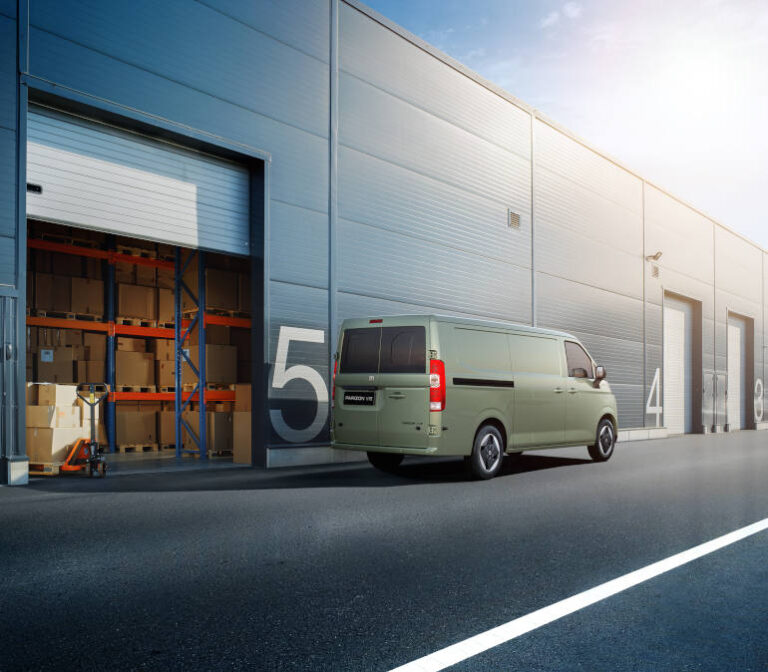
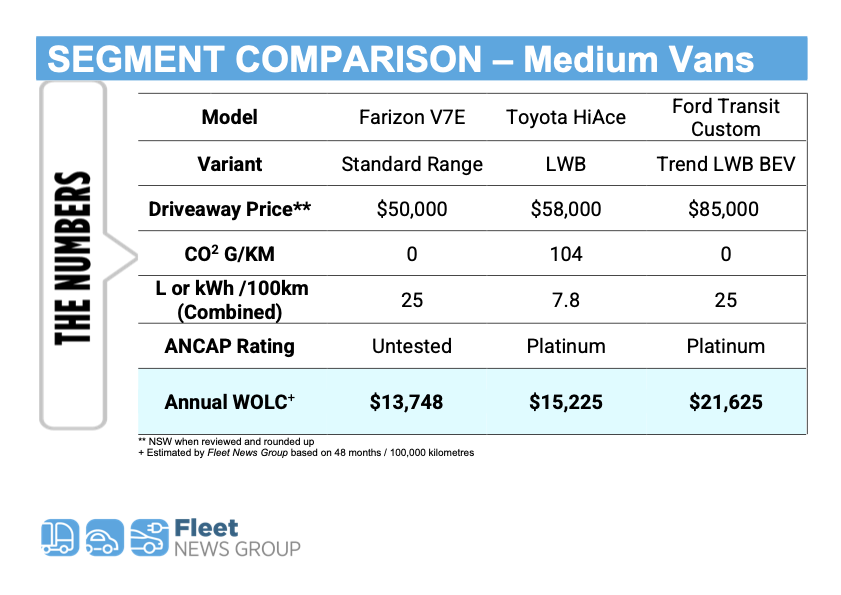
The Australian electric van market has reached a new milestone with the launch of the Farizon V7E — a medium electric van priced below $50,000 drive-away. For Fleet Managers and novated lease buyers, the headline is simple: this is the first time a medium-segment electric van has entered the market at a price point that competes directly with diesel alternatives.
Arriving in showrooms from May 2026, the Farizon V7E starts at $49,990 drive-away, setting a new benchmark for affordability in the electric commercial vehicle segment.
That single number is likely to shift procurement conversations across fleets, particularly for organisations under pressure to reduce emissions without increasing capital costs.
A new benchmark on price and emissions
For several years, the transition to electric vans has been slowed by one key barrier — upfront cost. While whole-of-life savings from lower fuel and maintenance have been widely recognised, many Fleet Managers have struggled to justify higher purchase prices when compared to established diesel models.
The Farizon V7E changes that equation.
By launching below the psychological $50,000 threshold in the medium van segment, it positions electric mobility as a practical option rather than a premium one. In emissions terms, it also provides a straightforward pathway for fleets looking to reduce their carbon footprint without waiting for new infrastructure or policy changes.
This is particularly relevant for urban delivery fleets, local government operations, and service-based businesses where daily duty cycles suit electric vehicles.
Built for everyday commercial work
Price alone would not matter if the vehicle could not perform the job. The V7E has been designed around typical fleet requirements, offering payload and cargo capacity comparable to traditional internal combustion engine vans.
The new model delivers:
- Payload capacity: Over 1,300kg
- Cargo volume: 6.95m³
- Powertrain: Fully electric
- Target use: Urban delivery and service operations
These specifications place the V7E squarely in the mainstream of the medium van category, rather than as a niche or experimental product.
According to the distributor, the vehicle was developed to match the expectations of commercial operators in terms of usability and day-to-day reliability.
Adam Lawson, Country General Manager at Jameel Motors Australia, said the vehicle reflects changing expectations in the commercial vehicle market.
“The V7E has been developed to meet the real expectations of commercial vehicle operators — capability, value and dependable day-to-day usability,” he said.
Why this launch matters for fleets
From a fleet management perspective, this launch is less about a single vehicle and more about a market turning point.
For years, electric vans have been positioned as the future. The V7E suggests that future has arrived in a form that fits standard procurement models.
Three implications stand out:
1. Electric vans are entering the mainstream price band – Fleet buyers can now compare electric and diesel vans on a near-like-for-like purchase price basis.
2. Emissions reduction becomes operational, not aspirational – A sub-$50,000 electric van makes it easier to meet sustainability targets without major budget increases.
3. The competitive response will follow quickly – Other brands in the medium van segment will be forced to review pricing strategies, accelerating the shift to lower-emission vehicles.
For organisations working through fleet decarbonisation plans — particularly those guided by whole-of-life cost and utilisation frameworks — this type of pricing shift is often the trigger point for change.
The start of a new phase in the van market
The Farizon V7E is unlikely to be the last electric van to break the $50,000 barrier. But it may be remembered as the one that made electric vans financially accessible to mainstream fleet buyers.
In practical terms, this launch signals the start of the next phase of fleet electrification — where price parity begins to replace policy incentives as the primary driver of adoption.
For Fleet Managers reviewing replacement cycles over the next 12 to 24 months, the conversation has shifted from “Can we afford to go electric?” to “Why would we stay diesel?”
- Foton and Ampol Target Electric Truck Charging
 Foton Mobility Distribution (FMD) and Ampol have signed a Memorandum of Understanding to explore charging solutions for electric truck fleets, with a focus on helping operators charge at depots, commercial hubs and public charging sites. The collaboration will investigate charging options across Ampol’s AmpCharge public network and private facilities for FMD’s fleet, logistics and business
 - Ausgrid’s charging strategy goes well beyond the depotInstalling chargers at the depot might be the obvious starting point for fleet electrification. For Ausgrid, it wasn’t going to be enough. As the electricity network continues electrifying passenger vehicles, vans and trucks, it has developed a charging strategy designed around how employees actually use fleet vehicles. Speaking during the Fleet News Group Awards finalists
- Home Charging Enters a New Growth PhaseEvnex has passed 20,000 connected charger installations across Australia and New Zealand, with rapid growth reflecting the shift of home EV charging from an early-adopter product to mainstream infrastructure. The Christchurch-based manufacturer shipped its first charger in 2017. While reaching the first 10,000 installations took eight years, the next 10,000 were added in just nine
- Ampol’s $225 million Evie deal puts a new value on public EV chargingAmpol’s proposed $225 million acquisition of Evie Networks could prove to be a significant milestone for Australia’s EV charging sector, putting a substantial transaction value on a public charging network that was built well before electric vehicles became a mainstream consideration for Australian fleets. Ampol Energy has entered into an agreement to acquire 100% of
- A Charger That Powers Up Isn’t Finished: Why Commissioning Matters for Fleet EV ChargingAn EV charger can be installed, connected and apparently operating — and the charging system can still be wrong. That is one of the more important lessons from the Local Council EV Integration Project involving Wyndham, Brimbank and Moonee Valley councils. As fleet charging installations become larger, depots are adding not only chargers but load