


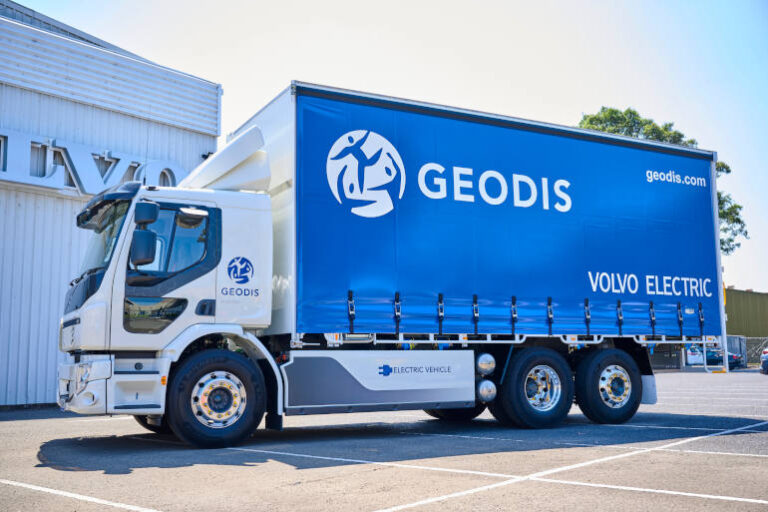
Australia’s electric truck industry has released a five-point plan aimed at removing barriers that are slowing the transition to zero-emission freight vehicles, arguing that policy and regulation are now the biggest obstacles to adoption rather than the technology itself.
The Electric Vehicle Council’s new ELECTruck: Powering Australia’s Trucks with Australian Energy report outlines a series of reforms designed to improve the business case for electric trucks, expand charging infrastructure and unlock greater utilisation of vehicles already operating on Australian roads.

The report comes as fleet operators face increasing pressure to reduce emissions while managing rising fuel costs and growing expectations from customers, investors and governments around sustainability performance.
According to the Electric Vehicle Council, Australia’s electric truck fleet is currently being underutilised because regulations originally developed for diesel-powered vehicles continue to apply to battery-electric trucks, despite their significantly lower noise and emissions profiles.
Julie Delvecchio, Chief Executive Officer at the Electric Vehicle Council, said Australia risks missing the benefits of freight electrification if regulations fail to keep pace with technology.
“Australia has invested in the cleanest, quietest delivery technology ever built – and then locked it out of the very hours where it would make the biggest difference,” said Delvecchio.
“A rule designed to solve a diesel problem is now blocking the very technology that solves it.”
Five Priorities for Government
The report identifies five areas where industry believes governments can accelerate the deployment of electric trucks.
The recommendations include:
- Streamlining electric truck incentives through simple point-of-sale programs.
- Removing noise restrictions that prevent electric trucks from operating during off-peak periods.
- Developing a national heavy vehicle charging infrastructure roadmap.
- Introducing a two-tonne payload concession to offset battery weight.
- Improving access to local roads and freight routes for electric trucks.
For fleet operators considering electrification, several of these reforms address common operational concerns including payload capacity, vehicle utilisation and charging availability.
Infrastructure Remains a Key Challenge
One of the strongest messages in the report is the need for a coordinated national approach to heavy vehicle charging infrastructure.
While countries such as the United Kingdom have committed significant funding towards heavy vehicle charging networks, the Electric Vehicle Council argues Australia has yet to develop a comprehensive strategy for supporting the growth of electric freight transport.
The lack of charging certainty remains one of the most frequently cited barriers by fleet managers evaluating electric truck deployments, particularly for larger vehicles operating across regional and interstate routes.
The report notes that electric truck sales remain at an early stage in Australia, accounting for just 0.7 per cent of heavy vehicle sales in 2025. A total of 630 electric trucks and 340 electric vans were sold during the year.
Reducing Dependence on Diesel
Beyond emissions reduction, the report highlights the potential role electric trucks could play in improving Australia’s energy security.
Cameron Rimington, Senior Policy Officer – Heavy Vehicles at the Electric Vehicle Council, said every electric truck introduced into a fleet reduces dependence on imported diesel.
“An electric truck can displace up to 45,000 litres of diesel per year,” said Rimington.
“Scale that to 50,000 trucks and that’s 2.25 billion litres of diesel no longer imported, worth almost $5 billion at current prices.”
For organisations developing fleet decarbonisation plans, the report reinforces the growing view that electric trucks are becoming a practical solution for many urban and regional freight applications. However, industry leaders argue that achieving meaningful scale will require governments to remove regulatory barriers and provide the infrastructure framework needed to support widespread adoption.
The report follows an open letter signed by more than 45 organisations across the transport, energy and logistics sectors, including Volvo Trucks, Daimler Truck, IKEA, DHL, Tesla, ABB, JET Charge, Kempower and Fortescue, calling for coordinated national action on heavy vehicle electrification.
As more fleets move from pilot projects to operational deployments, the focus is increasingly shifting from vehicle technology to the policies, infrastructure and operational settings that will determine how quickly Australia can electrify its freight sector.