


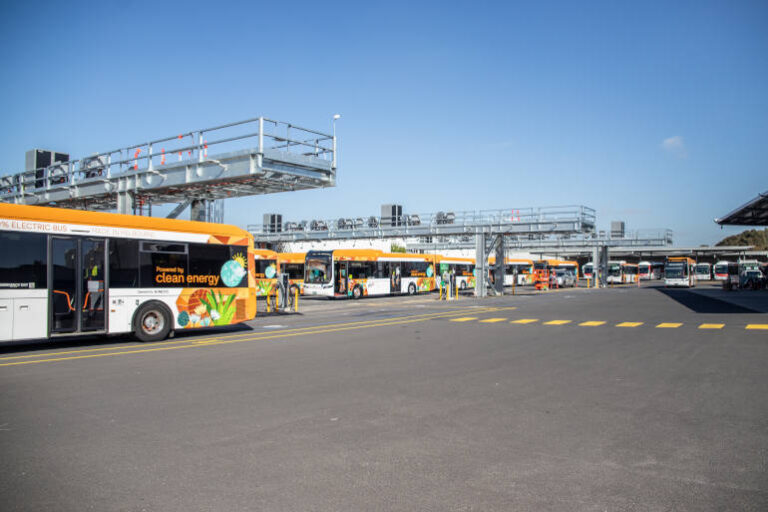
Kinetic has completed a major electrification upgrade at its Sunshine West bus depot in Melbourne’s west, preparing the site to operate 60 zero-emission buses by the end of 2026.
The project increases the number of electric buses that can be charged at the depot from 24 to 66, while the underlying infrastructure has been designed to support as many as 82 buses as the fleet continues to grow.
For fleet operators planning a staged transition to electric vehicles, the project provides an example of designing charging infrastructure beyond immediate requirements rather than rebuilding capacity each time additional vehicles are introduced.
Kinetic Managing Director Australia Matthew Campbell said the additional capacity had been deliberately built into the project.
“We have built in headroom deliberately. The infrastructure here can support more zero-emission buses than we will have at the depot this year, so we are ready as more arrive.”
The upgraded depot will support zero-emission buses operating on routes 215, 216, 220, 223, 232 and 429, along with some Fisherman’s Bend to Melbourne CBD services. Twenty hybrid buses will remain based at Sunshine West to operate the 901, 902 and 903 orbital routes, which are among the longest services in Melbourne’s bus network.
Charging becomes a fleet management system
The Sunshine West project also demonstrates how depot electrification increasingly involves more than installing chargers.
The upgrade includes automated charging technology previously introduced at Kinetic’s Heatherton depot, with load management software controlling how charging is distributed across the site overnight.
Rather than every vehicle drawing maximum power at the same time, the system manages charging within the electrical capacity available at the depot while ensuring buses are ready for morning operations.
This approach will become increasingly important for fleet operators electrifying larger numbers of vehicles, where managing available power can be just as important as the number of chargers installed.
The first stage of the Sunshine West project includes three overhead charging gantries carrying 38 charge points, with capacity for up to 54. Two fast chargers provide opportunity charging, while a second electrical kiosk increases the available power supply.
Kinetic has previously installed similar gantry charging infrastructure at its Glenfield depot in Auckland and at Preston and Heatherton in Melbourne.
Existing depots can be electrified
Another important aspect of the Sunshine West project is that it involved upgrading an operating bus depot rather than constructing an entirely new facility.
Campbell said Sunshine West and Heatherton demonstrated what could be achieved by progressively upgrading existing sites.
“Alongside Heatherton, Sunshine West shows what can be achieved by upgrading depots already in service, working closely with the Victorian Government and with our building and bus manufacturing partners.”
Sunshine West was one of Victoria’s first depots to charge electric buses and was originally electrified under Kinetic’s Metropolitan Bus Franchise. The charging operation uses renewable electricity from the grid, supported by more than 300 solar panels installed at the depot.
Kinetic now operates more than one-third of Melbourne’s public bus network, with 64 routes across the city following the commencement of its Metropolitan Bus Franchise in February 2022 and the Metropolitan Zero Emission Bus Franchise in July 2025.
The Sunshine West upgrade highlights a challenge that will increasingly face large fleet operators moving to battery-electric vehicles: vehicle procurement may be the most visible part of electrification, but depot power, charging management and future capacity ultimately determine how quickly an electric fleet can scale.




