

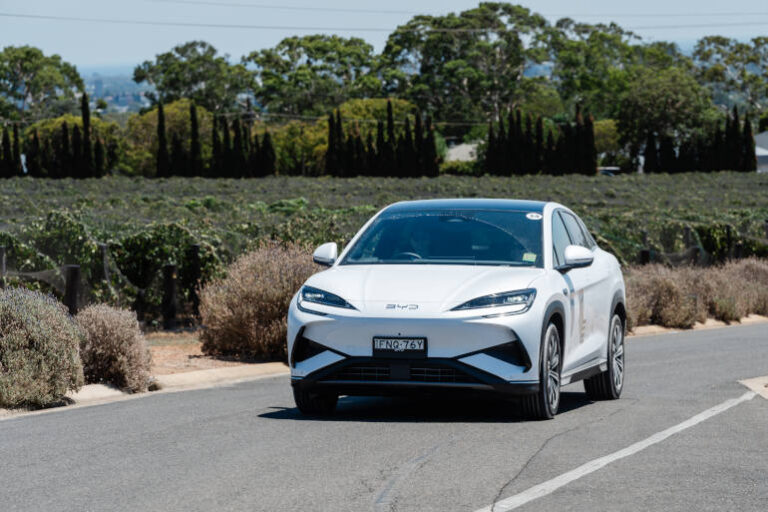
Australia’s new-car market delivered another clear signal in August that electric vehicles are moving into the mainstream, with battery electric vehicle sales reaching their highest monthly level on record.
VFACTS recorded 100,939 new vehicles in August, up 0.4 per cent on the same month last year, while year-to-date sales reached 811,388. But the headline number was the surge in battery electric vehicles.
Across all reporting sources, 27,089 BEVs were sold during August, representing 24.9 per cent of the total new-vehicle market and an increase of 171 per cent compared with August 2025.
For fleet buyers, novated leasing providers and employers planning future vehicle policies, the significance is becoming difficult to ignore. BEVs are no longer a small niche sitting beside the mainstream market. In August, they represented almost one in four new vehicles sold.
FCAI chief executive Tony Weber acknowledged the scale of the change.
“The sustained level of BEV sales, together changing brand preferences, shows how quickly consumer choice and competition are reshaping Australia’s new-vehicle market,”
The August result also came with a major shift in brand and model preferences. Five Chinese brands — BYD, GWM, MG, Geely and Chery — finished inside the top 10, accounting for a combined 26,610 vehicles, or 26.4 per cent of VFACTS sales.
Five of the 10 highest-selling models were also supplied by manufacturers based in China: the BYD Sealion 7, Chery Tiggo 4, Geely EX5, GWM Haval Jolion and Zeekr 7X.
The BYD Sealion 7 finished fifth overall with 2,213 sales, while the Geely EX5 recorded 1,947 and the Zeekr 7X 1,748. Toyota remained the overall market leader, with the RAV4 topping the model rankings at 5,470 sales.
A record result, but less transparency
There is, however, an increasingly uncomfortable contrast between the scale of the EV transition and the level of detailed market information being made available to media.
Until June 2026, Fleet News Group and other media outlets had access to more detailed VFACTS reporting that allowed deeper analysis of fuel type, brands, models and market segments. That detailed access was subsequently stopped at around the same time BEV sales appeared to be reaching a tipping point.
The FCAI continues to publish high-level summaries and has itself acknowledged that the market is undergoing a “significant structural shift”. But the reduction in access to the detailed data makes it harder for independent publications to properly analyse exactly where that transition is occurring and which parts of the market are driving it.
That matters because the August numbers are not simply a story about Tesla or a handful of early adopters. They point to a broader change in buying behaviour, supported by a growing choice of vehicles and government policy settings that are helping make EVs more financially attractive.
The transparency being provided by the Electric Vehicle Council and the National Automotive Leasing and Salary Packaging Association has allowed some of that picture to continue to be reported, although their datasets cover narrower parts of the market.
Tesla shows the scale of the change
The Electric Vehicle Council reported that Tesla and Polestar delivered a combined 7,821 BEVs in August, up 148 per cent from 3,156 in August 2025.
Tesla accounted for 7,685 of those vehicles, an increase of 163 per cent year-on-year, while the Model Y alone recorded 6,414 deliveries — up 176 per cent compared with August last year.
Combined Tesla and Polestar year-to-date sales reached 37,532 vehicles, 91 per cent higher than the same period in 2025.
Electric Vehicle Council CEO Julie Delvecchio said the sales trend went beyond a short-term spike.
“The sustained growth in monthly and annual EV sales points to a structural shift in Australia’s car market.”
She said purchase decisions were increasingly being influenced by both environmental and household cost considerations.
“EVs are not only close to or at price parity with petrol cars, but Australians are also increasingly looking beyond the purchase price to what a vehicle will cost them over the years they own it. They are choosing electric vehicles to cut both their household bills and emissions.”
That is particularly relevant to fleet and novated leasing markets, where whole-of-life cost has always mattered more than the initial transaction price alone.
Federal incentives are having an impact
NALSPA data provides another important part of the August story because it shows how Commonwealth policy is influencing vehicle choice through novated leasing.
Its analysis estimates Australians who bought a new BEV through novated leasing with the support of the Electric Car Discount between January and June 2026 will collectively save around $76 million on fuel by the end of this year.
From 2027, those annual fuel savings are estimated to rise to $103.6 million, based on unleaded petrol at $2.10 per litre.
NALSPA also estimates workers who purchased an EV through novated leasing using the Electric Car Discount between July 2022 and June 2026 will have saved a collective $609 million on fuel by the end of this year.
The uptake is also not concentrated in inner-city areas. Tarneit, Werribee, Kellyville, Marsden Park, Coombs, Springfield Lakes, Craigieburn, Clyde North, Cranbourne and Baulkham Hills were among the leading postcode areas for Electric Car Discount uptake in the first half of 2026.
NALSPA chief executive Rohan Martin said the impact was being felt directly in household budgets.
“Everyday working Australians are together saving tens of millions of dollars this year by swapping petrol pumps for EV chargers during the fuel crisis, and they’re strengthening our national energy security.”
For fleet managers, this matters because novated leasing is increasingly shaping employee expectations around vehicle choice, while stronger private and salary-packaged EV demand is also expanding the used-EV pipeline that fleets will eventually buy from and sell into.
The August result suggests the Electric Car Discount is doing what policy incentives are designed to do — reducing the financial barriers to adoption and accelerating demand.
Infrastructure now becomes the next fleet issue
Even with record sales, the transition still brings practical challenges.
Weber said charging infrastructure would need to keep pace with growing demand.
“These changes continue to reinforce the need for infrastructure settings that keep pace with the market. Accessible and dependable charging will remain critical to consumer confidence, particularly on highways, in rural and regional areas and for motorists without access to charging at home.”
That is a legitimate concern for fleets operating outside metropolitan areas, and for organisations where vehicles cannot reliably return to a depot or home charger each night.
But the August sales figures suggest the question is shifting.
The debate is becoming less about whether Australians will buy electric vehicles and more about how quickly infrastructure, fleet policies, taxation settings and industry reporting can keep up with the change.
For Fleet News Group, better access to detailed market data would make that transition easier to track and explain. At a time when BEVs have reached almost a quarter of the total new-vehicle market, less transparency is moving in the opposite direction to the market itself.
- Parramatta found a simple way to tackle EV resistance
 Range anxiety isn’t always solved with another spreadsheet. Sometimes you need to hand someone the keys. That’s one of the lessons from City of Parramatta’s fleet electrification program, where an EV drive week has become an important tool for building employee support for the transition. Speaking at Everything Electric Sydney during a panel featuring finalists
 - Ausgrid’s charging strategy goes well beyond the depotInstalling chargers at the depot might be the obvious starting point for fleet electrification. For Ausgrid, it wasn’t going to be enough. As the electricity network continues electrifying passenger vehicles, vans and trucks, it has developed a charging strategy designed around how employees actually use fleet vehicles. Speaking during the Fleet News Group Awards finalists
- For Allianz, EVs are now business as usualFor many organisations, fleet electrification still means pilots, trials and discussions about what might happen next. At Allianz, the conversation has moved on. After starting its transition with a small pilot of 12 vehicles two years ago, the insurer has reached the point where electric vehicles are becoming part of its normal fleet replacement process.
- A Charger That Powers Up Isn’t Finished: Why Commissioning Matters for Fleet EV ChargingAn EV charger can be installed, connected and apparently operating — and the charging system can still be wrong. That is one of the more important lessons from the Local Council EV Integration Project involving Wyndham, Brimbank and Moonee Valley councils. As fleet charging installations become larger, depots are adding not only chargers but load
- How to Install EV Charging Without Shutting Down the DepotBuying electric vehicles may be the visible part of fleet electrification, but much of the hard work can happen underground. Trenching, conduits, electrical upgrades, switchboards, charger foundations, communications, traffic management and electrical shutdowns all need to be completed while the depot continues doing its normal job. Experience from the Local Council EV Integration Project involving