

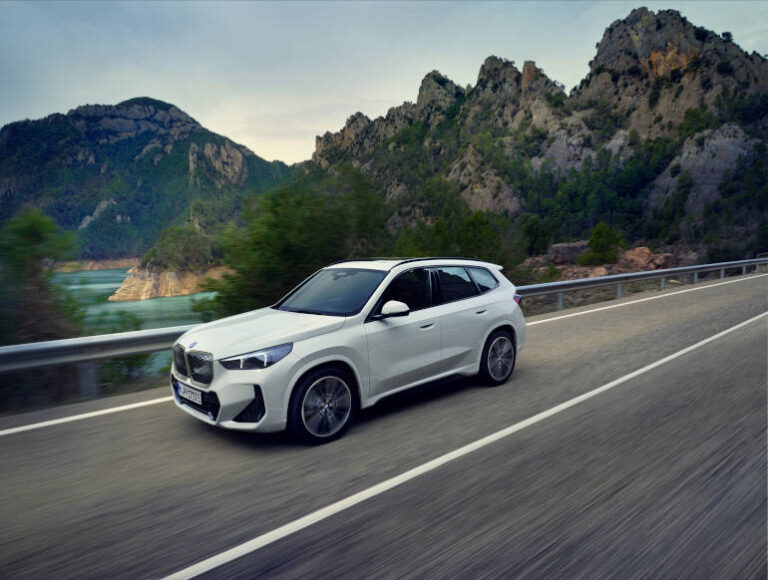
BMW has moved to strengthen its position in Australia’s growing electric vehicle market, announcing sharper entry pricing for its fully electric compact SUVs — a signal that premium brands are responding to increasing competition and changing buyer expectations.
The updated pricing sees the BMW iX1 xDrive30 now starting from $77,900, while the coupe-styled BMW iX2 xDrive30 is priced from $79,900. A new iX1 xDrive30 Sport Collection variant also joins the line-up with a national driveaway price of $79,900.
For fleet buyers and novated lease customers, this move reflects a broader trend — premium EVs are becoming more accessible as manufacturers adjust pricing to maintain momentum in a rapidly evolving market.
Premium EV Performance Meets Practical Fleet Capability
Both models are powered by a dual-motor all-wheel-drive system delivering 230kW of power and 494Nm of torque, positioning them firmly in the performance category for compact SUVs.
This level of performance is no longer unusual in the EV segment, but it does help address one of the remaining barriers to driver acceptance — the perception that electric vehicles are less capable than traditional petrol or diesel options.
From a fleet perspective, vehicles like the iX1 and iX2 demonstrate how EV capability has matured. They offer strong acceleration, smooth drivability and advanced safety technology, while still fitting into typical passenger vehicle applications such as:
- Executive and management vehicles
- Salary-packaged novated lease vehicles
- Pool vehicles for urban operations
- Sustainability-focused fleet transition programs
Technology Upgrades Focus on Efficiency and Range
BMW has also introduced silicon carbide (SiC) inverters to the iX1 and iX2, a technical enhancement designed to improve power efficiency and extend driving range.
While the full range figures will be confirmed closer to launch, this type of hardware upgrade highlights where EV development is heading — incremental improvements in efficiency rather than headline-grabbing battery size increases.
For Fleet Managers working through fleet decarbonisation plans, these incremental gains matter because they influence:
- Real-world operating range
- Energy consumption and charging costs
- Vehicle suitability across different duty cycles
- Whole-of-life cost outcomes
A Strategic Pricing Move in a Competitive EV Market
BMW’s decision to sharpen pricing on its entry-level electric SUVs reflects a market reality that many Fleet Managers are already seeing — competition is intensifying across all segments, including premium vehicles.
The iX1 has been BMW’s best-selling electric vehicle in Australia for the past three years, while the iX2 ranked as the brand’s second-highest-selling battery electric model in 2025.
Lower entry pricing helps maintain that momentum, particularly as new entrants and established brands continue to expand their EV portfolios.
For novated lease buyers, the implications are straightforward:
- Premium EVs are moving closer to mainstream affordability
- More choice is becoming available in the $70k–$80k bracket
- Competition is improving value and specification levels
What It Means for Fleet Buyers
Vehicles like the BMW iX1 and iX2 sit in a segment that is increasingly relevant to fleet procurement strategies — particularly where organisations are balancing sustainability targets with driver expectations.
The key takeaway is not just the price reduction. It’s the signal that premium EVs are entering a more competitive phase of the market.
For organisations developing fleet transition plans, that competition typically leads to:
- Better pricing and incentives
- Faster technology improvements
- Stronger aftersales and support offerings
- Greater confidence in long-term vehicle supply
And for novated lease buyers, it means the premium EV conversation is shifting from “early adopter” to “realistic option.”