
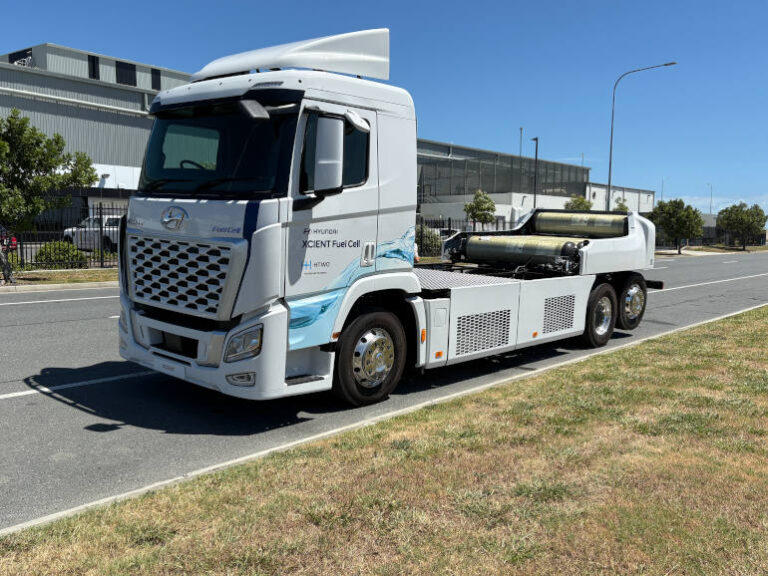
Hydrogen has long been positioned as a potential solution for zero-emission heavy transport. With the Australian launch of the Hyundai XCIENT Fuel Cell truck, that potential is now being tested in real fleet operations.
For Hyundai Australia, the introduction of XCIENT is not a technology trial or concept demonstration. It is the result of more than a decade of global investment in hydrogen fuel cell vehicles and years of operational learning from markets where hydrogen trucks are already working in commercial service.
Global hydrogen experience informs the Australian rollout
Hyundai’s hydrogen strategy spans passenger vehicles, buses and heavy trucks, with the XCIENT Fuel Cell now recognised as the world’s first mass-produced hydrogen-powered heavy-duty truck.
In Europe, close to 200 XCIENT trucks operate across logistics and freight tasks, collectively accumulating more than 15 million kilometres in real-world use. New Zealand deployments have provided insight into infrastructure planning, driver acceptance and integration into existing fleet operations, while trials in the United States have explored port and logistics applications.
According to Hyundai Australia, this international experience has shaped how the Australian program has been designed — particularly around vehicle specification, refuelling requirements and the level of support fleets need to confidently adopt hydrogen.
What the XCIENT Fuel Cell brings to fleets
The Australian-spec Hyundai XCIENT Fuel Cell is a purpose-built hydrogen electric truck rather than a converted diesel platform.
Key highlights include:
- Twin fuel cell system producing 220 kW
- 72 kWh lithium-ion battery supporting peak loads and energy recovery
- 350 kW electric motor delivering up to 2,237 Nm of torque
- Approximately 400 km driving range, depending on load and conditions
- Hydrogen refuelling measured in minutes rather than hours
From an EV perspective, the vehicle operates as a fully electric drivetrain, with the fuel cell generating electricity onboard. The result is zero exhaust emissions, quiet operation and a driving experience closer to a battery electric truck than a conventional diesel.
The XCIENT also features a comprehensive suite of advanced driver assistance systems, aligning with European safety standards and supporting fleet safety objectives.
Early adoption led by Western Australian fleets
Four customers based in Western Australia have committed to purchasing XCIENT Fuel Cell trucks as part of the initial Australian deployment.
These fleets operate in environments where payload, range and utilisation are critical, making them a strong test case for hydrogen’s suitability in heavy-duty applications. Western Australia’s freight task and emerging hydrogen supply chains make it a logical starting point for early adoption.
Hyundai is working closely with these customers to validate not just the vehicle, but the full operating ecosystem — including refuelling, maintenance, training and support.
Local conversion capability through Advanced Manufacturing Queensland
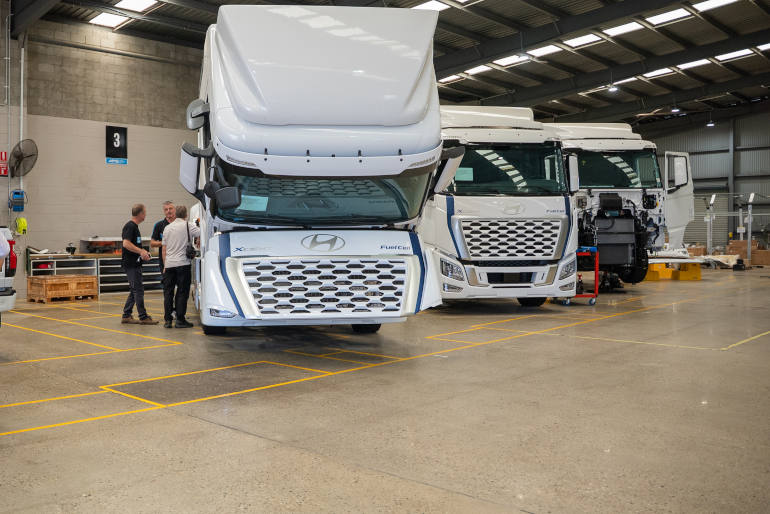
A key differentiator in Hyundai’s Australian approach is its decision to localise the left-hand-drive to right-hand-drive conversion process.
The conversion work is being undertaken by Advanced Manufacturing Queensland at its Brisbane facility. This involves detailed engineering and validation to ensure the XCIENT meets Hyundai’s global standards while being fit for Australian operating conditions.
Local conversion capability provides greater flexibility for future volumes, supports Australian manufacturing skills, and allows Hyundai to respond more quickly to fleet and regulatory requirements.
Investment beyond the vehicle
Hyundai’s hydrogen commitment in Australia extends beyond truck deliveries.
At its head office in Macquarie Park, Hyundai has invested in staff training and established a hydrogen refuelling station to support demonstration vehicles, technical development and internal capability building.
This investment builds on Hyundai’s earlier experience with hydrogen in Australia, which dates back to the launch of the ix35 Fuel Cell electric vehicle in 2015. While that program was small in scale, it provided valuable insight into infrastructure, regulation and operational requirements.
Where hydrogen fits in the EV landscape
For Fleet EV News readers, the significance of the XCIENT Fuel Cell lies in its role within a broader zero-emission transport mix.
Battery electric trucks are increasingly well suited to urban and short-haul tasks. Hydrogen fuel cell electric vehicles, by contrast, offer a potential pathway to decarbonise heavier freight tasks without long charging times or reduced payload.
Hyundai’s position is that hydrogen is not a replacement for battery electric vehicles, but a complementary solution — particularly where high utilisation, long range and fast turnaround are essential.
With XCIENT now entering Australian fleet operations, hydrogen moves from theory to practice. For fleet managers exploring zero-emission options beyond batteries, the Hyundai XCIENT Fuel Cell represents one of the most advanced and commercially mature hydrogen truck offerings yet to reach the local market.