

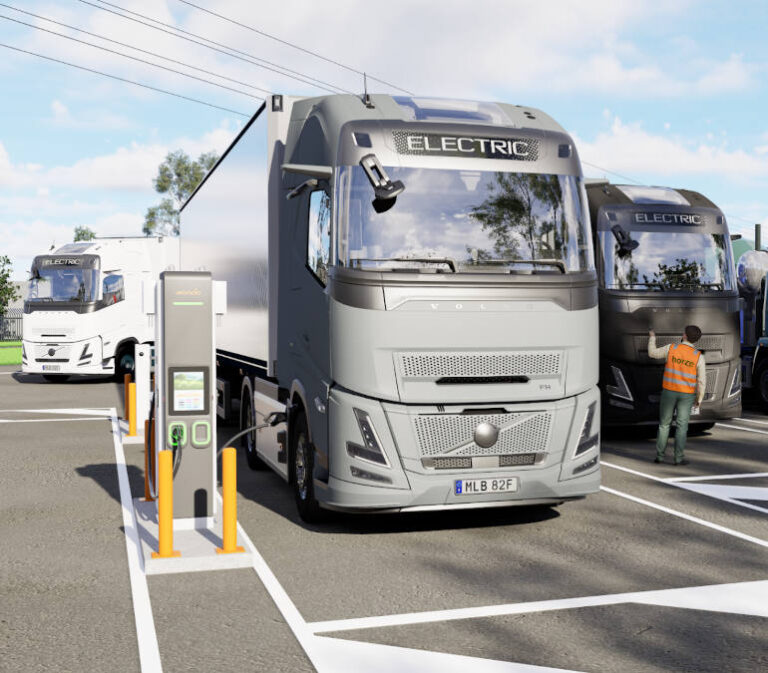
Australia’s transition to cleaner road freight has taken a major step with confirmation that Melbourne’s west will soon host the nation’s first dedicated electric truck charging hub. Supported by a $12.3 million grant from the Australian Renewable Energy Agency (ARENA), the project will be led by Mondo Power, delivering infrastructure designed specifically for heavy battery electric vehicles (BEVs).
Located in Laverton North, the hub will feature 14 dual-plug chargers, purpose-built to support the increasing demand for zero-emission heavy transport. For Fleet Managers exploring the feasibility of electrification, this site is positioned to serve as a real-world case study.
“Through Mondo’s project, we’ll be able to highlight to the heavy transport sector how electrification can be integrated into their existing business models and drive down the high emissions from transporting goods on our roads.”
ARENA CEO Darren Miller
The hub will not only provide charging services but also incorporate membership agreements, giving operators access to high-speed charging, set pricing, and driver amenities. Importantly, the funding package also offsets the total cost of ownership for 20 heavy BEV trucks, helping early adopters overcome initial barriers.
For fleet operators, this announcement demonstrates how industry and government are working together to reduce the 22% of Australia’s emissions that come from transport. The hub will allow companies to test operational models, understand charging patterns, and prepare for wider electrification.

- EV fleet adoption moves from planning to implementation
 For several years, conversations about electric vehicles in fleet operations centred on preparation. Organisations knew EVs were coming, but most activity focused on learning, trialling and planning rather than making large-scale changes. That mindset is now shifting. According to Origin Zero’s Adam Aslam, fleet operators are increasingly moving beyond planning discussions and into practical decisions
 - NYC Fleet Pushes Low-Emission Adoption Past 10 Million Electric MilesNew York City continues to set the pace on low-emission fleet adoption, with new reporting showing record fuel economy results and significant growth in electric vehicle use across its non-emergency fleet. According to the DCAS Report on the Use-Based Fuel Economy of Light and Medium Duty Non-Emergency Vehicles in the City Fleet (Fiscal Year 2025) local-law-77-use-based-fuel-eco…, the
- How an electric van is powering Big Group Hug’s missionFor many fleet operators, electric vans are still being trialled, tested and debated. For Melbourne-based charity Big Group Hug, an electric van is already part of the daily workload — moving essential goods, supporting vulnerable families and quietly proving where EVs work best. Big Group Hug is a volunteer-driven, not-for-profit organisation supporting disadvantaged Victorian families by
- Medium SUVs Surge as FBT Exemption Reshapes EV UptakeThe Fringe Benefits Tax (FBT) exemption for eligible electric vehicles has had a measurable impact on Australia’s EV market — but not evenly across all segments. According to Kristian Handberg, General Manager – Future Business and Origination at JET Charge, the strongest uplift has occurred in the medium SUV category, where salary packaging dynamics and
- Why waiting for “better batteries” may cost fleets more in the long runAcross Australia’s fleet sector, one hesitation keeps resurfacing: we’ll wait until the batteries get better. On the surface, it sounds sensible. Battery costs are falling, technology is improving and vehicle choice is expanding. Why lock in now? That question was tackled head-on during a late-2025 webinar hosted by the Australasian Fleet Management Association and sponsored by JET Charge. The