

Electrifying a fleet is relatively straightforward when suitable vehicles are available, but what happens when the technology cannot meet the operational requirements?
That’s the challenge facing Icon Water, where the transition to electric vehicles is progressing for some assets while others are being deliberately held back until suitable alternatives become available.
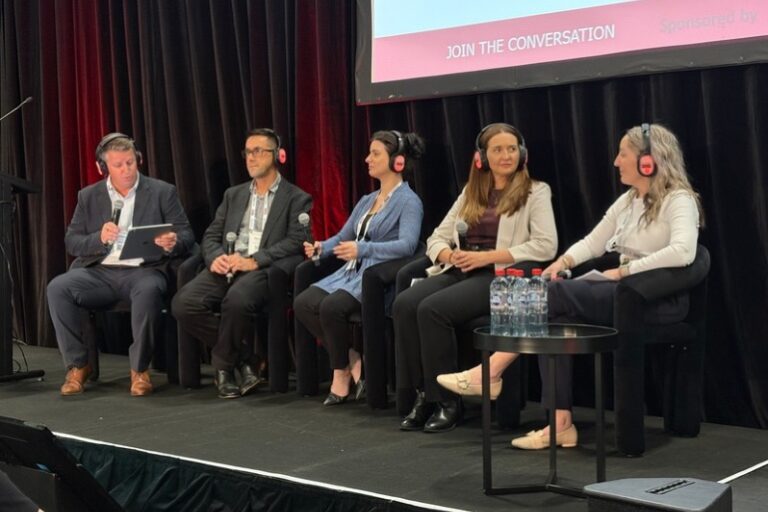
Speaking at MOVE Australia 2026, Paul Hopwood, Team Leader – Supply Chain & Logistics at Icon Water, explained why the organisation is taking a strategic approach rather than attempting to electrify every vehicle.
“We’ve already replaced some of the easy ones,” Hopwood said. “You can get an electric vehicle like you can get a coffee. You go get it, you plug it in, you charge it, you use it.”
However, the transition becomes significantly more complicated when dealing with specialised vehicles and equipment used to maintain essential infrastructure.

When the vehicle is also a workplace
Icon Water operates vehicles that do much more than transport employees between locations. Many support specialised equipment used for excavation, sewer inspections and other maintenance activities.
These applications require power for hydraulic systems, cranes and equipment that may operate throughout the working day.
Hopwood explained that finding an electric truck capable of driving to a worksite is only part of the challenge.
Some vehicles also need to provide power to equipment mounted on the truck or operated at the worksite.
“Some of those vehicles, they’re not on the market to be made available,” he said.
He highlighted the difficulty of finding suitable electric alternatives that can support digging and excavation services or sewer inspection cameras requiring all-day power.
The challenge is further complicated by the integration of modern vehicle systems, including smart alternators, power take-offs, cranes and hydraulics.
For fleet managers, this means the decision cannot be based on driving range and payload alone.
A strategic pause, not a failed transition
Rather than purchasing vehicles that may compromise operational performance, Icon Water is taking more time to understand the requirements of its specialised fleet.
“We’re strategically pausing that so that we can do the work on what the actual solution needs to be,” Hopwood said.
The organisation is involving vehicle users, work program planners and engineering teams to better understand the technical capabilities required.
It is also collaborating with industry suppliers to investigate potential solutions.
This approach recognises that fleet electrification is an asset management challenge, not simply a vehicle replacement exercise.
Who pays for the transition?
Another consideration is the additional investment required to support electric heavy vehicles.
Along with potentially higher acquisition costs, fleet operators must consider charging infrastructure and the cost of developing or modifying vehicles to meet specialised applications.
For Icon Water, these decisions also involve responsibility for community funding.
“Our funding comes from the community,” Hopwood explained.
He questioned whether it would be prudent to commit significant funding to vehicle development and charging infrastructure before the technology can meet operational needs.
The result is a mixed fleet that reflects the current capabilities of the market.
“We have a mixed fleet for a purpose and a reason because at the moment we don’t see that the market is ready to provide the complete suite of assets that you need to have a full EV fleet,” Hopwood said.
Fleet management maturity is knowing when to wait
The experience at Icon Water provides an important lesson for organisations developing fleet electrification strategies.
Transitioning passenger vehicles and light commercial vehicles may be relatively straightforward where suitable models exist and daily operating requirements can be met.
However, specialised assets require more detailed planning, particularly when equipment power demands, charging infrastructure and operational reliability are considered.
A mature fleet management approach means understanding the application, engaging with operational stakeholders and evaluating the whole-of-life implications before committing to a new powertrain.
It also means recognising when the best decision is to wait.
For fleet managers under pressure to reduce emissions, Icon Water’s approach demonstrates that a mixed fleet can be part of a deliberate transition strategy rather than evidence of a lack of progress.
The goal is not simply to replace every diesel vehicle with an electric alternative. It’s to maintain essential services while identifying where electrification can deliver genuine operational, financial and environmental benefits.