

Chery Group has outlined an ambitious new energy strategy centred on ultra-fast charging, longer battery life and improved safety—developments that could reshape how organisations plan the transition to electric vehicles over the next decade.
The announcement was made at the company’s 2026 Chery Auto Battery Night in Wuhu, where the manufacturer revealed its next-generation “Rhino” battery platform designed to address three of the most persistent barriers to fleet electrification: charging time, durability and operational reliability.
Ultra-fast charging moves EVs closer to operational parity
The headline feature of the Rhino battery is its ability to deliver up to 500 kilometres of driving range in just eight minutes of charging—performance that begins to align electric vehicles with the refuelling expectations of traditional petrol and diesel fleets.
For Fleet Managers, this type of capability has practical implications for vehicle scheduling, downtime management and infrastructure planning. Faster charging reduces the need for spare vehicles and can improve asset utilisation, particularly in high-demand operational environments such as field service, logistics and municipal operations.
The technology is also designed for longevity, with the battery engineered to support up to 5,000 charge cycles.
For organisations managing vehicles over extended replacement cycles, battery durability is becoming as important as range. A longer service life helps protect residual value and supports whole-of-life cost planning—an area where many fleets are still building capability.
Safety and durability remain central to fleet acceptance
While charging speed attracts attention, reliability and safety remain the decisive factors for most organisations considering electrification.
Chery has introduced what it describes as a “three lines of defence” safety system combining advanced materials, structural protection and cloud-based battery monitoring to manage operational risks.
The battery platform has also been tested across multiple extreme conditions, including temperature variations, salt exposure, collisions, underbody impacts and water immersion.
For Sustainability Managers and risk stakeholders, these developments reinforce a broader industry trend: electrification is no longer just about emissions reduction. It is increasingly about risk management, asset reliability and maintaining service delivery standards.
Solid-state development signals long-term range gains
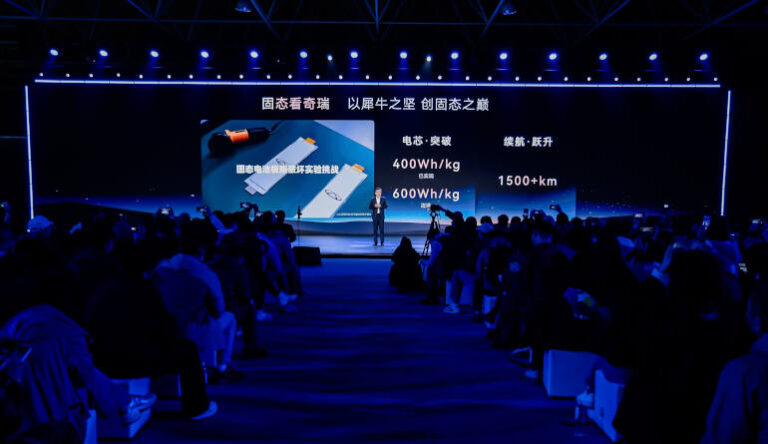
Beyond the current generation of batteries, Chery confirmed significant investment in solid-state technology, supported by a research and development team expected to exceed 1,200 specialists and more than RMB 10 billion in funding.
Early prototypes are already achieving energy densities of around 400 Wh/kg, with a roadmap targeting 600 Wh/kg—levels that could enable driving ranges exceeding 1,500 kilometres on a single charge.
For Finance Managers, this type of performance shift could fundamentally change vehicle replacement strategies. Higher range and improved battery performance reduce operational constraints, allowing electric vehicles to move into duty cycles that were previously considered unsuitable.
Multi-pathway strategy reflects fleet transition realities
Chery’s roadmap includes battery systems for hybrid, plug-in hybrid and full battery electric vehicles, reflecting the reality that most organisations will transition through multiple technologies rather than adopting a single solution.
This approach aligns with best-practice fleet management principles, where technology selection is guided by operational requirements rather than policy targets alone.
The company has also set long-term sustainability targets, including a 60 per cent reduction in per-vehicle emissions by 2030 and full value-chain carbon neutrality by 2047.
What this means for organisations planning fleet decarbonisation
For organisations developing fleet transition strategies, the key takeaway is not just the technology itself, but the pace of change in vehicle capability.
1. Charging time is rapidly becoming a manageable operational issue
Ultra-fast charging reduces one of the most commonly cited barriers to EV adoption.
2. Battery durability is emerging as a financial decision factor
Longer cycle life supports predictable replacement planning and protects asset value.
3. Fleet planning needs to become more structured and data-driven
As vehicle capability improves, organisations with clear policies, utilisation data and replacement frameworks will be better positioned to evaluate new technologies.
Fleet management maturity remains the critical enabler. Organisations that understand their duty cycles, replacement schedules and operational risks will be able to adopt emerging battery technologies with confidence—while others may struggle to translate technical capability into practical outcomes.