


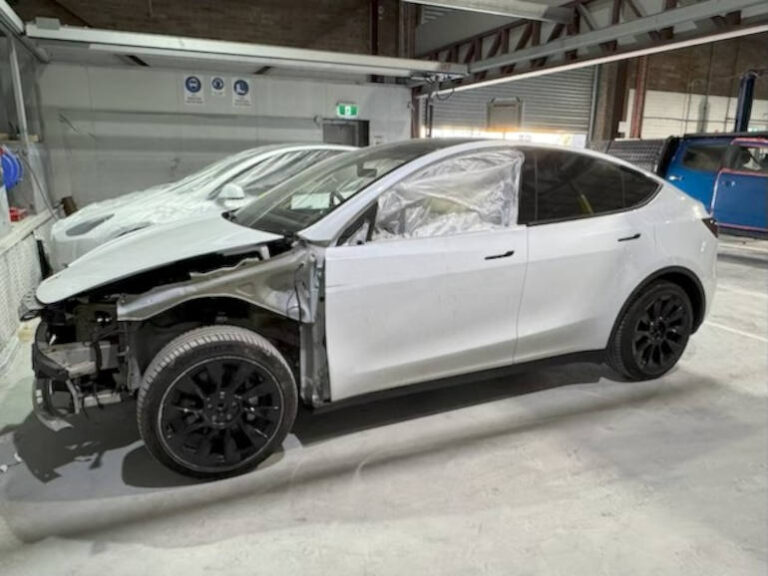
Electric vehicles may deliver savings in energy and scheduled maintenance, but accident repair costs need to be considered when fleets calculate whole-of-life costs.
Dmitri Feigin from DingGo told an Everything Electric Sydney panel that its data was currently showing higher repair costs for EVs compared with internal combustion engine vehicles.
DingGo was participating alongside FleetGuru, Geosecure and Origin Energy as supplier sponsors of the Fleet News Group Awards program.
Feigin said the emerging data shouldn’t stop fleets adopting EVs, but it provides another cost that fleet managers need to understand.

EV repairs are currently costing more
According to Feigin, DingGo is seeing approximately a 20% increase in the cost of repairing an EV.
“We see about a 20% increase in the cost to repair an EV,” he said.
For passenger-style vehicles, DingGo’s current data indicates an additional repair cost of approximately $700 on average. The difference becomes larger for commercial vehicles.
“A commercial is probably an extra $2,000 per repair,” Feigin said.
The figures are particularly relevant for fleets developing whole-of-life cost models because accident management expenses can be overlooked compared with more visible categories such as purchase price, depreciation, fuel and scheduled servicing.
There’s a downtime cost as well
The repair invoice isn’t the only consideration. Feigin said EVs were also currently taking slightly longer to return to service following an incident.
He estimated an additional “one to two extra days” in the repair process. For an operational fleet, those days can create a cost beyond the repair itself.
Replacement vehicles may be required, employees can lose access to essential equipment, and service delivery can be affected.
That makes repair downtime another factor to consider when selecting vehicles and assessing the support networks available around them.
The market is still developing
There are reasons why the current cost differential may not remain permanent.
EV repair volumes remain relatively low, technicians and repairers are still building experience, and the supporting repair infrastructure continues to develop.
Feigin said the higher repair costs shouldn’t be treated as a reason for fleets to avoid electrification.
“We see a lot of advantages. We see headwinds, but the headwinds we anticipate will definitely level off,” he said. “The average cost of repair will smooth out, so that should not be a barrier to someone to start to actually leverage EVs within their fleet.”
Put accident costs into WOLC
The message for fleet managers is therefore about visibility rather than avoiding EVs.
A robust whole-of-life cost calculation needs to capture the areas where an EV saves money as well as those where costs may currently be higher.
Lower energy consumption and scheduled maintenance can strengthen the business case. Higher accident repair costs and potentially longer repair downtime need to sit on the other side of the calculation.
As EV volumes increase and Australia’s repair industry develops its capabilities, those numbers will continue to change.
For fleet managers making procurement decisions today, however, accident repair deserves a place in the WOLC calculation.