

As Australia prepares for a new wave of electric vehicles (EVs) entering the second-hand market, fleet and sustainability leaders can look to Europe for a clear lesson: battery testing is not optional—it’s essential.
Across Europe, where EV uptake began years earlier, the tipping point in fleet adoption didn’t come from lower prices or wider vehicle availability alone. It came when the used car market gained the confidence to support EVs as resaleable assets. And that confidence was built on data—specifically, battery health testing.
“Europe is well ahead of us,” said Philip Browne, Managing Director at Autorola Australia. “They’ve had more EVs on the road for longer, and their used car market now accepts EVs much more readily than we do in Australia. A big part of that is because battery testing is normal practice.”
Battery Testing: The Game Changer
Battery condition is the EV equivalent of engine health. But unlike a compression test or oil analysis—expensive and time-consuming diagnostics for ICE vehicles—battery state of health (SOH) can be tested quickly and reliably with the right technology.
“In Europe, battery testing is used widely to assess performance, reassure buyers, and even identify warranty faults,” Browne explained. “And that’s not just for dealers or fleets. Owners are using it themselves to verify the condition of their vehicles, especially when they feel the car isn’t performing the way it should.”
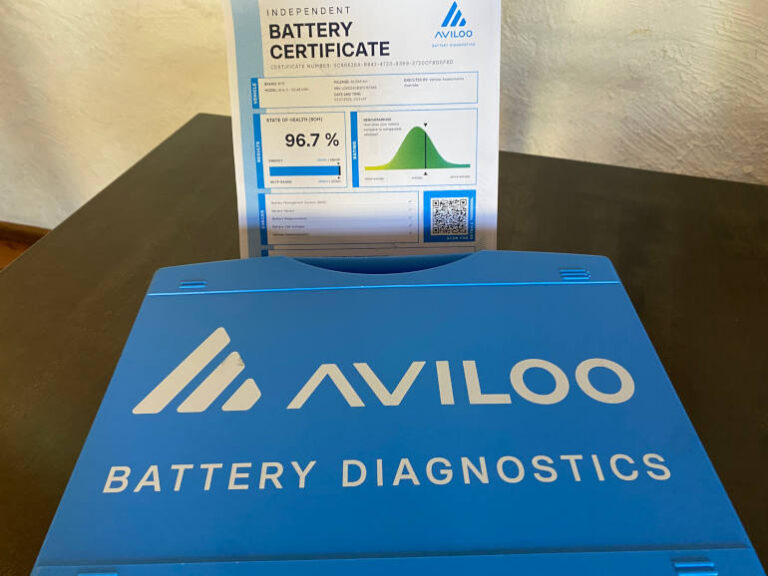
Browne’s company has partnered with European battery testing leader Aviloo to bring the same service to Australia. Their testing platform connects directly to the vehicle’s battery management system and provides a detailed report, benchmarking the results against a global database.
“This is the kind of transparency that builds trust,” said Browne. “And that trust is what helped Europe move from early adoption to a mature second-hand EV market.”
Early Lessons: Why Europe Moved First
Several European governments played a proactive role in encouraging EV uptake, not just through incentives for new vehicles, but by supporting resale value and second-owner adoption.
“In places like Norway and the Netherlands, EV owners benefit from free parking, toll exemptions, and lower registration costs,” Browne noted. “But importantly, some of those benefits extend beyond the first owner. That sends a clear message that the used EV market matters.”
Crucially, these markets recognised that without a viable second-hand pathway, fleets and consumers would hesitate to buy new. Resale value is critical to total cost of ownership—and without reliable battery data, it’s a guessing game.
“The only person who gains from a sales tax discount is the first owner,” Browne said. “But if you look after the second owner—by ensuring the battery can be tested and verified—you support the whole ownership cycle. And that’s what makes the EV model work.”
Australia’s Catch-Up Moment
In Australia, fleets are now reaching the point where their first generation of EVs—often acquired during post-COVID novated lease surges or trials—are coming up for replacement. The timing is perfect to apply Europe’s lessons.
“Battery test results here in Australia have been overwhelmingly positive,” Browne said. “Even the vehicles with 40,000 or 50,000 km on the clock are showing well above average battery health. That’s the message we need to share.”
At the recent AfMA Conference, Autorola showcased the Aviloo testing technology and spoke with leading Fleet Managers about its application. The response was clear: fleets want to hold onto EVs longer—but they also want assurance.
“Many fleets are planning to run EVs longer than their ICE equivalents, and battery testing is giving them the confidence to do that. At the same time, it creates a path for better resale. It’s a win-win.”
Breaking the Fear Factor for Dealers
In Europe, widespread battery testing has also helped bring dealerships back into the EV resale game. Initially hesitant—often due to concerns about battery degradation and lack of servicing know-how—dealers have warmed up as battery data becomes more accessible.
“In Australia, dealers are still cautious,” Browne admitted. “But in Europe, once they could see test results, benchmarked against thousands of vehicles, it changed the game. Suddenly, a second-hand EV wasn’t a risk. It was a known quantity.”
That shift is now slowly emerging in Australia. Uber drivers, taxi operators and even larger fleets like Ausgrid are running EVs with confidence—and in many cases, extending vehicle life because the battery condition supports it.
“Driver behaviour, charging habits, and maintenance all affect battery health,” Browne said. “But now, instead of speculating, we can measure it. That’s incredibly powerful.”
Building a Sustainable Second-Hand Market
What does this mean for Fleet Managers, Sustainability Officers, and Finance teams in Australia?
It means that resale value is no longer just about kilometres and condition reports. Battery health must be part of every end-of-lease conversation, every remarketing plan, and every procurement policy for electric vehicles.
“The used market is the backbone of every vehicle lifecycle,” said Browne. “If we don’t support that for EVs, we won’t get true adoption. Europe realised this years ago. Now it’s Australia’s turn.”
By learning from Europe’s early investment in battery testing and applying the same standards locally, the industry can build the confidence required to support fleet turnover, accelerate sustainability targets, and normalise EV ownership—at both ends of the market.
“The bottom line is simple,” Browne said. “You can’t manage what you can’t measure. Battery testing gives us the tools to manage the transition properly.”
And as more data flows in, the story for EVs in the used market is expected to look more like that of Toyota’s early hybrids—once misunderstood, now mainstream.
“It took time for the Prius and Camry Hybrid to earn resale value,” Browne reminded us. “EVs are on that same path. We just need to back them with facts.”