

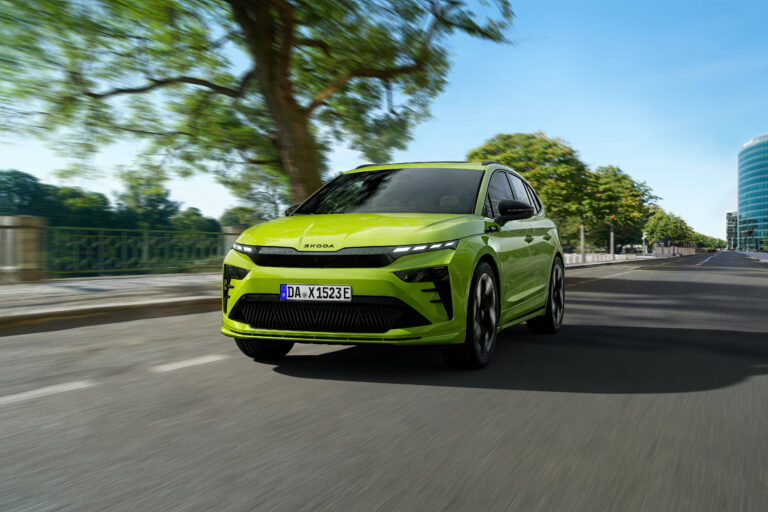
Škoda Australia has strengthened its electric vehicle line-up with the introduction of the new Enyaq RS and Enyaq Coupé RS—its most powerful production EVs to date. Designed to combine performance, long-range capability and everyday practicality, the new models signal a shift in how electric vehicles are being positioned for both private buyers and organisational fleets.
According to the official media release, both RS variants deliver dual-motor all-wheel drive, rapid charging capability and premium equipment levels, reinforcing the brand’s move into higher-performance EV territory.
The Enyaq RS SUV is priced from $75,490, while the sleeker Enyaq Coupé RS starts from $76,490, with nationwide drive-away pricing to be confirmed closer to launch.
Performance Moves Beyond the Entry-Level EV Conversation
The Enyaq RS range is powered by a 79 kWh battery paired with dual electric motors delivering 250 kW and 545 Nm, enabling a 0–100 km/h time of 5.4 seconds.
For fleet buyers and novated lease customers, these figures matter because they demonstrate how quickly EV capability is moving beyond basic urban commuting. Performance, towing confidence and highway usability are increasingly part of the mainstream EV discussion rather than niche requirements.
Range figures also position the vehicle as a practical daily driver:
- Up to 534 km WLTP combined range (Coupé)
- Up to 523 km WLTP combined range (SUV)
- Up to 646 km city range depending on variant
Charging performance is equally important for operational planning. The Enyaq RS supports DC charging up to 185 kW, enabling a 10–80% recharge in approximately 26 minutes, while 11 kW AC charging allows a full overnight charge at home or depot.
Technology and Safety Designed for Real-World Use
Inside the cabin, the Enyaq RS blends premium comfort with the digital features drivers increasingly expect in modern fleet vehicles. Standard equipment includes:
- 13-inch infotainment system with wireless Apple CarPlay and Android Auto
- Digital cockpit with intelligent voice control
- Heated and ventilated front seats
- Three-zone climate control
- Wireless phone charging and multiple USB-C ports
Safety technology remains a core focus, with driver assistance features such as adaptive cruise control, lane guidance, traffic jam assist and proactive occupant protection systems included across the range.
For organisations managing duty-of-care obligations, this level of standard safety equipment aligns well with procurement frameworks that prioritise risk reduction and driver wellbeing.
Practicality Still Matters in a Performance EV
Despite its performance focus, the Enyaq RS retains the practical touches that have become a hallmark of the brand. Features such as a hands-free power tailgate, flexible cargo storage and remote seat-folding functionality are designed to support everyday operational tasks rather than just lifestyle driving.
These details are particularly relevant for fleet buyers evaluating vehicles through a whole-of-life lens, where usability and driver productivity often carry as much weight as acceleration figures.
What It Means for Fleet and Novated Buyers
For organisations developing fleet decarbonisation plans, vehicles like the Enyaq RS highlight three clear trends in the market.
EV capability is no longer limited to basic applications
Modern electric vehicles now deliver performance, range and comfort comparable to traditional premium vehicles, expanding their suitability across more operational roles.
Driver acceptance barriers are continuing to decline
Higher performance, improved technology and faster charging help address concerns around usability, satisfaction and range confidence.
Policy and procurement strategies need to evolve
Fleet teams should review vehicle selection frameworks to ensure they capture emerging EV options across all segments—not just passenger vehicles used for operational tasks.
As fleet management maturity increases, organisations will be better positioned to evaluate vehicles like the Enyaq RS within a structured procurement and sustainability strategy rather than as isolated purchases.