

A new industry analysis suggests electric trucks are becoming financially viable across a wider range of freight tasks, with falling vehicle prices, more model availability and government incentives reshaping the economics of fleet transitions.
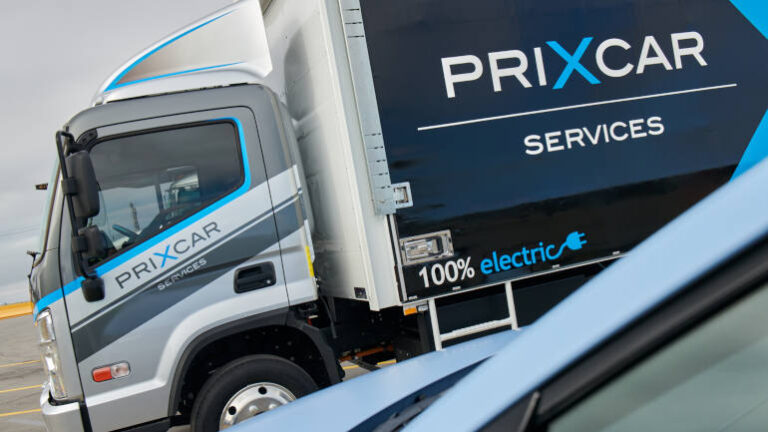
The latest Electric Truck Report from fleet sustainability advisory group MOV3MENT indicates that electric trucks are now cost-competitive with diesel in three vehicle segments without subsidies, and in two additional segments where grants are available.
The findings represent a shift from the organisation’s first report released six months earlier, which found only one segment — light urban delivery vehicles in the 3.5 to 4.5-tonne range — approaching cost parity without incentives.
More segments becoming financially viable
The updated report attributes the change largely to increased competition from newer manufacturers and the arrival of purpose-built electric truck platforms.
MOV3MENT Managing Director Mark Gjerek said the pace of change in the heavy vehicle market had been quicker than many expected.
“You can now get an electric truck in the smallest class for the same upfront purchase price as a diesel truck. That’s game changing.”
The report also notes that larger electric vehicles are approaching similar price points. According to the analysis, a new electric prime mover designed for urban freight tasks is now available at roughly the same purchase price as a conventional diesel model — a milestone that had previously been forecast later in the decade.
While upfront pricing has drawn attention, the report emphasises that total cost of ownership remains the more significant factor. Lower operating and energy costs mean electric trucks do not necessarily need to match diesel purchase prices to deliver savings over time.
Operational factors still relevant
Despite improving financial performance, the report identifies operational considerations that continue to influence fleet decisions, including charging time and payload capacity.
Gjerek said these factors may still affect some operations, but many urban fleets could now transition with minimal disruption.
“Some fleets will still point to charging time and payload issues – which can be important for some – but for the majority of fleets who do less than 200km per day in urban areas and charge overnight, it’s now a simple choice.”
The analysis also highlights continued growth in adoption, with electric truck sales increasing by almost 20 per cent in the past year, setting another annual record.
More than 50 fleets across Australia — ranging from small operators to major logistics businesses — are now reported to have purchased electric trucks, in some cases at scale.
Charging costs and energy prices in focus
A key addition in the latest report is a deeper examination of charging infrastructure and electricity pricing, reflecting growing industry attention on operational energy costs.
The modelling assumes a diesel price of $1.80 per litre, meaning recent increases above $2.50 per litre would further strengthen the business case for electrification in some applications.
Gjerek noted that energy price stability may also be a factor in long-term planning.
“At least with electric truck charging you don’t get that volatility of energy prices. You can plan the business case with certainty on fuel/energy costs.”
Ongoing updates expected
MOV3MENT said the report continues to address four core questions commonly raised by operators considering electrification:
- Can I get one?
- Will it do the job?
- How much will it cost?
- How will I charge?
With additional models scheduled to enter the Australian market during 2026, the organisation expects to release another update later in the year to reflect further changes in vehicle pricing, availability and infrastructure.
- EVs are turning employees’ homes into fleet fuel stations
 For decades, fleet fuel management has been relatively straightforward. Give the driver a fuel card, let them visit a service station and receive an invoice detailing the transaction. Electric vehicles are changing that model because the organisation can suddenly be responsible for procuring the energy used to power its fleet — and some of that
 - Foton and Ampol Target Electric Truck ChargingFoton Mobility Distribution (FMD) and Ampol have signed a Memorandum of Understanding to explore charging solutions for electric truck fleets, with a focus on helping operators charge at depots, commercial hubs and public charging sites. The collaboration will investigate charging options across Ampol’s AmpCharge public network and private facilities for FMD’s fleet, logistics and business
- Ausgrid’s charging strategy goes well beyond the depotInstalling chargers at the depot might be the obvious starting point for fleet electrification. For Ausgrid, it wasn’t going to be enough. As the electricity network continues electrifying passenger vehicles, vans and trucks, it has developed a charging strategy designed around how employees actually use fleet vehicles. Speaking during the Fleet News Group Awards finalists
- Home Charging Enters a New Growth PhaseEvnex has passed 20,000 connected charger installations across Australia and New Zealand, with rapid growth reflecting the shift of home EV charging from an early-adopter product to mainstream infrastructure. The Christchurch-based manufacturer shipped its first charger in 2017. While reaching the first 10,000 installations took eight years, the next 10,000 were added in just nine
- Ampol’s $225 million Evie deal puts a new value on public EV chargingAmpol’s proposed $225 million acquisition of Evie Networks could prove to be a significant milestone for Australia’s EV charging sector, putting a substantial transaction value on a public charging network that was built well before electric vehicles became a mainstream consideration for Australian fleets. Ampol Energy has entered into an agreement to acquire 100% of