


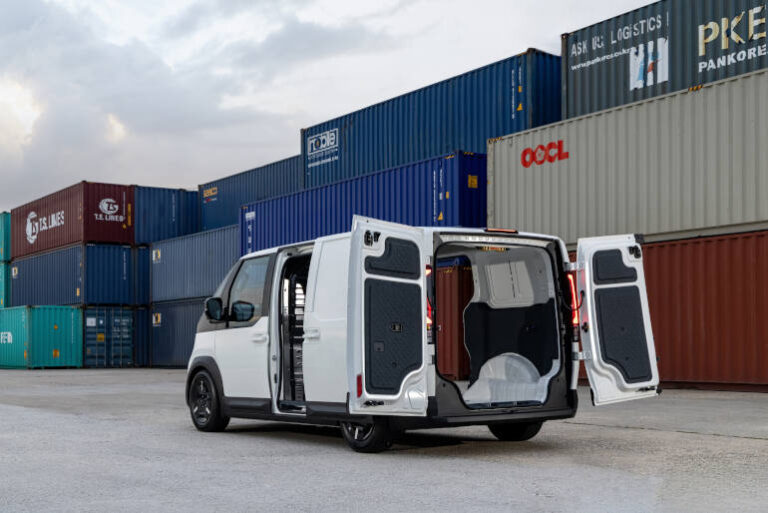
Kia has confirmed Australian pricing for its all-electric PV5 Cargo, the first model in the brand’s new Platform Beyond Vehicle (PBV) range and the reigning 2026 International Van of the Year.
The new van will arrive in local showrooms from late May with a recommended retail price of $55,990, positioning it as a compact, urban-focused alternative to the larger diesel vans that dominate Australian fleets.
But while the award credentials are strong, the bigger question for Fleet Managers is whether a smaller electric van can carve out a meaningful share of a market built around payload, volume, and versatility.
A purpose-built electric van — not a converted one
The PV5 Cargo is built on Kia’s dedicated E-GMP.S electric commercial platform, rather than being adapted from a passenger vehicle or diesel van. That approach reflects a broader shift among OEMs to design light commercial vehicles specifically for urban delivery and service roles.
Australian specification models will be offered in a single configuration at launch:
- 71.2kWh battery
- 416km WLTP driving range
- Single-motor front-wheel drive
- Long Range Cargo S trim
This range figure places the PV5 firmly in the sweet spot for last-mile delivery and metropolitan operations, where predictable routes and overnight depot charging reduce operational risk.
Kia also confirmed the vehicle has undergone its local ride and handling program, with tuning focused on urban routes while maintaining capability on rougher regional roads — a practical requirement for Australian fleet duty cycles.
Smaller than the segment leaders — and that’s the point
The Australian van market has long been dominated by larger vehicles such as the Toyota HiAce, Ford Transit and Hyundai Staria Load. These models are designed to handle a wide variety of tasks — often more than a single role requires.
The PV5 takes a different approach.
It is intentionally smaller, targeting fleets that prioritise efficiency, manoeuvrability and total operating cost rather than maximum payload or cargo volume. In dense urban environments — courier fleets, trades operating in CBD areas, local government services — a compact footprint can be an operational advantage rather than a limitation.
This shift mirrors a broader trend already emerging in Europe and parts of Asia, where cities are becoming less tolerant of large commercial vehicles in congested areas.
Pricing sends a signal to the market
At $55,990, the PV5 enters the market at a price point that will attract attention from both fleet and novated lease buyers.
For Fleet Managers, the key consideration will not be the purchase price alone, but the whole-of-life cost equation — particularly fuel savings, maintenance reduction, and downtime risk.
For salary packaging and novated leasing, the appeal is more immediate. An electric van in this price bracket sits within reach of many small business operators and sole traders, particularly while incentives remain in place.
In practical terms, the PV5 is likely to be evaluated against:
- Smaller diesel vans on acquisition cost
- Larger vans on productivity
- Passenger EVs on operating cost
That creates an interesting competitive dynamic.
Will fleets adopt a smaller electric van?
The answer depends less on the vehicle itself and more on fleet maturity and operational discipline.
Many Australian fleets still default to buying the largest vehicle in the category “just in case” it is needed. That habit increases capital cost, fuel consumption and emissions — often without delivering measurable productivity gains.
The arrival of vehicles like the PV5 challenges that thinking.
Instead of asking: “What is the biggest van we can buy?”
Fleet Managers will increasingly ask: “What is the smallest vehicle that can do the job safely and reliably?”
That shift aligns closely with best-practice fleet management principles — particularly fit-for-purpose selection and utilisation optimisation.
A niche product — but potentially an important one
The PV5 is unlikely to replace the large vans that underpin many fleet operations. Those vehicles will remain essential for heavy payload and high-volume logistics. However, it does introduce a new category into the Australian market:
The compact, purpose-built electric work van.
If urban freight continues to grow — and emissions targets tighten — this segment could expand quickly.
In that context, the PV5 may not need to dominate the market to succeed. It simply needs to prove that smaller, specialised vehicles can deliver better outcomes for specific tasks.
And for many fleets, that is where the real opportunity lies.