

Suzuki Australia says the introduction of new hybrid and electric vehicles will broaden its appeal to fleet buyers, even though the brand has historically focused on private customers.
In an interview with Fleet News Group, Michael Pachota, General Manager at Suzuki Australia, explained that the company is not traditionally a large fleet supplier but sees new opportunities emerging as the product line evolves.
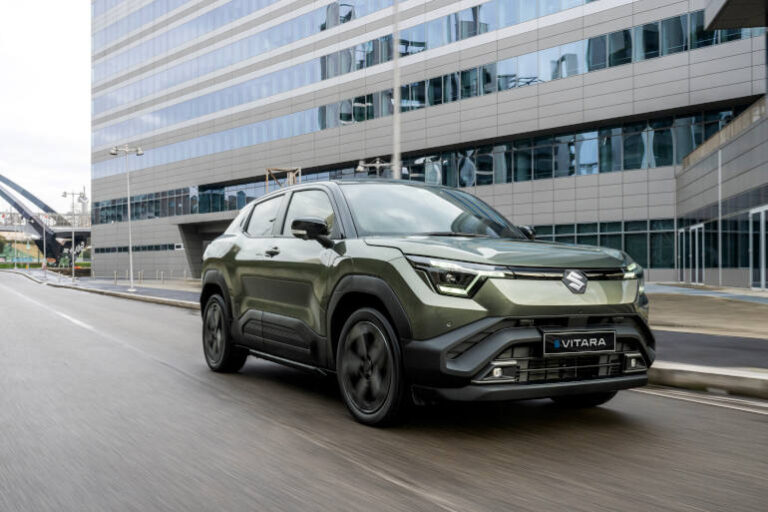
“We’re not big fleet players from a Suzuki brand perspective altogether,” Pachota said. “But introducing a product like the eVitara into the market now, we are going to get a very different buyer type incrementally to our current Suzuki customer profile.” 2603 Suzuki product presentatio…
Suzuki recently previewed several vehicles at a media event, including the Vitara Hybrid, updates to the Jimny range, and the brand’s first battery electric vehicle, the eVitara.
Fleet segments in focus
According to Pachota, government and fleet customers could become a larger part of Suzuki’s sales mix as the product range evolves.
“I would dare say that definitely fleet and government will play a role in terms of our national sales split,” he said.
Rather than targeting a single fleet segment, Suzuki is positioning its vehicles broadly across multiple buyer groups, from private users to work vehicles.
“Our buyer type is everybody. We appeal to or try to appeal to everyone in the market, whether they’re starting with a car, whether they need a car at work, whether they need a car for pleasure or off-road capability,” Pachota said.
Existing fleet success stories
Although fleet volumes are relatively modest, Suzuki has had success in specific sectors. Pachota pointed to the Swift in the rental market, the Vitara in earlier fleet programs, and the Jimny in agricultural and land management roles.
“We did have some great success with Swift in the fleet rental market,” he said.
“Jimny from an agricultural perspective — many national parks drive Jimnys around because they’re easy to get through between trees or parklands. They’re light enough not to damage anything but nimble enough to get over everything.”
This type of niche operational capability has helped Suzuki maintain a presence in specialised fleet applications even without large government or corporate contracts.
eVitara opens the EV conversation
Suzuki’s first battery electric vehicle, the eVitara, is expected to arrive in Australia around mid-2026. Pachota believes the model could create new opportunities with fleet managers seeking smaller EV options.
“I think eVitara is a great opportunity for buyers, fleet managers to be able to present to their customers or clients a great opportunity in the EV space,” he said.
The vehicle introduces a new electric platform and represents Suzuki’s first step into fully electric mobility in Australia. Pricing and full specifications are yet to be confirmed.
Novated leasing opportunity
Suzuki also expects novated leasing to play a role in EV adoption, particularly while the Federal Government’s electric vehicle Fringe Benefits Tax (FBT) exemption remains in place.
Pachota said Suzuki already has relationships with novated leasing providers through its fleet program and a National Fleet Manager (Michelle Parsons), reflecting a more structured approach to fleet opportunities.
“We can definitely see an opportunity for ourselves growth in that area, but also an opportunity for those partners to present different products — good products, reliable products that we will present as a great value proposition.”
Policy certainty still important
Like many manufacturers, Suzuki is watching government policy closely as Australia introduces the New Vehicle Efficiency Standard (NVES) and reviews incentives supporting EV uptake.
Pachota said policies designed to encourage electrification need to be supported by measures that improve affordability for customers.
“I think it’s very important for the government to make the necessary moves or adjustments,” he said.
“If they have schemes that relate to this area, like the New Vehicle Efficiency Standard where they’re trying to push the adoption of electrification, it’s important that they also back it up with opportunities for customers to make it more worthwhile.”
He added that policy settings ultimately affect the cost of ownership for electric vehicles.
“It’s very important in regards to the impact of the decisions the government make… making the cost of ownership for an electric vehicle more of a feasible option for Australian consumers.”
Global planning shapes Australian supply
Future Suzuki products for Australia will depend heavily on global supply and the speed of electrification in different markets.
Pachota said product planning is being coordinated closely with Suzuki Motor Corporation in Japan, particularly as the company responds to NVES requirements and broader industry changes.
“There’s always been a product plan or future portfolio idea for each region,” he said.
“We’ve worked very closely with Suzuki Motor Corporation to make sure we represent ourselves the right way and have a feasible business in Australia.”
Suzuki has operated in Australia for more than 50 years and intends to remain a long-term player in the market.
“We’re a 100-year-old company, over 50 years in Australia, and we plan to stay here,” Pachota said.




