

The shift to zero emission heavy vehicles (ZEHVs) is one of the most significant transformations facing Australia’s transport sector. According to Simon Anthonisz, General Manager of Transport at Orcoda, the move is unavoidable.
“The imperative to decarbonise is no longer a distant environmental goal; it is a present economic and operational reality, driven by increasing ESG scrutiny and customer demands for greener supply chains,” said Anthonisz.
For an industry built on long distances, heavy payloads, and tight delivery windows, the change requires more than simply swapping diesel engines for batteries or hydrogen fuel cells. It demands new thinking in fleet optimisation, energy management, and operational planning.
No Silver Bullet – The Mosaic Approach
Anthonisz emphasises that there is no single replacement technology: “The future of heavy transport will be a mosaic, dictated by the specific use case.”
Urban logistics and public transport are already viable for battery electric vehicles (BEVs), while medium-range regional haul could see a mix of BEVs, hydrogen, and biofuels. Long-haul remains the toughest segment, with payload, energy density, and refuelling challenges yet to be solved.
Battery Electric Vehicles (BEVs) – The Urban Leader
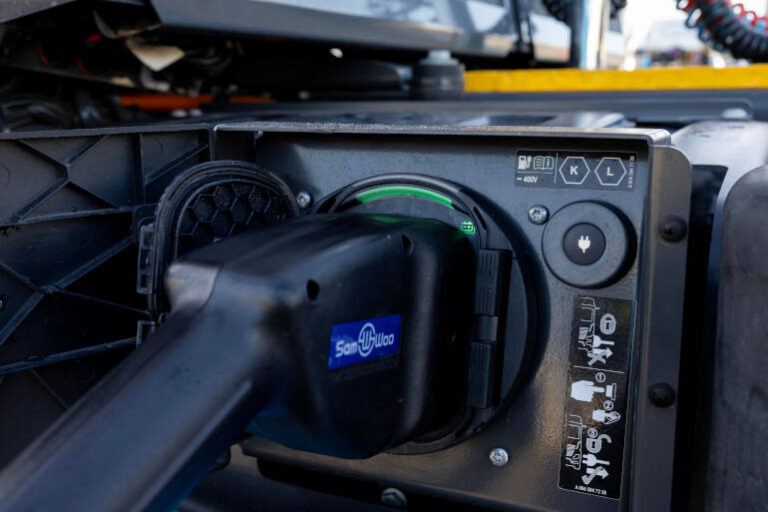
BEVs are the most advanced technology today. They deliver high efficiency (around 70%), zero tailpipe emissions, and lower maintenance. Transport for NSW modelling shows BEVs can offer the lowest total cost of ownership (TCO) by 2030, provided they can complete the operational task.
However, operators must manage energy demand carefully. Anthonisz warns: “Unmanaged, simultaneous charging of multiple heavy vehicles creates a massive power spike. These demand charges can add thousands of dollars to a monthly electricity bill, negating the fuel savings and destroying the TCO case for electrification.”
Trials such as Team Global Express’s 60 electric trucks in Sydney demonstrate the need for solar, battery storage, and smart charging to keep costs under control.
Hydrogen Fuel Cell Vehicles (FCEVs) – A High-Risk Bet
Hydrogen is often viewed as the answer for long-haul freight, with faster refuelling and ranges of 600 km or more. But efficiency challenges and high costs remain.
Anthonisz highlights the “viability trilemma”: “High vehicle costs deter adoption; lack of adoption provides no commercial case for infrastructure; and lack of infrastructure prevents economies of scale needed to lower hydrogen costs.”
The recent withdrawal of Hyzon Motors from Australia shows just how fragile the business case remains.
Renewable Diesel (HVO) – The Bridge Solution
Hydrotreated Vegetable Oil (HVO), or renewable diesel, offers a drop-in solution for existing fleets and infrastructure. It can cut lifecycle emissions by up to 95%, making it an important interim step while BEV and hydrogen infrastructure develop.
Infrastructure: The Biggest Bottleneck
The lack of charging and refuelling networks is a critical barrier. Australia has no public heavy-vehicle charging network, and only a handful of hydrogen stations nationwide. For now, most operators will need to invest in depot-based solutions.
The Road Ahead
Anthonisz is clear: “The pathway to zero emissions in heavy transport is irreversible, but it will not be linear.”
BEVs are set to dominate urban operations, HVO offers a transitional pathway, and hydrogen remains a longer-term option for long-haul.
How Orcoda is Supporting Fleets
Orcoda’s Transport360 platform is designed to help operators optimise mixed fleets, schedule charging, and manage energy costs. Working with partners Betterfleet and EVEnergi, Orcoda provides data-driven tools to balance ESG commitments with commercial goals.
“Managing a mixed fleet while factoring in new constraints like charging times, payload impacts, and critically, managing electrical load to avoid demand charges, is essential to making the economics of ZEHVs work,” said Anthonisz.