
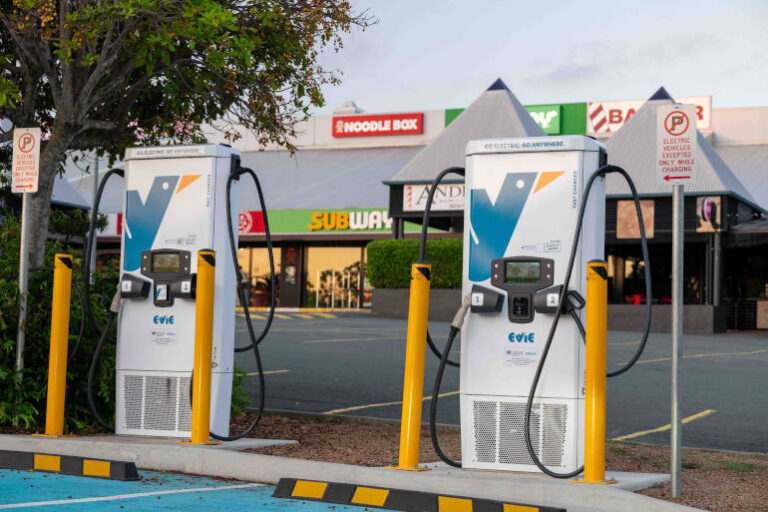
One of the strengths of public charging is its ability to support the wide variety of roles that fleet vehicles play in helping organisations deliver services and generate revenue. From sales teams on the road to mixed fleets trialling electric vehicles, public charging provides a ready-made solution that adapts to diverse operational needs.
“We’re seeing sales teams and mobile workforces who spend their day moving between client sites charge up on the road,” explains Ben Savigny, Head of Channel Partnerships at Evie Networks. “For them, charging during a client meeting is actually more efficient than going back to base.”
Mobile Teams on the Move
For organisations with staff constantly visiting clients, partners, or suppliers, public charging allows drivers to integrate charging into their day. With fast chargers strategically placed near major roads, shopping centres, and business hubs, drivers can top up their EV while conducting business. Instead of losing time returning to a depot or home charger, they return from their meeting to find the vehicle ready for the next appointment.
This “opportunistic” charging model turns what might be seen as downtime into productivity – drivers are working while the vehicle is charging.
Early Adopters Testing the Waters
Public charging also plays a crucial role for organisations taking their first steps into electrification. Rather than waiting for depot infrastructure or making large upfront investments, early adopters can begin with a handful of EVs and use public charging to understand their real-world requirements.
These insights allow fleet managers to build a clear picture of daily charging habits, energy use, and operational patterns. This data-driven approach helps shape infrastructure plans, ensuring investments match actual business needs.
Mixed Fleets Finding Balance
Not every fleet will switch to electric vehicles overnight, and many organisations are running both internal combustion (ICE) and EV vehicles side by side. For these fleets, public charging provides a low-cost and practical way to keep EVs charged without committing to expensive depot upgrades straight away.
With Evie’s Charge Cards, organisations can easily take on public charging and experience the convenience of Australia’s largest charging network. Evie’s Charge Cards function similarly to traditional fuel cards – each card is assigned to a specific vehicle and managed through Evie’s comprehensive fleet portal. This approach links charging costs directly to specific vehicles, eliminating the hassle of tracking company credit cards across multiple drivers and ensuring accurate allocation of expenses.
Supporting Revenue-Generating Vehicles
Fleet vehicles are more than just transport – they are often a key part of how organisations generate revenue. Whether it’s delivering goods, moving staff between job sites, or meeting clients, keeping those vehicles mobile is critical. Public charging ensures that EVs can remain productive without disruption. By charging at convenient locations along existing routes, organisations can maximise vehicle uptime and maintain service levels without compromise.
Building Confidence in EV Operations
For many fleet managers, the early stages of electrification are about building confidence. Public charging gives organisations the flexibility to trial EVs across different roles, from sales reps to service vans, without locking themselves into a single charging model. Over time, this flexibility allows fleets to scale and adapt as their operational maturity grows.
As Savigny puts it, “These drivers spend their days moving between client locations, business hubs, and various destinations throughout their territory. The strategic placement of fast chargers near major roads and business destinations means they can charge while conducting their regular business activities rather than making dedicated charging trips. This integration with existing workflows is crucial for maintaining productivity.”
Ready to support every role in your fleet?
Whether you’re running mobile sales teams, testing your first EVs, or managing mixed fleets, Evie’s Charge Cards adapt to your diverse operational needs. With strategic fast-charging locations near business hubs and fuel card-style simplicity, you can keep every vehicle productive while building confidence in your electrification journey. Learn more about Evie’s Charge Cards →
- Diesel meets electric as Chery expands Stockman ute range
 Chery is bringing a different approach to the electrification of Australia’s dual-cab ute market, combining a turbo diesel engine with plug-in hybrid technology in its new Stockman. The manufacturer has confirmed specifications for the Stockman Urban, a new variant joining the flagship Ultimate model, giving fleet operators another option when considering how to reduce fuel
- MG4 Urban gets a makeover as EV sales surgeMG Motor Australia has introduced a limited-edition version of the MG4 EV Urban, adding new styling features and interior enhancements as demand for electric vehicles continues to grow across Australia. Limited to just 750 vehicles nationally, the MG4 EV Urban Special Edition features a contrasting black roof, black exterior mirrors and ambient lighting integrated into the door
- Who’s checking your EV fleet’s tyres between services?A new fleet car can reach the end of its first lease without ever needing a safety inspection to renew its registration. If it’s an electric vehicle with a service interval of 12 or 24 months, it may also make few visits to a workshop. In that time, a set of tyres can wear below
- Amazon orders 3,000 electric trucks from Tata MotorsAmazon is taking a significant step towards electrifying its freight operations in India, announcing a collaboration with Tata Motors to deploy 3,000 electric trucks across its transportation network. The agreement represents the largest electric truck deployment announced by an e-commerce company in India and signals a shift beyond electric last-mile delivery vehicles towards the electrification of
- Geely EX2 proves there’s big demand for little EVsThe Geely EX2 has surpassed one million global sales in just two years, highlighting the growing demand for compact electric vehicles and the expanding choice available to Australian fleet buyers. The small electric hatchback, known as the E2 in selected markets, has become one of Geely’s most successful models, averaging approximately one sale every minute