
Electric vehicles are arriving in more fleets every month, but one big question remains: how will they be charged? The answer isn’t one single solution. Just like fuel cards give drivers access to different stations, EV charging will rely on a mix of options.
That’s where the Charging Pyramid comes in—a simple way to explain how an organisation plans to keep its EVs powered.
Three Ways to Charge
Fleets have three main options:
- Depot or onsite charging – Installing chargers at depots, offices or yards gives fleets control over costs, scheduling and uptime. Perfect for vehicles that return to base daily.
- Employee home charging – Ideal for take-home vehicles such as sales cars or inspectors. Home chargers and electricity reimbursements make it easy and convenient.
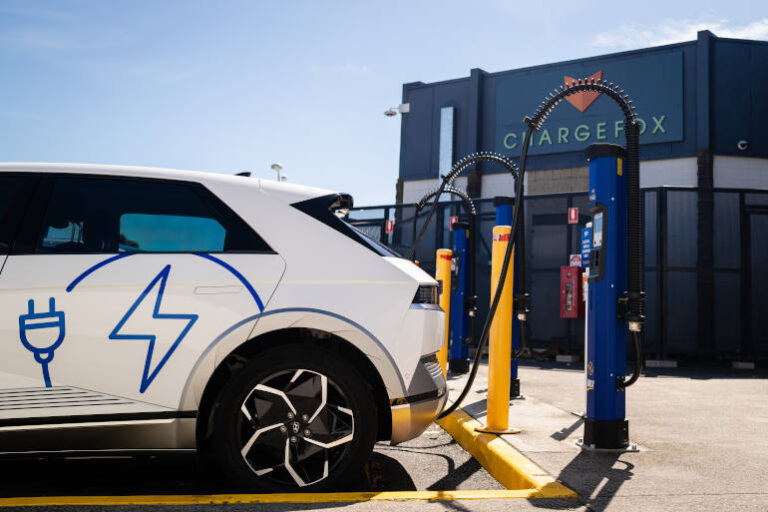
- Public charging – The most flexible option, especially for drivers covering long distances or working across wide geographies. As networks expand, some fleets may even make this the foundation of their strategy.
Choosing a Foundation
The power of the pyramid is that each organisation decides which option forms the base.
- A utility with a central depot might choose onsite charging as the foundation.
- A government department with hundreds of staff taking vehicles home may rely on home charging.
- A regional service fleet could put public charging at the base, supported by depot and home as needed.
The other two methods sit higher in the pyramid—used less often, but always available when required.
Why It Matters
The Charging Pyramid helps in three key ways:
- Clarity for drivers – Staff know where they’re expected to charge most of the time, and when exceptions apply.
- Confidence for executives – Leaders can see that EV transition plans are structured, not ad hoc.
- Cost control – By directing most charging through the cheapest or most reliable option, fleets avoid bill shock.
A Tool for Communication
Transitioning to EVs can be complex, but communication doesn’t need to be. The Charging Pyramid provides a clear, visual framework that explains to everyone—from drivers to the board—how charging will work day to day.
For Fleet Managers, it’s a simple tool that turns a technical challenge into an easy-to-understand plan.

- New B05 Gives Leapmotor a Sharper Electric Hatchback
 Leapmotor will expand its Australian electric vehicle range in late August with the B05, a rear-wheel-drive small hatch offered in two battery and equipment grades. Priced from $35,990 drive-away, the B05 Style will sit below the longer-range Design LR variant and bring another option to the growing sub-$40,000 EV market. Both versions use a 160kW
 - Subaru Trailseeker Arrives With Electric SpeedSubaru has expanded its electric vehicle line-up in Australia with the all-new Trailseeker, a large all-electric SUV that combines long-range capability, dual-motor all-wheel drive and the brand’s familiar focus on rough-road confidence. Positioned above the Solterra and the incoming Uncharted, the Trailseeker gives Subaru an EV offering across small, medium and large SUV categories. It
- Volvo Goes Lighter with New FL Electric TruckVolvo Trucks Australia has expanded its local electric truck range with a new 14-tonne FL Electric, targeting final-mile delivery and urban distribution operators seeking a lighter zero-emissions truck option. The 4×2 rigid is now the lightest model in Volvo Trucks Australia’s electric line-up and has been developed to open up applications where payload, manoeuvrability and
- Leapmotor Turns Up the Voltage on C10 SUVLeapmotor Australia has upgraded its C10 Design electric SUV for MY26, introducing a longer-range version with an 81.9kWh battery, 800V electrical architecture and up to 180kW DC fast-charging capability. The Leapmotor C10 Design Long Range BEV adds more range, stronger performance and shorter charging times, giving the model a more capable specification for Australian electric
- Chery Names Diesel Plug-In Hybrid UteChery Australia has confirmed the name of its upcoming diesel plug-in hybrid ute, with Stockman selected following a national public competition. The name was chosen from more than 20,000 submissions before being narrowed to a shortlist and put to a public vote. Stockman received more than 25 per cent of votes cast by more than 12,000 Australians,