


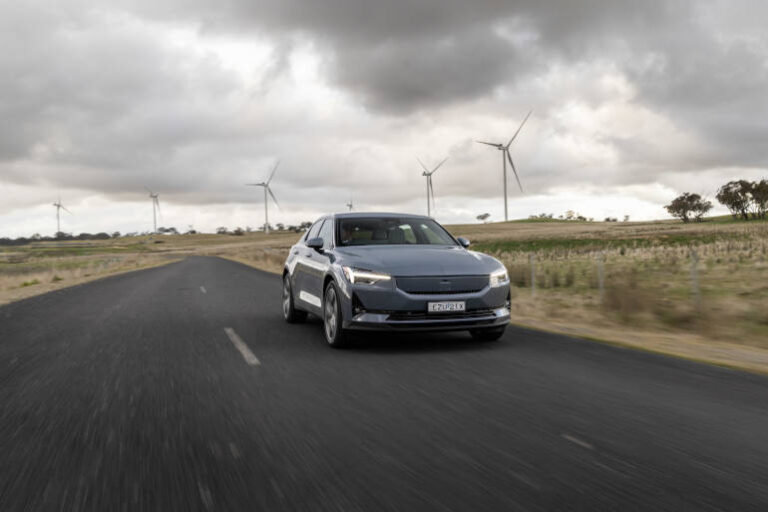
Australian motorists are saving close to $100 per month on fuel by switching to electric vehicles, according to new research released by Polestar. The findings add another practical data point for Fleet Managers and novated lease buyers weighing the operational cost benefits of electrification during a period of volatile fuel prices.
The survey of 1,015 Australian drivers found that electric vehicle owners reported a median monthly charging cost of $60, compared with $150 per month spent on petrol or diesel by drivers of conventional vehicles.
While the difference may seem modest at first glance, the implications for fleet operating budgets are significant when multiplied across dozens or hundreds of vehicles operating year-round.

Running Costs Still Leading the EV Conversation
Lower running costs have long been one of the strongest business cases for electric vehicles, and the latest data reinforces that trend. For organisations managing tight budgets or responding to rising fuel expenses, predictable energy costs are becoming an increasingly attractive proposition.
Polestar Australia Managing Director Scott Maynard said the cost advantages were evident even before recent global tensions began pushing up fuel prices.
“With lower running costs, improved performance, and simpler servicing, the benefits of going electric are clear,” he said.
Importantly for fleet decision-makers, the research was conducted before the latest spike in petrol and diesel prices, suggesting that the financial gap between electric and internal combustion vehicles may be widening further in real time.
This aligns with a trend already being observed across the Australian fleet market, where rising fuel costs are accelerating interest in electrification—particularly among novated lease buyers who can see immediate out-of-pocket savings.
Home Charging Giving Drivers Cost Control
One of the more practical insights from the research is how electric vehicle owners manage their energy use. Nearly four in five respondents charge primarily at home, often using rooftop solar or off-peak electricity tariffs to reduce costs.
For fleet operators, this highlights an important operational consideration. The cost advantage of EVs is not just about the vehicle itself—it is about the charging strategy behind it. Organisations that invest in home charging support or depot infrastructure are typically the ones that realise the strongest financial returns.
From a fleet management perspective, this reinforces a familiar principle: technology alone does not deliver savings—planning and policy do.
Range Anxiety Fading as Real-World Data Emerges
The research also provides a useful reality check on driving patterns and range requirements, an issue that still surfaces in many fleet transition discussions.
The median weekly driving distance among respondents was 158 kilometres, and 84 percent of drivers travelled less than 300 kilometres per week.
These figures sit comfortably within the range capability of most modern electric vehicles, many of which now exceed 400–600 kilometres on a single charge.
In practical fleet terms, this suggests that range anxiety is increasingly being replaced by a more operational concern—energy cost predictability and fuel supply security.
A Shift From Pump Anxiety to Energy Planning
Polestar’s global leadership framed the transition in broader terms, linking vehicle electrification to long-term energy stability.
“High oil prices are not the problem, they are the reality of a volatile system. Electric cars change that,” said Polestar CEO Michael Lohscheller.
For fleet organisations, this perspective is less about environmental messaging and more about risk management. Fuel price volatility, supply disruptions, and operational certainty are all factors that sit squarely within the responsibilities of a modern Fleet Manager.
What This Means for Fleet Buyers
For fleet buyers and salary packaging customers, the message is relatively straightforward.
Electric vehicles are no longer just a sustainability initiative—they are increasingly a financial strategy.
The combination of lower energy costs, stable operating expenses, and improving vehicle capability is shifting the conversation from “if” to “when” for many organisations.
The remaining barriers are typically not vehicle performance or cost, but infrastructure readiness, workforce planning, and organisational maturity—areas that require deliberate planning rather than rapid change.
As fuel prices continue to fluctuate and more electric models enter the market, the financial case for electrification is becoming harder to ignore.