


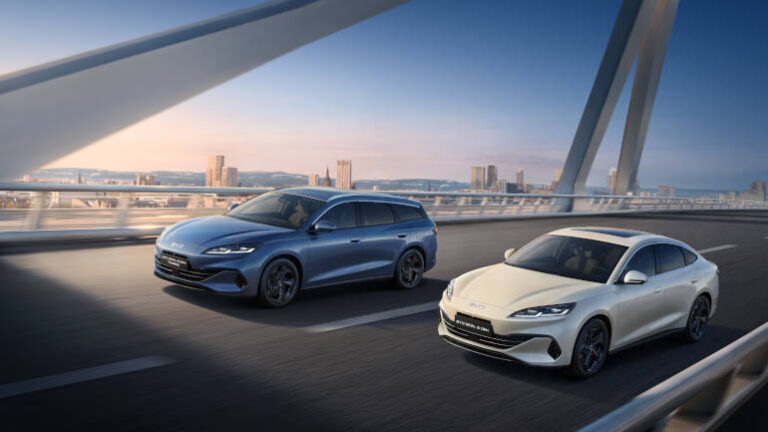
BYD has expanded its Australian line-up with the launch of the Seal 6 Sedan and Seal 6 Touring, giving buyers a new plug-in hybrid alternative to the growing number of SUVs on the market. According to the company’s media release, both models use BYD’s latest DM 5.0 Super Hybrid technology and are expected to deliver more than 1,000km of driving range from a single tank under test conditions.
The new range opens with the Seal 6 Sedan Essential, priced from $34,990 plus on-road costs, while the Seal 6 Touring Premium starts from $39,990 plus on-road costs. BYD is clearly pitching the pair at Australians looking for lower running costs, more practicality and an alternative body style to the now-dominant SUV market.

For fleet buyers and novated lease customers, the headline number will be the claimed range. BYD says the Seal 6 Sedan Essential is expected to exceed 1,400km on a WLTP-equivalent combined basis, while the Seal 6 Touring Premium is projected to deliver around 1,300km. As always, those figures are based on test conditions, but they still point to a vehicle aimed squarely at drivers doing big kilometres and trying to reduce fuel bills without going full battery electric.
The powertrain combines a 1.5-litre Atkinson-cycle petrol engine with an electric motor and BYD’s Blade Battery technology. BYD says the engine achieves 46 per cent thermal efficiency, while the hybrid system is designed to maximise electric driving and keep fuel consumption low. The Seal 6 Sedan Essential uses a 10.08kWh battery and offers a WLTP electric-only range of 55km. The Seal 6 Touring Premium gets a larger 19kWh battery and a claimed 100km of electric-only driving.
That difference in battery size also gives the two variants slightly different roles. The sedan looks more like the commuter-friendly, price-led entry point, while the Touring adds more EV-style daily driving potential for buyers who can charge regularly and want more practicality.
BYD is also leaning into that practicality story. The Seal 6 Touring offers up to 670 litres of cargo space, expanding to 1,535 litres with the rear seats folded. Roof rails and a powered tailgate are also included, giving the wagon a more family-focused and lifestyle-oriented pitch.
Inside, both models share a 2,790mm wheelbase, which BYD says delivers generous rear legroom and a flat rear floor. Standard cabin technology includes an 8.8-inch digital instrument cluster, a 12.8-inch central touchscreen, wireless Apple CarPlay and Android Auto, plus a broad list of convenience features.
Safety equipment is another key part of the package. BYD says all Seal 6 variants will come with seven airbags, its Blade Battery and a suite of driver assistance systems including adaptive cruise control, autonomous emergency braking, blind spot detection, child presence detection and DiPilot Level 2 intelligent driving assistance.
BYD Australia Chief Operating Officer Stephen Collins said the new models broaden the brand’s appeal in the local market.
“The Seal 6 Sedan and Seal 6 Touring continues the BYD commitment to offer Australians a range of advanced electric and intelligent plug-in vehicles that suits their needs and lifestyles,” Collins said.
He said BYD would continue expanding its local range to support the shift to lower-emission transport.
For the Australian market, the timing is interesting. The Seal 6 arrives as buyers continue looking for ways to manage fuel costs, while also weighing up whether a full EV fits their lifestyle or fleet operating model. A long-range plug-in hybrid sedan and wagon will not solve every problem, but it does give the market something it has not seen much of lately: a non-SUV electrified option with serious touring range.