

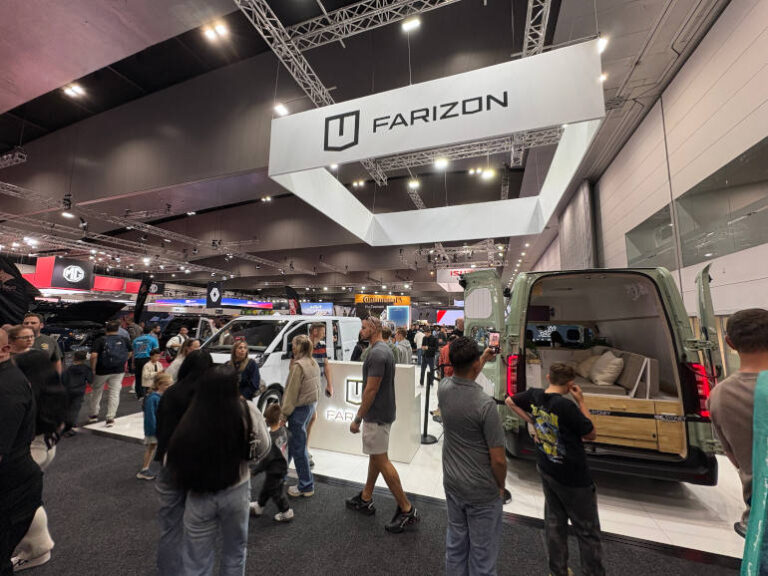
Farizon now offers two electric vans in Australia that, on paper, look similar but are designed for very different applications. One is a compact urban delivery vehicle built around price and simplicity. The other is a larger, purpose-built electric van platform designed to replace traditional diesel vans in mainstream fleet roles.
The decision for Fleet Managers isn’t which one is better. It’s which one is fit-for-purpose.
The Big Picture: What’s the Real Difference?
Farizon V7E
- Compact, urban-focused electric van
- Lower purchase price and simpler platform
- Designed for last-mile and city operations
Farizon SuperVAN
- Larger, more capable electric van
- Higher payload and cargo flexibility
- Designed as a full diesel replacement in mainstream fleets
In fleet terms:
- V7E = urban courier tool
- SuperVAN = operational workhorse
Specifications Comparison
| Specification | Farizon V7E (Extended Range) | Farizon SuperVAN (LWB Low Roof) |
|---|---|---|
| Battery | 66 kWh | 83 kWh |
| WLTP Range | 329 km | 355 km |
| Payload | 1,208 kg | 1,235 kg |
| Cargo Volume | 6.95 m³ | 8.25 m³ |
| Gross Vehicle Weight | 3,150 kg | 3,500 kg |
| DC Fast Charging | 97 kW | 140 kW |
| Towing Capacity (braked) | 1,000 kg | 2,000 kg |
| Length | 4,995 mm | 5,490 mm |
| Drive | FWD | FWD |
Payload and Cargo: Where the SuperVAN Starts to Pull Ahead
At first glance, payload looks similar. But cargo flexibility tells a different story.
The SuperVAN offers:
- Larger cargo volume options up to 11.22 m³
- Higher gross vehicle weight (3.5 tonnes)
- Higher towing capacity
That matters in real fleet operations. Not for couriers. But for trades, maintenance, and service fleets.
According to the specifications of the SuperVAN brochure, payload ranges from 1,170–1,300 kg depending on body size, with towing capacity up to 2,000 kg.
Range and Charging: Close Enough for Most Fleets
Both vans sit comfortably in the operational sweet spot for daily fleet work. Typical daily utilisation:
- Urban delivery fleets: 80–150 km/day
- Service fleets: 100–200 km/day
Both vehicles cover that easily. The difference is charging speed and operational resilience.
SuperVAN advantages
- Larger battery
- Faster DC charging
- Better suited to multi-shift operations
The SuperVAN can charge from 20% to 80% in approximately 36 minutes using a 140 kW DC charger.
That’s not a marketing feature. It’s a downtime management tool.
Technology and Fleet Features
Both vans include modern driver assistance and operational features, including:
- Adaptive cruise control
- Autonomous emergency braking
- Lane keeping assist
- 360-degree camera
These systems are listed in both specifications list under safety features. But the SuperVAN introduces something more interesting for fleets.
The Hidden B-Pillar: A Practical Fleet Innovation
The SuperVAN uses a no B-pillar sliding door design, creating a wide side opening. That’s not cosmetic. It’s operational. It improves:
- Loading speed
- Manual handling safety
- Workshop access
The feature is highlighted on page 6 of the SuperVAN brochure as part of its cargo accessibility design.
Pros and Cons
Farizon V7E
Pros
- Lower purchase price
- Simple platform
- Easy to drive in urban areas
- Good payload for its size
- Fast charging capability
Cons
- Smaller cargo capacity
- Lower towing capability
- Limited flexibility for larger fleets
- Less suitable for regional work
Farizon SuperVAN
Pros
- Larger cargo volume options
- Higher towing capacity
- Faster charging
- More versatile body sizes
- Purpose-built electric platform
Cons
- Higher purchase price
- Larger footprint in tight urban areas
- May be over-specified for small fleets
Best Applications for Each Van
Farizon V7E — Urban and Last-Mile Work
Best suited to:
- Courier fleets
- Food and parcel delivery
- Urban logistics
- Local government inspections
- Short-distance service work
This is a classic city van. It’s simple. Predictable. Cost-effective.
Farizon SuperVAN — Mainstream Fleet Operations
Best suited to:
- Trades and service fleets
- Utilities and maintenance
- Facilities management
- Regional operations
- Multi-shift fleets
This is where the SuperVAN becomes a genuine diesel replacement. Not just an EV alternative.
Fleet Manager Takeaway
The introduction of two electric vans from the same manufacturer is a sign of market maturity. We’re moving beyond: “Can we electrify?” And into: “Which vehicle is fit-for-purpose?” That’s the real shift happening in fleet right now.
The V7E lowers the entry barrier to electrification. The SuperVAN expands what electric vans can realistically do. And together, they give Fleet Managers something they’ve been asking for: Choice.

- Parramatta found a simple way to tackle EV resistance
 Range anxiety isn’t always solved with another spreadsheet. Sometimes you need to hand someone the keys. That’s one of the lessons from City of Parramatta’s fleet electrification program, where an EV drive week has become an important tool for building employee support for the transition. Speaking at Everything Electric Sydney during a panel featuring finalists
 - Ausgrid’s charging strategy goes well beyond the depotInstalling chargers at the depot might be the obvious starting point for fleet electrification. For Ausgrid, it wasn’t going to be enough. As the electricity network continues electrifying passenger vehicles, vans and trucks, it has developed a charging strategy designed around how employees actually use fleet vehicles. Speaking during the Fleet News Group Awards finalists
- For Allianz, EVs are now business as usualFor many organisations, fleet electrification still means pilots, trials and discussions about what might happen next. At Allianz, the conversation has moved on. After starting its transition with a small pilot of 12 vehicles two years ago, the insurer has reached the point where electric vehicles are becoming part of its normal fleet replacement process.
- A Charger That Powers Up Isn’t Finished: Why Commissioning Matters for Fleet EV ChargingAn EV charger can be installed, connected and apparently operating — and the charging system can still be wrong. That is one of the more important lessons from the Local Council EV Integration Project involving Wyndham, Brimbank and Moonee Valley councils. As fleet charging installations become larger, depots are adding not only chargers but load
- How to Install EV Charging Without Shutting Down the DepotBuying electric vehicles may be the visible part of fleet electrification, but much of the hard work can happen underground. Trenching, conduits, electrical upgrades, switchboards, charger foundations, communications, traffic management and electrical shutdowns all need to be completed while the depot continues doing its normal job. Experience from the Local Council EV Integration Project involving