


Battery-electric transport refrigeration is moving beyond overseas demonstrations and specification sheets, with Australian trials showing the technology can complete demanding freight routes while significantly reducing diesel use.
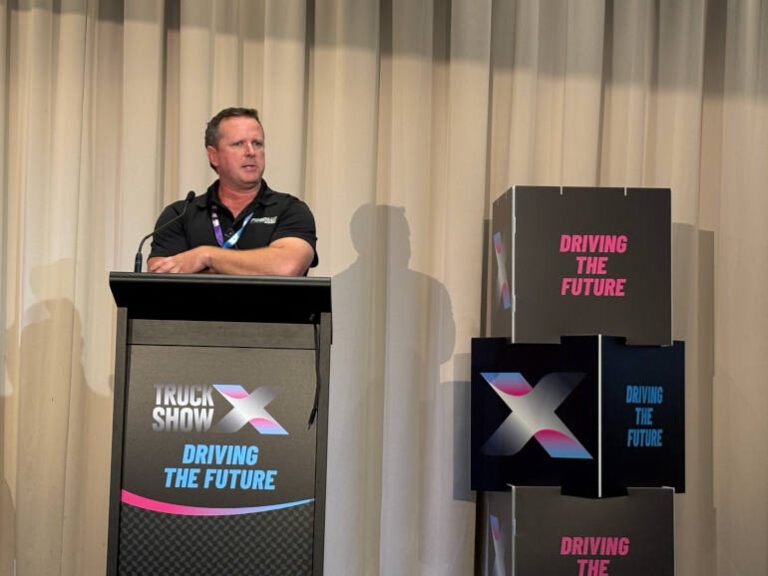
Speaking at TruckShowX, Protrans Solutions General Manager Grant Turner shared results from a series of local trials designed to test whether electric refrigeration units could withstand Australian temperatures, distances and operating conditions.
Turner has spent almost three decades in the transport refrigeration and air-conditioning industries, including 11 years leading a major distributor of diesel-powered refrigeration equipment.
He established Protrans Solutions after identifying what he believed was a gap between the transport industry’s desire to reduce emissions and the capability of some early alternative refrigeration products.
“I could see a problem with the transition,” Turner said. “There had been a few products introduced, but they weren’t working for the applications customers needed.”
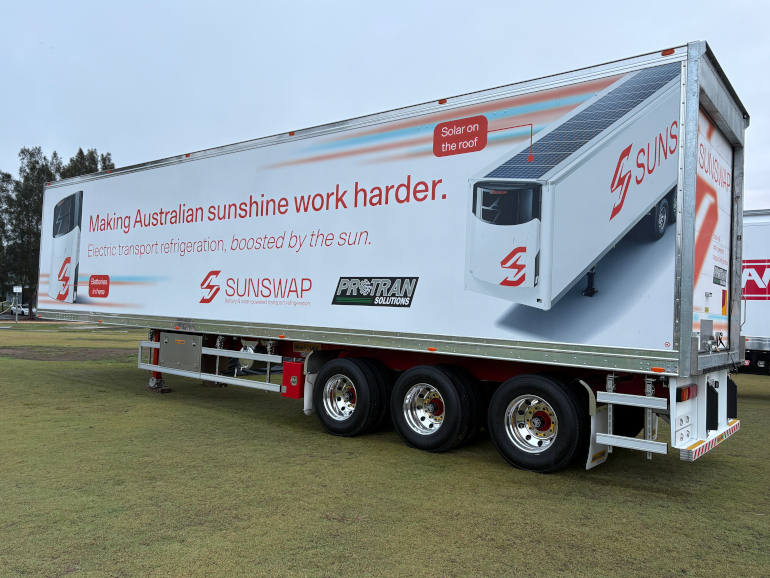
After assessing the technology developed by UK-based Sunswap, Turner believed it offered a practical alternative. However, he knew Australian transport operators would require local evidence before committing.
“I knew I couldn’t bring a product in from the UK and just throw it into the field,” he said. “I had to do my own validation.”

Operators want proof, not promises
Before launching the product locally, Protrans Solutions commissioned independent market research involving 140 transport refrigeration customers.
The research generated more than 1,000 responses across 63 questions, providing insight into fleet attitudes towards new refrigeration technologies, purchasing intentions and barriers to adoption.
Turner said many operators were interested in reducing diesel use but lacked information about the available technology and how it would perform in their businesses.
“We knew the large retailers and major third-party logistics operators were ready,” he said. “We also knew some of the smaller operators would sit back and watch.”
Upfront cost and concerns about battery capacity remained common barriers. However, Turner said the research confirmed that operators were prepared to consider new technology when it was supported by credible operating data.
“Australian customers want to see it run,” he said. “They will buy from testimonials. They can’t buy from a specification sheet or from something that has only operated overseas.”
Sydney to Brisbane without diesel refrigeration
One of the first major demonstrations involved a B-double travelling between Sydney and Brisbane.
The outbound load consisted of eggs that arrived at the transport depot at approximately 27 degrees Celsius and needed to be reduced to a set point of 11 degrees.
The unexpected pull-down requirement placed a heavier load on the electric refrigeration unit than originally planned.
On the return journey, the combination carried temperature-controlled meat. The vehicle also stopped for approximately seven hours during a driver rest break.
Rather than depleting the battery during the stop, the refrigeration system’s solar panels recovered a small amount of energy while maintaining the required temperature.
Across the journey, the unit completed approximately 18 hours of overnight operation, when solar generation was not available.
Turner described the trip as the company’s “hero run” because it demonstrated that the equipment could complete a long-distance Australian freight task under more challenging conditions than initially expected.
Retail trial returns with 39 per cent battery
Protrans Solutions also completed a three-week trial with a major Australian retailer, covering 20 routes and multiple supermarket deliveries.
The longest operating cycle involved a morning departure, several deliveries, a return to the depot, reloading and another delivery run without connecting to external power.
The system operated for 11 hours, including eight hours of active temperature control, and returned with 39 per cent battery capacity remaining.
Average ambient temperatures during the trial reached approximately 33 degrees Celsius.
“That was proof that we could handle those conditions,” Turner said.
On lighter Brisbane and Gold Coast routes, the solar system was able to recharge the battery during the empty return leg, with the unit arriving back at the depot with as much as 99 per cent charge.
Efficiency improvements extend operating range
A trial with poultry transport operator Multi-Quip also demonstrated how operating procedures could affect energy use.
The initial Sydney–Canberra–Sydney run used approximately 60 per cent of the available battery capacity on the outbound journey.
After reviewing loading, pre-cooling and other operational practices, the same task was completed across two nights, with the trailer returning to Sydney with 67 per cent battery remaining.
The refrigeration unit maintained temperature for approximately 24 hours, predominantly overnight, without using diesel.
“By the end of the trial, we had completed the whole route and returned to Sydney with 67 per cent battery,” Turner said.
The trial also highlighted a broader benefit of electrification: the data produced by the refrigeration system can help operators identify inefficient loading, unloading and pre-cooling practices.
Diesel savings create the business case
Conventional trailer refrigeration engines can operate for between 3,000 and 4,000 hours each year.
Turner said fuel consumption could begin at approximately two litres an hour and rise to between 3.5 and four litres under heavier operating conditions.
Depending on the application, this could equate to between 8,000 and 9,000 litres of diesel annually for a single refrigeration unit.
On a 24-hour route, replacing a diesel unit consuming two litres an hour could avoid approximately 48 litres of diesel.
“The business case is real,” Turner said.
Unlike a battery-electric truck, the refrigeration system can be fitted to an existing trailer. Turner said the unit effectively replaced the current diesel refrigeration system without requiring fleets to change their prime mover or entire trailer fleet.
“This bolts onto the front wall and replaces what operators currently have,” he said. “It can also be retrofitted to an existing trailer.”
Education remains the next challenge
Despite the trial results, Turner said awareness remained one of the largest barriers to adoption.
Operators frequently asked whether the unit would continue working overnight, during rain or when solar generation was limited.
At TruckShowX, the demonstration unit operated throughout two days of cloudy and wet conditions while maintaining its temperature, with approximately 75 per cent battery capacity remaining.
Turner said funding and finance options would also be important as operators assessed the upfront cost against long-term fuel and maintenance savings.
The Australian trials suggest electric trailer refrigeration does not need to wait for the complete electrification of the heavy vehicle fleet.
By replacing an independent diesel engine already operating on the trailer, fleets can reduce fuel consumption and emissions while retaining their existing vehicles, routes and freight tasks.
For transport operators, the next stage of the transition will be less about whether the technology works and more about understanding where it can deliver the strongest operational and financial return.