


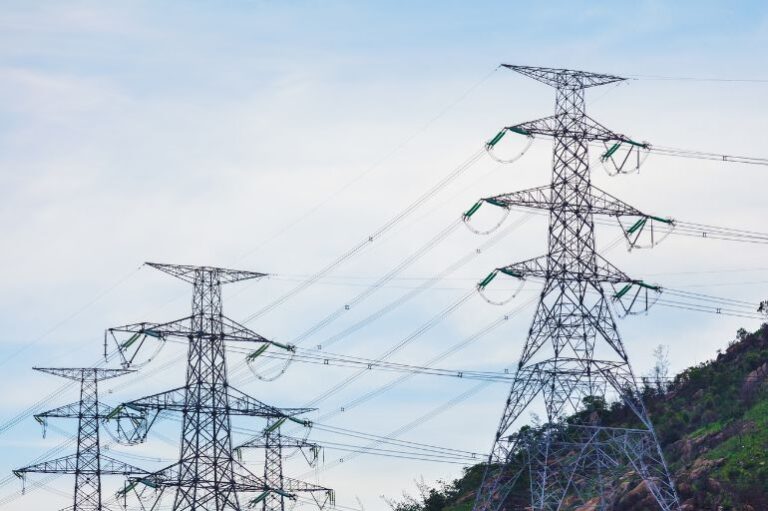
The conversation around heavy vehicle electrification has shifted noticeably over the past few years. Early discussions focused on vehicle technology — battery range, drivetrain performance and charging times. Today, the more pressing question is increasingly about energy supply.
That shift was a consistent theme during the Power of Penske Showcase at the Australian Automotive Research Centre (AARC) in Anglesea during March, where industry leaders explored the practical realities of transitioning heavy fleets to low-emission powertrains. The message was clear: the technology to electrify trucks largely exists, but the infrastructure and energy systems required to support them are still evolving.
According to Hamish Christie-Johnston, Managing Director, Penske Australia & New Zealand, the industry is no longer searching for solutions in vehicle engineering alone.
“My view is that broadly, we’ve got the solutions,” Christie-Johnston said. “It doesn’t matter whether you want to talk about battery electric, hydrogen fuel cell, hybrid — all of those technologies are available and quite mature.”
That observation reflects a growing consensus across the heavy transport sector. Manufacturers have invested heavily in alternative powertrains, and demonstration vehicles are now operating in real-world applications. However, the scale of energy required to support heavy vehicle operations introduces a different set of challenges — ones that extend well beyond the vehicle itself.

Scaling the Energy Requirement
One of the most significant differences between light vehicles and heavy trucks is energy demand. While passenger cars can often be charged overnight using existing infrastructure, heavy vehicles operate at far higher utilisation levels and require substantially more energy to maintain productivity.
Christie-Johnston highlighted the magnitude of that difference when discussing fleet electrification.
“If you want to electrify a truck, it’s a 600 kilowatt hour battery travelling 200 or 300,000 kilometres a year,” he said. “So now we’re talking about 100 times the energy of the electric car.”
For fleet operators, that scale has practical implications. Charging infrastructure must be designed to handle large power loads, often across multiple vehicles operating simultaneously. In depot environments, this can require significant upgrades to electrical connections, substations and distribution networks.
The issue is not limited to individual fleets. Widespread adoption of electric trucks will place additional demand on national energy systems, particularly in regions where heavy transport activity is concentrated.
Infrastructure as the Critical Path
As electrification moves from pilot programs to operational deployment, infrastructure planning has emerged as a critical factor in fleet transition strategies. This includes not only charging equipment, but also grid capacity, energy generation and long-term supply reliability.
Christie-Johnston framed the challenge in straightforward terms.
“So the question actually becomes around generating the electricity, I think, and producing the fuels,” he said.
This perspective highlights the interconnected nature of the transition. Vehicle technology, energy production and infrastructure development must progress together to support large-scale adoption.
For fleets operating in regional and remote areas — such as mining, construction and agriculture — the challenge can be even more complex. Access to reliable power supply may be limited, and the cost of infrastructure upgrades can be significant.
In these environments, alternative solutions such as hybrid systems, renewable energy integration and on-site generation are increasingly being explored as transitional pathways.
Planning for Operational Reality
Fleet Managers considering electrification must balance environmental objectives with operational requirements. Vehicle range, payload capacity and charging time all influence productivity, particularly in industries where downtime has direct financial consequences.
The discussions at the showcase emphasised the importance of aligning technology selection with operational duty cycles rather than adopting a one-size-fits-all approach.
Heavy vehicles typically operate on fixed schedules, covering predictable distances each day. This creates opportunities to design charging strategies around known usage patterns. However, it also requires careful planning to ensure vehicles remain available when needed.
Energy supply reliability becomes a critical factor in maintaining service continuity.
In high-utilisation fleets, even short disruptions to charging infrastructure can have cascading effects on operations, affecting delivery schedules, customer commitments and workforce planning.
Collaboration Across the Supply Chain
The transition to low-emission heavy transport is not solely the responsibility of vehicle manufacturers or fleet operators. It requires coordination across multiple sectors, including energy providers, infrastructure developers and government agencies.
Christie-Johnston noted that electrification is ultimately a system-level challenge rather than a single technology decision.
“Where’s that energy actually going to come from?” he asked.
That question reflects a broader shift in industry thinking. Electrification is no longer viewed as a standalone vehicle project, but as part of a larger transformation in how energy is generated, distributed and managed.
For Fleet Managers, this means engaging earlier with stakeholders responsible for infrastructure planning and energy supply. Decisions about depot location, facility upgrades and charging strategies may need to be made years in advance of vehicle procurement.
A Gradual Transition, Not an Overnight Change
Despite the challenges, the outlook for heavy vehicle electrification remains positive. Advances in battery technology, charging systems and energy management continue to improve the feasibility of low-emission transport solutions.
However, the transition is likely to occur gradually rather than through rapid, large-scale replacement of existing fleets.
Many organisations are adopting phased approaches, introducing electric vehicles into specific applications where infrastructure and operating conditions are most favourable. Lessons learned from these early deployments can then inform broader rollout strategies.
This incremental approach helps manage risk while building organisational capability.
The Bigger Picture for Fleet Operators
The discussions at the Power of Penske Showcase reinforced a central theme for fleet decision-makers: electrification is not just about choosing a different vehicle. It is about understanding the energy systems that support that vehicle throughout its operating life.
For heavy fleets, the path to lower emissions will depend on careful planning, infrastructure investment and collaboration across the supply chain.
The technology is advancing rapidly, but the success of electrification will ultimately be determined by the availability of reliable, scalable energy.
As Christie-Johnston’s comments suggest, the industry’s next challenge is not developing new powertrains — it is ensuring the power to run them is available when and where it is needed.