

Transport has emerged as one of Australia’s fastest-growing emissions challenges, with new data showing the sector is now competing with electricity generation as the country’s largest source of carbon output.
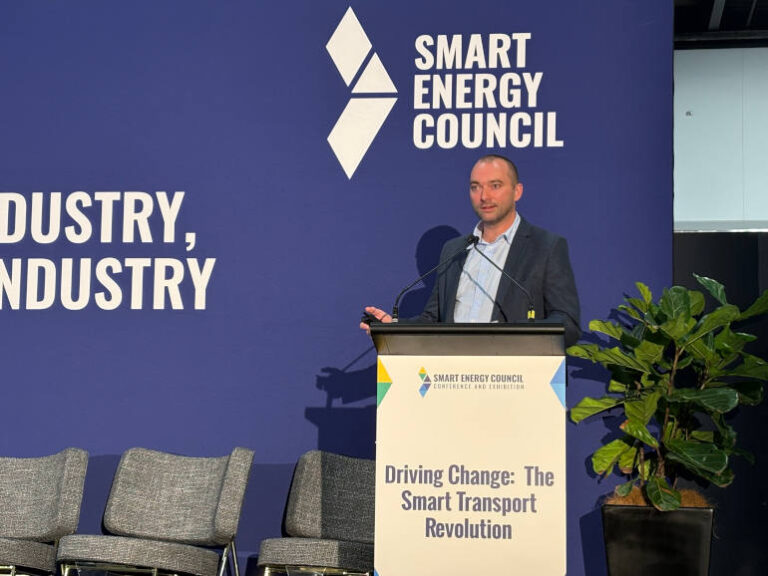
Speaking at the Smart Energy Council Conference and Exhibition in Sydney, Alex Grant, Director at ARENA, said the trend is clear — emissions from transport are still rising, even as other sectors begin to stabilise or decline.
“Transport is one of the only areas of the economy to have continued to grow year on year since COVID,” Grant said. “So that shows that we’re really talking about when… this idea of peak emissions in transport — and we’re not there yet on the data.”
That growth has pushed transport into a new position in the national emissions profile.
“It’s currently the second largest sector of emissions, overtaking stationary energy late last year,” Grant explained. “Now it’s a bit of a one-two race between the electricity sector and transport as to who’s going to take the lead by 2030 — ultimately, it’s a race that we don’t want to win.”
For Fleet Managers and Sustainability Managers, this shift reframes the urgency around electrification. The issue is no longer theoretical or long-term — it is becoming a core operational and financial risk that organisations need to address now.
Strategy is clear, but market progress is lagging
Grant pointed out that the industry is not short on analysis or direction. Multiple reports, including recent work on electric trucks and freight decarbonisation, have outlined pathways to reduce emissions.
However, the pace of change in the market is not matching the clarity of those strategies.
“We probably have an idea of what needs to happen, but it’s not presenting in what we’re seeing in the market,” he said.
This disconnect highlights a familiar challenge for fleet operators — the gap between policy ambition and practical implementation. While frameworks and targets continue to evolve, many organisations are still building the internal capability, data, and business cases needed to act.
A critical window for fleet investment decisions
The current environment is creating what Grant described as a “moment in time” for transport electrification, where external pressures are aligning.
Rising fuel costs, energy security concerns and tightening emissions expectations are all contributing to a stronger business case for change. At the same time, government-backed programs are increasingly focused on accelerating adoption.
“There’s a moment in time and a window for this capex cycle where electric transport can play a disproportionate impact,” Grant said, referencing recent industry analysis.
For Finance Managers, this creates a more complex investment landscape. Decisions about vehicle replacement cycles, infrastructure, and funding models are no longer just about cost — they are about timing, risk, and future-proofing fleet operations.
2026 shaping as a turning point
While electrification has been discussed for years, Grant signalled that the next phase will be defined by action rather than planning.
“2026 is the year of electrification of transport,” he said.
That statement reflects a broader shift in the market. Early adopters have already moved beyond pilots, and the lessons from those projects are starting to influence wider industry behaviour. At the same time, policy settings and funding programs are beginning to support more meaningful deployment.
For organisations with low fleet management maturity, the challenge is clear. Waiting for perfect conditions may no longer be a viable strategy, particularly as emissions reporting, stakeholder expectations, and operational costs continue to evolve.
Moving from awareness to execution
The rising emissions profile of transport is forcing a shift in mindset across the fleet sector. Electrification is no longer just a sustainability initiative — it is becoming a core part of operational strategy.
Grant’s message to industry was direct: the pathway is understood, but progress depends on organisations taking action and working together.
For Fleet Managers, this means focusing on practical steps — understanding duty cycles, improving data quality, reviewing policies, and engaging with suppliers and partners. For Sustainability and Finance teams, it means aligning emissions goals with whole-of-life cost analysis and investment planning.
The opportunity is there, but so is the pressure.
As transport emissions continue to rise, the urgency to act is no longer coming from policy alone — it is being driven by the market itself.