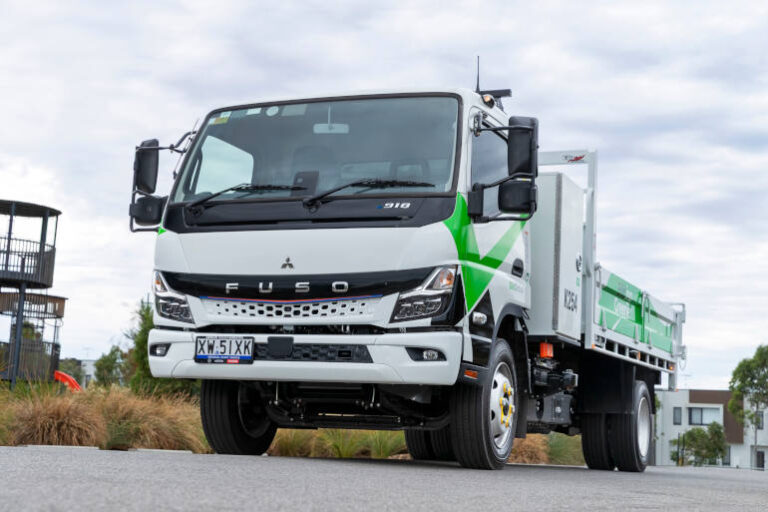
BildGroup has taken a practical step toward reducing emissions in heavy vehicle operations, taking delivery of its first battery-electric truck — a Fuso eCanter tipper — as part of its broader sustainability program.
The Australian civil construction company has introduced the e918 tipper model into its fleet to support a transition to lower-carbon operations, while also testing how electric trucks perform in demanding construction environments. The move reflects a growing trend among infrastructure and civil contractors to trial electric vehicles in targeted applications before scaling adoption.
The fully electric truck produces zero exhaust emissions and operates near-silently, characteristics that are increasingly valued on urban worksites and projects with strict environmental or community requirements.
A signal of intent for fleet transition
For Fleet Managers and Sustainability Managers, the decision by BildGroup highlights a common starting point for electrification: introducing a single vehicle into the fleet to build operational knowledge and confidence.
Jake Chitty, Environmental and Sustainability Manager at BildGroup, said the addition of the electric truck is about more than simply adding new technology.
“We’re not waiting for the industry to change — we’re helping lead that change. This is the first of many steps toward modernising our fleet, reducing emissions, and aligning our business with the expectations of our clients and our people,” said Chitty.
He added that the vehicle represents a shift in how the organisation approaches environmental responsibility within day-to-day operations, reinforcing the importance of aligning fleet strategy with broader organisational sustainability goals.
This staged approach is consistent with improving fleet management maturity — starting with pilot vehicles, gathering operational data, and refining policies before committing to large-scale procurement.
Operational benefits beyond emissions
While emissions reduction is the headline benefit, electric trucks can also deliver measurable operational improvements, particularly in safety and working conditions.
Chitty noted that the near-silent operation of the vehicle can improve the work environment for crews and reduce disruption to surrounding communities.
“For our crews, this means safer, and more comfortable work environments. For our clients, it means projects that align with modern sustainability expectations. And for our business, it’s another step in future proofing our operations,” he said.
For Finance Managers, these benefits can translate into risk reduction and improved service delivery, particularly on projects where environmental performance and community impact are contractual requirements.
Technology improvements support productivity
The latest generation of the Fuso eCanter includes several technical upgrades designed to improve efficiency and reliability — key considerations for fleet decision makers evaluating electric trucks.
One of the most significant changes is the introduction of an integrated eAxle system, which combines the electric motor and drive components into a single unit. This design removes the need for a traditional driveshaft, reducing weight and improving energy efficiency.
The truck also features a full suite of active safety technologies, reflecting the increasing role of safety performance in procurement decisions and whole-of-life cost analysis.
For organisations operating in construction, utilities, or local government, these features support the business case for electrification in predictable, urban duty cycles such as tipper work, maintenance tasks, and short-haul operations.
Leadership from early adopters
Industry suppliers view early adopters like BildGroup as critical to building confidence in electric heavy vehicles across the sector.
Daniel Whitehead, President and CEO of Daimler Truck Australia Pacific, said the deployment demonstrates how organisations can use real-world operations to validate new technology.
“We are delighted to see companies such as BildGroup show such great leadership and make the move to battery electric trucks like the Fuso eCanter,” said Whitehead.
For fleet operators, the message is clear: electrification does not require an immediate fleet-wide transition. Instead, targeted deployment of suitable vehicles allows organisations to build capability, refine charging strategies, and strengthen procurement processes.
A practical starting point for fleet electrification
The introduction of a single electric tipper may seem modest, but it represents an important step in building operational readiness for future fleet transitions.
For many organisations, the pathway to lower emissions will not begin with policy documents or large capital investments. It will begin with small, deliberate trials — selecting the right vehicle, matching it to the right task, and using data to inform the next decision.
That incremental approach is often the difference between a successful transition and a costly experiment.