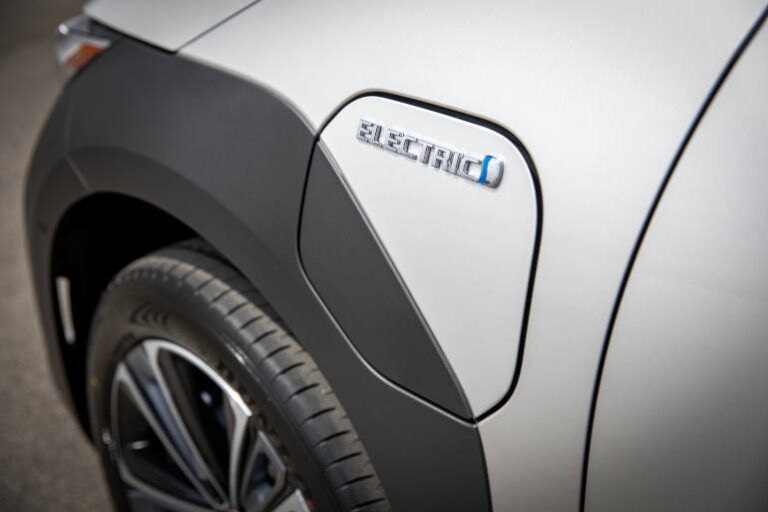
The Federal Government has announced significant changes to the Electric Car Discount that will gradually reshape how fringe benefits tax (FBT) exemptions apply to electric vehicles, with a stronger focus on affordability and long-term sustainability.
Under the revised approach, the current full FBT exemption for eligible EVs will remain unchanged until March 2027. From April 2027, the full exemption will only apply to EVs priced below $75,000, while vehicles above that threshold but below the luxury car tax cap will receive a 25 per cent discount on payable FBT. From April 2029 onwards, all eligible EVs below the luxury car tax threshold will receive the reduced 25 per cent discount.
The Government said the changes reflect the rapid maturity of the EV market and the increasing availability of more affordable electric vehicles in Australia.
Chau Le, General Manager, E-mobility at Origin Energy, told Fleet EV News that the continuation of the incentive provides important certainty for both consumers and organisations planning fleet transitions.
“It’s positive to see the EV incentive remaining in place, with clear direction on how it will evolve over time,” said Le.
“This certainty matters, particularly for Aussies weighing upfront costs for petrol cars against the ongoing savings EVs can offer, and for the businesses fleet sector that accounts for around half of all new vehicle purchases every year,” she said.
Le said the revised settings would continue supporting organisations as they develop plans to transition staff and fleets to lower-emission vehicles.
“Clear settings like these will continue to support Australians considering the switch to electric vehicles, and will help organisations plan and support employees looking to transition to electric vehicles,” said Le.
She also noted the growing number of affordable EV options entering the market.
“Focussing government support towards EVs below $75,000 reflects the increasing availability of more affordable EV options in Australia, and may even help contribute to a broader range of more affordable EV options entering the Australian market over time,” said Le.
Origin Energy has been directly involved in supporting fleet electrification, with Le confirming strong growth in demand for EV programs.
“At Origin, we’ve seen strong growth in demand, now managing more than 2,000 EVs across customer fleets and programs. We expect this level of certainty to support continued uptake, particularly in a cost-of-living environment where fuel prices remain a key consideration,” she said.
Darren Gore, General Manager at Summit Fleet Leasing and Management, described the introduction of a vehicle price cap as a logical next step for the policy.
“The introduction of a vehicle price cap under the Electric Car Discount is a sensible evolution of the policy. The original intent was to improve affordability and accelerate EV adoption, and by most measures, it has achieved that objective,” said Gore.
“It helped bring more electric vehicles into the market with novated leasing being a viable pathway for a broad group of users,” he said.
Gore said the market had evolved significantly since the policy was first introduced.
“Now the market has shifted. The industry has adapted, supply has improved, and there is a wider range of models at different price points. Introducing a cap reflects that maturity—it keeps the focus on accessible vehicles rather than subsidising higher-end purchases,” said Gore.
He also highlighted that the EV transition now extends well beyond purchase incentives alone.
“It’s also important to recognise that the Electric Car Discount is just one piece of a much larger transition. As EV adoption increases, attention is naturally turning to other factors like fleet procurement strategies, road user tax assessment and the ongoing rollout of charging infrastructure,” said Gore.
Those broader issues are becoming increasingly important for Fleet Managers and Sustainability Managers as organisations move from early EV adoption into larger scale transition planning.
Gore said policy certainty was critical after recent spikes in demand caused by concerns about potential changes to the scheme.
“In the lead-up to this federal budget, there was a noticeable surge in demand as buyers moved to take advantage of the existing settings, although the geopolitical influence on fuel scarcity and cost has also played its part,” said Gore.
“With the changes now clearer, new car buyers have more certainty and can plan accordingly. That clarity matters—it provides a more stable pathway for continued EV adoption rather than short-term spikes driven by policy uncertainty,” he said.
The Government estimates the revised policy settings will save the Budget $1.7 billion over five years while continuing to support EV adoption across Australia.