

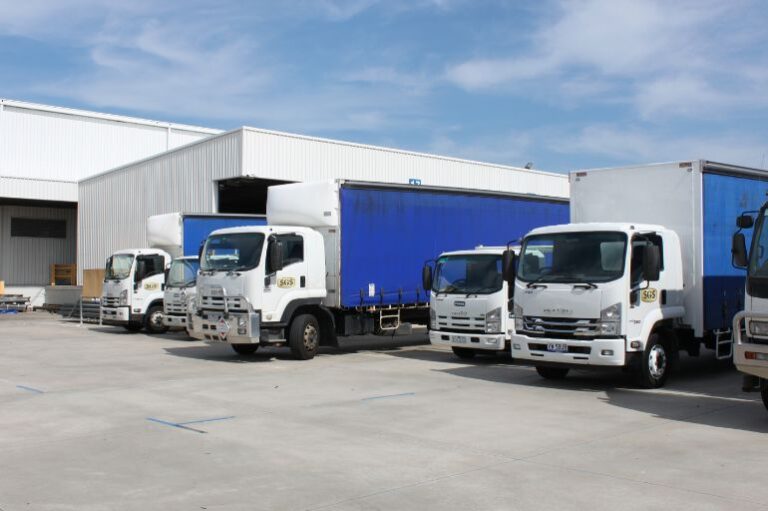
Australia’s transport industry is investing millions of dollars in electric vehicle technology, charging infrastructure and emissions reduction programs. But according to one logistics operator, the industry’s biggest opportunity to reduce emissions may be sitting in the yards of small business operators running trucks that are more than a decade old.
Speaking at Sustainability Business Live in Melbourne, Luke Sadler, Director at SGS Logistics, said much of the conversation around transport decarbonisation is overlooking the realities facing owner-drivers and small fleet operators.
While large fleets are increasingly exploring electric vehicles and sustainability initiatives, Sadler believes many smaller operators remain locked out of the transition because the economics simply don’t stack up.
“I think what’s not been looked at closely enough is that 80 per cent of the industry are owner operators and small businesses with trucks that are over 10 years old.”
Luke Sadler, Director at SGS Logistics
For Sadler, the issue is not a lack of interest in cleaner vehicles. It is a lack of practical pathways that make replacement vehicles affordable.
“I think that’s what needs to be looked at,” he said.
The comments come as governments continue to support transport electrification through grants, charging infrastructure programs and fleet transition initiatives. While Sadler welcomes those investments, he believes they are only part of the solution.
“The government grants are fantastic,” he said. “Without the infrastructure, the charging infrastructure, and the push towards faster charging, then electrification won’t happen, or it will take too long.”
However, he argues that many of the current programs are designed around larger organisations with dedicated sustainability teams and the resources needed to navigate complex application processes.
SGS Logistics recently applied for state government funding to support the purchase of an electric vehicle and successfully progressed through the first stage of the process. The experience highlighted for Sadler how difficult similar programs may be for smaller operators to access.
“We needed to say who the customer was, what the work would be,” he explained. “I think an owner operator, the only thing he answers is, ‘I’m just interested in replacing my truck.'”
For many small operators, the challenge is simple. Existing diesel trucks may be older and produce higher emissions, but they are fully paid for and continue to perform the work required.
A replacement electric truck, while attractive from an environmental perspective, often comes with a significantly higher purchase price.
“That truck operates fine,” Sadler said. “I’m interested in an electric vehicle, but it’s way too expensive.”
The result is a gap between industry ambition and commercial reality.
While many sustainability discussions focus on fleet transition targets, battery technology and charging networks, Sadler believes there needs to be greater attention paid to the financial barriers facing small businesses.
“If you can make that $300,000 electric vehicle $80,000, well then I might be interested,” he said.
He also sees parallels with incentives that have helped drive passenger vehicle electrification.
“There are incentives with novated leases for private citizens and company fleets,” Sadler said. “Maybe there should be something for those small operators.”
The comments reflect a broader challenge facing Australia’s freight sector. While major fleet operators often attract attention for large-scale EV deployments, a substantial proportion of the nation’s freight task is carried out by smaller businesses and independent operators.
For those businesses, replacing an ageing diesel truck is often one of the biggest capital decisions they will ever make.
Sadler believes that helping these operators make the transition could deliver significant emissions reductions across the sector.
“There doesn’t seem to be enough there for the owner drivers,” he said. “I think that’s where the greatest ground will be achieved.”
As governments and industry continue to push towards lower-emission transport, Sadler’s message is clear: electrification strategies cannot focus solely on large fleets.
If Australia wants to accelerate the transition, the industry may need to spend less time talking about the future of transport and more time helping small business operators afford to be part of it.