

Fleet managers preparing to add electric vehicles often spend considerable time assessing range, charging and whole-of-life costs.
But there is another question worth asking before signing the purchase order: who is going to repair the vehicle after an accident?
Dmitri Feigin from DingGo says Australia’s collision repair sector is adapting to electrification, but the transition requires investment in people, equipment and workshop facilities.
Speaking during an Everything Electric Sydney panel featuring supplier sponsors of the Fleet News Group Awards, Feigin said repair-network capability needed to develop alongside the growing EV fleet.

EV repair requires more than technician training
EV collision repair isn’t simply a matter of teaching a panel beater how to work on another model.
High-voltage electrical systems introduce different safety requirements, while battery removal and isolation can require specialist equipment and training.
“The actual supply side of that repair process is also struggling to find talent, bringing talent into their business, upskill,” Feigin said.
But training is only part of the challenge.
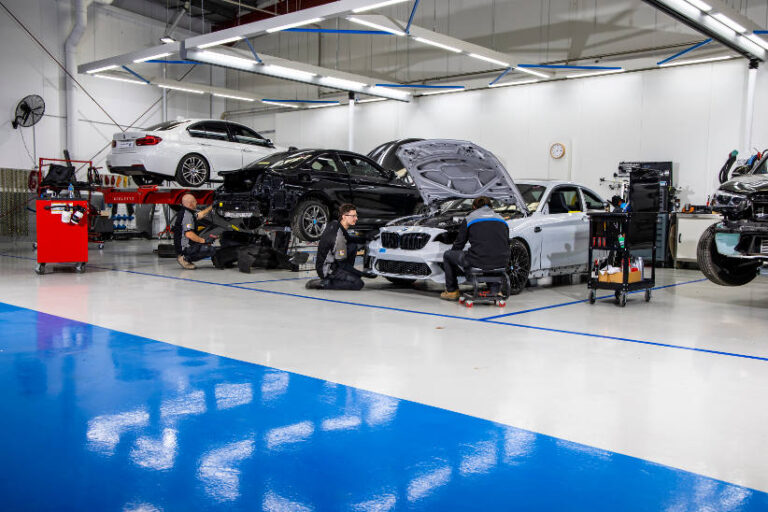
“Part of it is actually physical layout optimisation of the shop to make sure that you have all the tools required to be able to facilitate a repair of that EV,” he said.
Workshop procedures and physical separation can also be required to safely manage high-voltage vehicles.
Smaller repairers face an investment decision
The transition presents a commercial decision for collision repair businesses.
Many repairers are relatively small operations and investing in equipment, workshop modifications and training requires capital.
For some businesses, that makes the decision to become EV capable difficult while electric vehicles still represent a relatively small percentage of repair volumes.
“We still see a very small portion of our repair network that is EV compliant and EV friendly,” Feigin said. “It’s growing.”
As the Australian EV car park increases, repair volumes should provide a stronger commercial incentive for workshops to make those investments.
Fleets need to understand the network
For fleet managers, the issue becomes particularly important when vehicles operate across multiple regions.
A vehicle may be well supported close to a capital city but have fewer repair options when operating in regional locations. That can affect both repair cost and downtime.
The panel discussion also raised the possibility of fleets working more closely with preferred repairers as EV numbers grow, giving workshops greater visibility of future demand.
Feigin said established preferred-repairer relationships could be valuable, although he also cautioned against losing the advantages of a broader repair network.
A wider network can create competition between repair quotes while potentially reducing the time required to find available repair capacity.
Support belongs in the procurement decision
EV procurement is increasingly about more than the specification sheet.
Fleet managers need to consider dealership coverage, maintenance capability, parts supply and collision repair capacity alongside range, payload and charging.
The challenge will become more important as electric commercial vehicles enter applications where downtime directly affects service delivery or revenue generation.
Before deploying EVs across a national or regional fleet, understanding where they can be repaired could therefore become as important as understanding where they can be charged.