

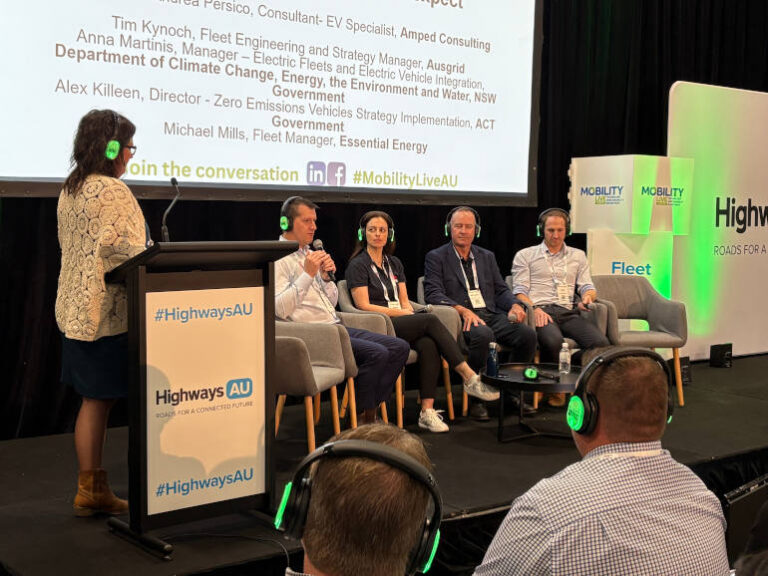
Technology may power the electric-fleet revolution, but people make it happen. Moderator Andrea Persico of Amped Consulting steered the Mobility Live 2025 panel toward one vital question: how do you secure executive buy-in and bring employees along for the ride?
Start with leadership
“Support from the top makes your life so much easier,” said Ausgrid’s Tim Kynoch. “If you’re a Fleet Manager trying to push up, you’ll face resistance. But when the CEO or finance team is on board, you can say, ‘This is a company decision—get on board.’”
Anna Martinis agreed, noting that executive backing must be anchored in knowledge. “Understand your operations and where vehicles are garaged,” she advised. “Then build a change-management plan and clear communication across your organisation. Leadership support lasts when it’s underpinned by shared understanding.”
End-user champions
For Essential Energy, engaging drivers was paramount. “The end user is critical in any change piece,” said Mills. “Once someone drives an EV, it’s hard for them to go back to an ICE vehicle.” He encourages creating a “safe space” for staff to experiment, run trials, and share honest feedback: “Do this with people, not to them.”
Alex Killeen reflected on early missteps in Canberra’s transition. “When we announced our targets in 2019, it was dropped on fleet teams—make it work. People don’t like quick change. Get hearts and minds first.” The ACT now relies on early adopters—community nurses and field staff—as “walking, talking billboards” for the program. “They’re empowered to have conversations with the community about the benefits.”
Walk the talk
Kynoch recalled being challenged by his CEO: ‘What car do you drive?’ The question prompted him to switch to an EV himself. “If you don’t know what you’re talking about, no one else will come along for it,” he said.
Communication builds confidence
Martinis urged fleet managers to “make transitions visible.” Demonstrate new vehicles, publicise milestones, and share facts to dispel misconceptions. “Confidence is critical,” she said. “Each fleet manager should have a communication and education plan—and stay up to date.”
Create connection
Mills added: “Get people in the vehicles—test drives, loan programs, drive days. Once they feel it, they understand it.”
Killeen summed up the lesson: “Empower people. Give them ownership of the transition.”
Together, the panellists painted a clear message: fleet decarbonisation succeeds when leaders champion it, and staff feel included, informed, and inspired.